Electromechanical Equipment Assemblers vs Cutting, Punching, and Press Machine Setters, Operators, and Tenders, Metal and Plastic

Electromechanical equipment assemblers spend 0m of a shift on tasks AI or robots touch; cutting, punching, and press machine setters, operators, and tenders, metal and plastic spend 1h 19m. Here is how pay, outlook and training compare.

Home / Compare

Electromechanical equipment assemblers or cutting, punching, and press machine setters, operators, and tenders, metal and plastic: which will AI change more? AI and robots touch more of the day for cutting, punching, and press machine setters, operators, and tenders, metal and plastic: 1h 19m of an 8-hour shift, against 0m for electromechanical equipment assemblers. Median pay is about the same: $45,930 and $46,330.

The two jobs share very close skills, including troubleshooting, equipment maintenance, repairing, so moving between them is realistic for many people.

Electromechanical Equipment Assemblers
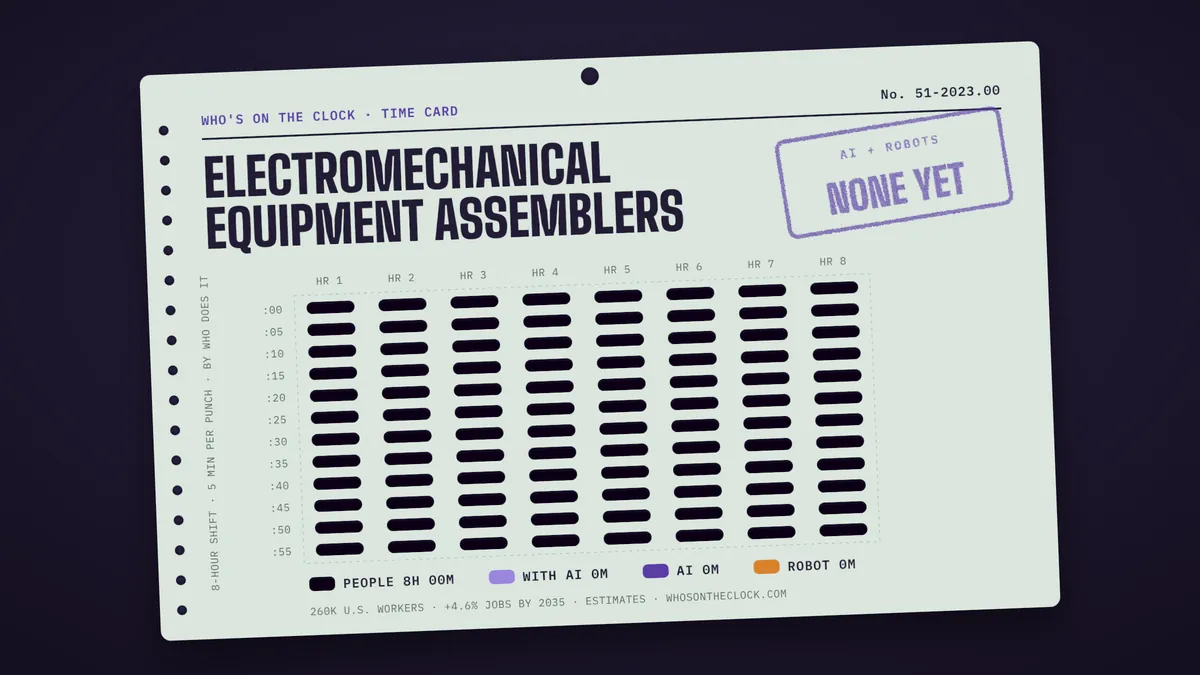
0mof an 8-hour shift touched by AI or robotsLess AI time
  • 8hDone by people
  • 0mPeople do it with AI's help
  • 0mAI mostly does it alone
  • 0mRobots have done it somewhere
Median pay
$45,930
U.S. workers
260,000
Outlook to 2035
+4.6%
Openings a year
27,000
Typical preparation
High school diploma, some training
See the full time card →

Electromechanical Equipment Assemblers

Where AI or robots show up most

No AI or robot use documented for any task yet.

Biggest tasks still done by people

  • Assemble parts or units, and position, align, and fasten units to assemblies, subassemblies, or frames, using hand tools and power tools. 2h 12m
  • Position, align, and adjust parts for proper fit and assembly. 1h 12m
  • Connect cables, tubes, and wiring, according to specifications. 1h 6m

Cutting, Punching, and Press Machine Setters, Operators, and Tenders, Metal and Plastic

Where AI or robots show up most

  • Load workpieces, plastic material, or chemical solutions into machines. 36m
  • Set stops on machine beds, change dies, and adjust components, such as rams or power presses, when making multiple or successive passes. 18m
  • Turn controls to set cutting speeds, feed rates, or table angles for specified operations. 6m

Biggest tasks still done by people

  • Set up, operate, or tend machines to saw, cut, shear, slit, punch, crimp, notch, bend, or straighten metal or plastic material. 1h 47m
  • Start machines, monitor their operations, and record operational data. 41m
  • Measure completed workpieces to verify conformance to specifications, using micrometers, gauges, calipers, templates, or rulers. 30m

Swap in a different job Highlighted numbers are the higher of the two. Hours are estimates from each job's time card.