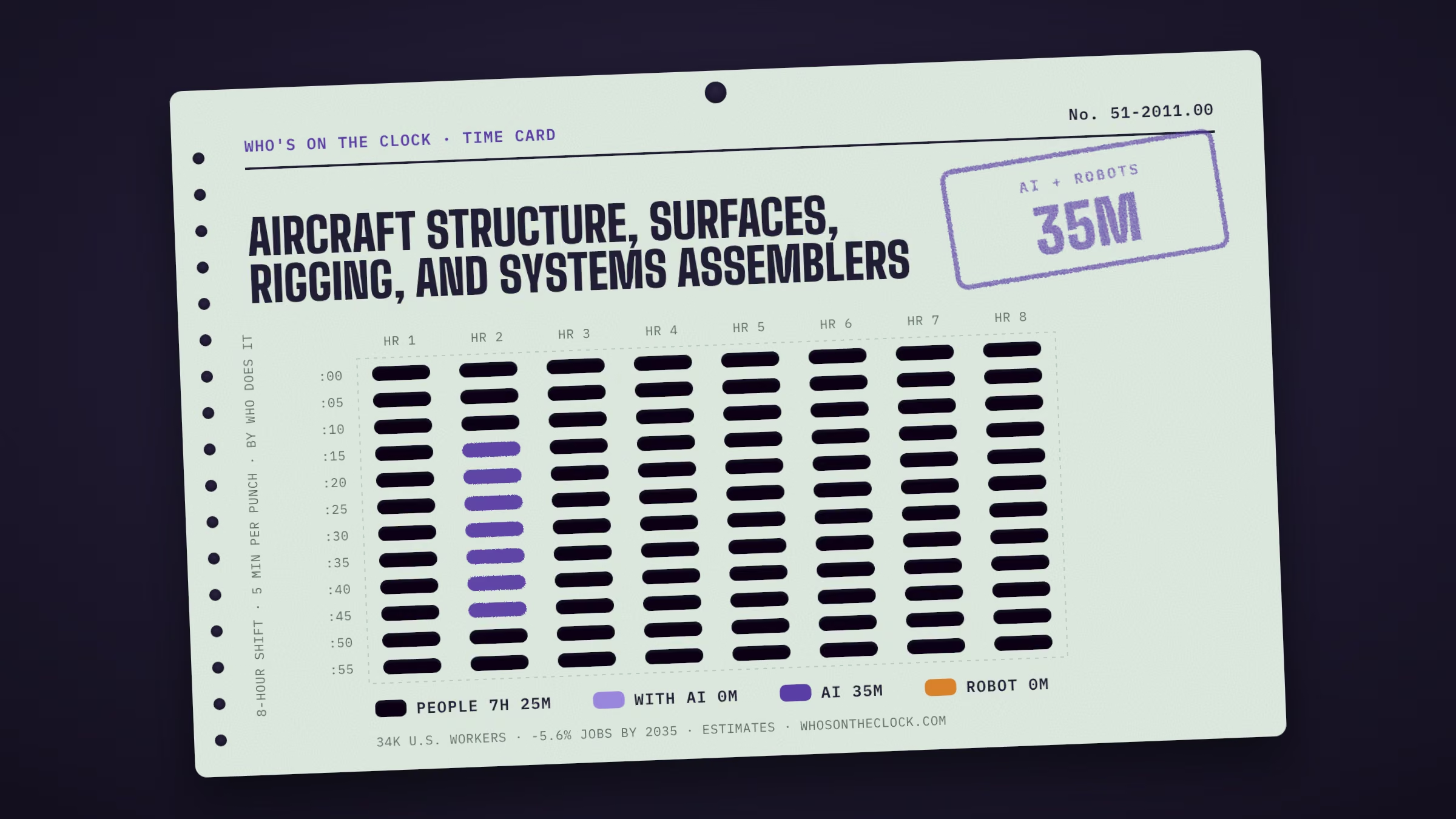
Assemble, fit, fasten, and install parts of airplanes, space vehicles, or missiles, such as tails, wings, fuselage, bulkheads, stabilizers, landing gear, rigging and control equipment, or heating and ventilating systems.
Time card
Untick tasks you don't do, or set your own times.
| Mine | Task, by time spent | Human | With AI | AI | Robot |
|---|---|---|---|---|---|
Assemble parts, fittings, or subassemblies on aircraft, using layout tools, hand tools, power tools, or fasteners, such as bolts, screws, rivets, or clamps.1h 16m a shift · Robots only in factory cellsWhy this label?Robots have done this only in factory setups built around the machine, so it stays Human for aircraft structure, surfaces, rigging, and systems assemblers. How labels work | |||||
Read blueprints, illustrations, or specifications to determine layouts, sequences of operations, or identities or relationships of parts.35m a shift · Observed in AI useWhy this label?Marked AI because this task shows up regularly in real AI conversations (Anthropic Economic Index, 2025 usage), and in most of them AI does the task on its own rather than helping a person. Many workplaces may not use AI for it at all. How labels work | |||||
Inspect or test installed units, parts, systems, or assemblies for fit, alignment, performance, defects, or compliance with standards, using measuring instruments or test equipment.35m a shift · Robots only in factory cellsWhy this label?Robots have done this only in factory setups built around the machine, so it stays Human for aircraft structure, surfaces, rigging, and systems assemblers. How labels work | |||||
Adjust, repair, rework, or replace parts or assemblies to ensure proper operation.35m a shift · No AI or robot evidence foundWhy this label?This is physical work, and no robot has been shown doing it yet. How labels work | |||||
Assemble prefabricated parts to form subassemblies.29m a shift · Robots only in factory cellsWhy this label?Robots have done this only in factory setups built around the machine, so it stays Human for aircraft structure, surfaces, rigging, and systems assemblers. How labels work | |||||
Align, fit, assemble, connect, or install system components, using jigs, fixtures, measuring instruments, hand tools, or power tools.29m a shift · Robots only in factory cellsWhy this label?Robots have done this only in factory setups built around the machine, so it stays Human for aircraft structure, surfaces, rigging, and systems assemblers. How labels work | |||||
Attach brackets, hinges, or clips to secure or support components or subassemblies, using bolts, screws, rivets, chemical bonding, or welding.23m a shift · Robots only in factory cellsWhy this label?Robots have done this only in factory setups built around the machine, so it stays Human for aircraft structure, surfaces, rigging, and systems assemblers. How labels work | |||||
Cut, trim, file, bend, or smooth parts to ensure proper fit and clearance.23m a shift · Robots only in factory cellsWhy this label?Robots have done this only in factory setups built around the machine, so it stays Human for aircraft structure, surfaces, rigging, and systems assemblers. How labels work | |||||
Position and align subassemblies in jigs or fixtures, using measuring instruments and following blueprint lines and index points.23m a shift · Robots only in factory cellsWhy this label?Robots have done this only in factory setups built around the machine, so it stays Human for aircraft structure, surfaces, rigging, and systems assemblers. How labels work | |||||
Layout and mark reference points and locations for installation of parts or components, using jigs, templates, or measuring and marking instruments.18m a shift · Robots only in factory cellsWhy this label?Robots have done this only in factory setups built around the machine, so it stays Human for aircraft structure, surfaces, rigging, and systems assemblers. How labels work | |||||
Set, align, adjust, or synchronize aircraft armament or rigging or control system components to established tolerances or requirements, using sighting devices and hand tools.18m a shift · No AI or robot evidence foundWhy this label?This is physical work, and no robot has been shown doing it yet. How labels work | |||||
Join structural assemblies, such as wings, tails, or fuselage.18m a shift · Robots only in factory cellsWhy this label?Robots have done this only in factory setups built around the machine, so it stays Human for aircraft structure, surfaces, rigging, and systems assemblers. How labels work | |||||
Fabricate parts needed for assembly or installation, using shop machinery or equipment.12m a shift · Robots only in factory cellsWhy this label?Robots have done this only in factory setups built around the machine, so it stays Human for aircraft structure, surfaces, rigging, and systems assemblers. How labels work | |||||
Clean, oil, or coat system components, as necessary, before assembly or attachment.12m a shift · Robots only in factory cellsWhy this label?Robots have done this only in factory setups built around the machine, so it stays Human for aircraft structure, surfaces, rigging, and systems assemblers. How labels work | |||||
Manually install structural assemblies or signal crane operators to position assemblies for joining.12m a shift · Robots only in factory cellsWhy this label?Robots have done this only in factory setups built around the machine, so it stays Human for aircraft structure, surfaces, rigging, and systems assemblers. How labels work | |||||
Place and connect control cables to electronically controlled units, using hand tools, ring locks, cotter keys, threaded connectors, turnbuckles, or related devices.12m a shift · Robots only in factory cellsWhy this label?Robots have done this only in factory setups built around the machine, so it stays Human for aircraft structure, surfaces, rigging, and systems assemblers. How labels work | |||||
Install mechanical linkages and actuators, using tensiometers to verify tension of cables.12m a shift · No AI or robot evidence foundWhy this label?This is physical work, and no robot has been shown doing it yet. How labels work | |||||
Fit and fasten sheet metal coverings to surface areas or other sections of aircraft prior to welding or riveting.12m a shift · Robots only in factory cellsWhy this label?Robots have done this only in factory setups built around the machine, so it stays Human for aircraft structure, surfaces, rigging, and systems assemblers. How labels work | |||||
Assemble prototypes or integrated-technology demonstrators of new or emerging environmental technologies for aircraft.6m a shift · No AI or robot evidence foundWhy this label?This is physical work, and no robot has been shown doing it yet. How labels work | |||||
Set up or operate machines or systems to crimp, cut, bend, form, swage, flare, bead, burr, or straighten tubing, according to specifications.6m a shift · Robots only in factory cellsWhy this label?Robots have done this only in factory setups built around the machine, so it stays Human for aircraft structure, surfaces, rigging, and systems assemblers. How labels work | |||||
Clean aircraft structures, parts, or components, using aqueous, semi-aqueous, aliphatic hydrocarbon, or organic solvent cleaning products or techniques to reduce carbon or other harmful emissions.6m a shift · Robots only in factory cellsWhy this label?Robots have done this only in factory setups built around the machine, so it stays Human for aircraft structure, surfaces, rigging, and systems assemblers. How labels work | |||||
Mark identifying information on tubing or cable assemblies, using etching devices, labels, rubber stamps, or other methods.6m a shift · Robots only in factory cellsWhy this label?Robots have done this only in factory setups built around the machine, so it stays Human for aircraft structure, surfaces, rigging, and systems assemblers. How labels work | |||||
Verify dimensions of cable assemblies or positions of fittings, using measuring instruments.6m a shift · Robots only in factory cellsWhy this label?Robots have done this only in factory setups built around the machine, so it stays Human for aircraft structure, surfaces, rigging, and systems assemblers. How labels work | |||||
Weld tubing and fittings or solder cable ends, using tack welders, induction brazing chambers, or other equipment.6m a shift · Robots only in factory cellsWhy this label?Robots have done this only in factory setups built around the machine, so it stays Human for aircraft structure, surfaces, rigging, and systems assemblers. How labels work | |||||
Capture or segregate waste material, such as aluminum swarf, machine cutting fluid, or solvents, for recycling or environmentally responsible disposal.6m a shift · Robots only in factory cellsWhy this label?Robots have done this only in factory setups built around the machine, so it stays Human for aircraft structure, surfaces, rigging, and systems assemblers. How labels work | |||||
Cut cables and tubing, using master templates, measuring instruments, and cable cutters or saws.6m a shift · Robots only in factory cellsWhy this label?Robots have done this only in factory setups built around the machine, so it stays Human for aircraft structure, surfaces, rigging, and systems assemblers. How labels work | |||||
Install accessories in swaging machines, using hand tools.time not estimated · Robots only in factory cellsWhy this label?Robots have done this only in factory setups built around the machine, so it stays Human for aircraft structure, surfaces, rigging, and systems assemblers. How labels work |