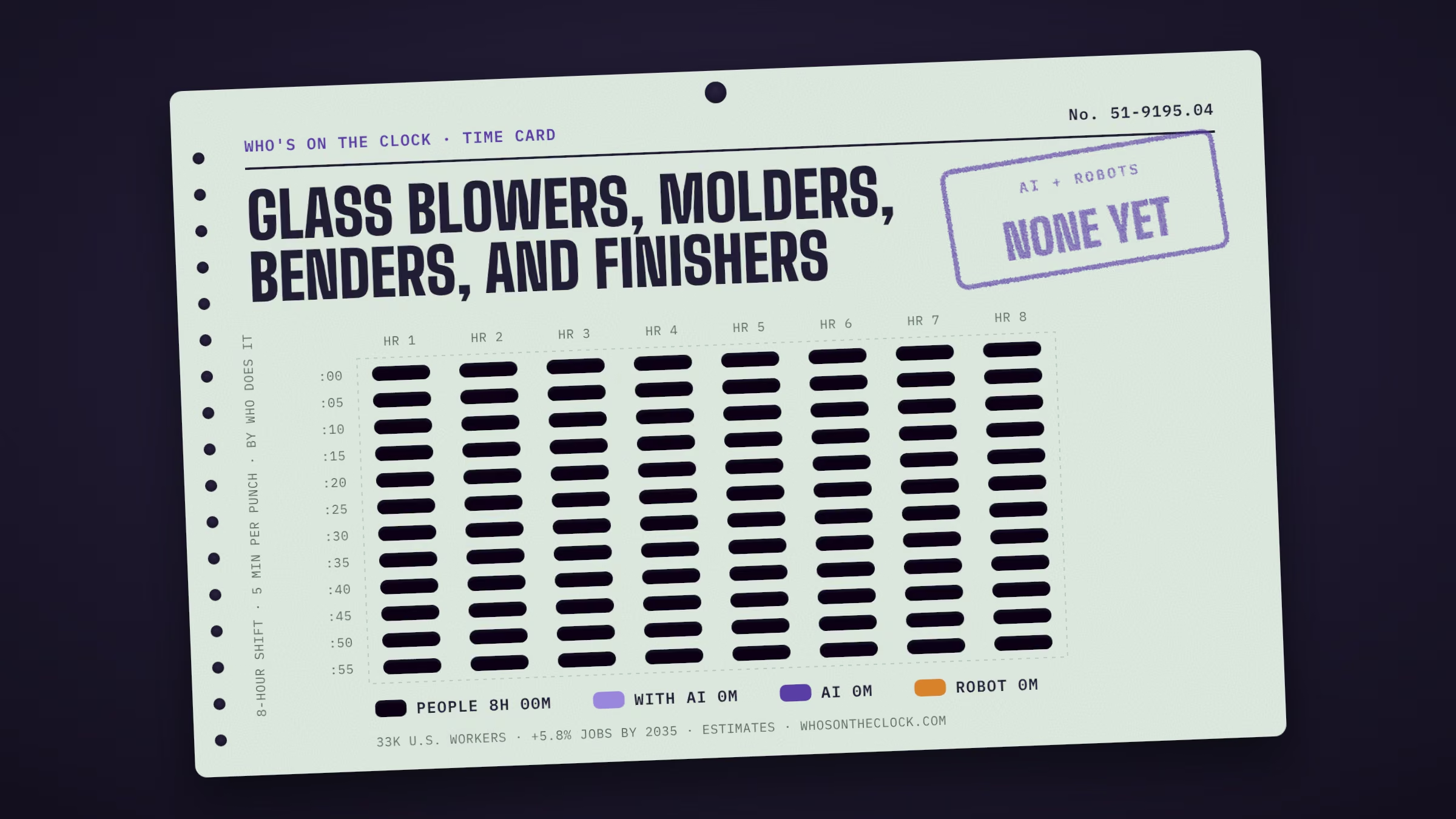
Shape molten glass according to patterns.
Time card
Untick tasks you don't do, or set your own times.
| Mine | Task, by time spent | Human | With AI | AI | Robot |
|---|---|---|---|---|---|
Heat glass to pliable stage, using gas flames or ovens and rotating glass to heat it uniformly.1h 11m a shift · Robots only in factory cellsWhy this label?Robots have done this only in factory setups built around the machine, so it stays Human for glass blowers, molders, benders, and finishers. How labels work | |||||
Place glass into dies or molds of presses and control presses to form products, such as glassware components or optical blanks.58m a shift · Robots only in factory cellsWhy this label?Robots have done this only in factory setups built around the machine, so it stays Human for glass blowers, molders, benders, and finishers. How labels work | |||||
Blow tubing into specified shapes to prevent glass from collapsing, using compressed air or own breath, or blow and rotate gathers in molds or on boards to obtain final shapes.58m a shift · Robots only in factory cellsWhy this label?Robots have done this only in factory setups built around the machine, so it stays Human for glass blowers, molders, benders, and finishers. How labels work | |||||
Shape, bend, or join sections of glass, using paddles, pressing and flattening hand tools, or cork.58m a shift · Robots only in factory cellsWhy this label?Robots have done this only in factory setups built around the machine, so it stays Human for glass blowers, molders, benders, and finishers. How labels work | |||||
Design and create glass objects, using blowpipes and artisans' hand tools and equipment.39m a shift · No AI or robot evidence foundWhy this label?This is physical work, and no robot has been shown doing it yet. How labels work | |||||
Operate and maintain finishing machines to grind, drill, sand, bevel, decorate, wash, or polish glass or glass products.39m a shift · Robots only in factory cellsWhy this label?Robots have done this only in factory setups built around the machine, so it stays Human for glass blowers, molders, benders, and finishers. How labels work | |||||
Inspect, weigh, and measure products to verify conformance to specifications, using instruments such as micrometers, calipers, magnifiers, or rulers.32m a shift · Robots only in factory cellsWhy this label?Robots have done this only in factory setups built around the machine, so it stays Human for glass blowers, molders, benders, and finishers. How labels work | |||||
Set up and adjust machine press stroke lengths and pressures and regulate oven temperatures, according to glass types to be processed.26m a shift · Robots only in factory cellsWhy this label?Robots have done this only in factory setups built around the machine, so it stays Human for glass blowers, molders, benders, and finishers. How labels work | |||||
Record manufacturing information, such as quantities, sizes, or types of goods produced.19m a shift · No AI or robot evidence foundWhy this label?No AI use or robot deployment showed up for this task in our data. That isn't proof it's safe; it may just be rare in the data. How labels work | |||||
Spray or swab molds with oil solutions to prevent adhesion of glass.19m a shift · Robots only in factory cellsWhy this label?Robots have done this only in factory setups built around the machine, so it stays Human for glass blowers, molders, benders, and finishers. How labels work | |||||
Cut lengths of tubing to specified sizes, using files or cutting wheels.19m a shift · Robots only in factory cellsWhy this label?Robots have done this only in factory setups built around the machine, so it stays Human for glass blowers, molders, benders, and finishers. How labels work | |||||
Determine types and quantities of glass required to fabricate products.13m a shift · No AI or robot evidence foundWhy this label?No AI use or robot deployment showed up for this task in our data. That isn't proof it's safe; it may just be rare in the data. How labels work | |||||
Repair broken scrolls by replacing them with new sections of tubing.6m a shift · No AI or robot evidence foundWhy this label?This is physical work, and no robot has been shown doing it yet. How labels work | |||||
Develop sketches of glass products into blueprint specifications, applying knowledge of glass technology and glass blowing.6m a shift · No AI or robot evidence foundWhy this label?No AI use or robot deployment showed up for this task in our data. That isn't proof it's safe; it may just be rare in the data. How labels work | |||||
Superimpose bent tubing on asbestos patterns to ensure accuracy.6m a shift · Robots only in factory cellsWhy this label?Robots have done this only in factory setups built around the machine, so it stays Human for glass blowers, molders, benders, and finishers. How labels work | |||||
Place rubber hoses on ends of tubing and charge tubing with gas.6m a shift · Robots only in factory cellsWhy this label?Robots have done this only in factory setups built around the machine, so it stays Human for glass blowers, molders, benders, and finishers. How labels work |