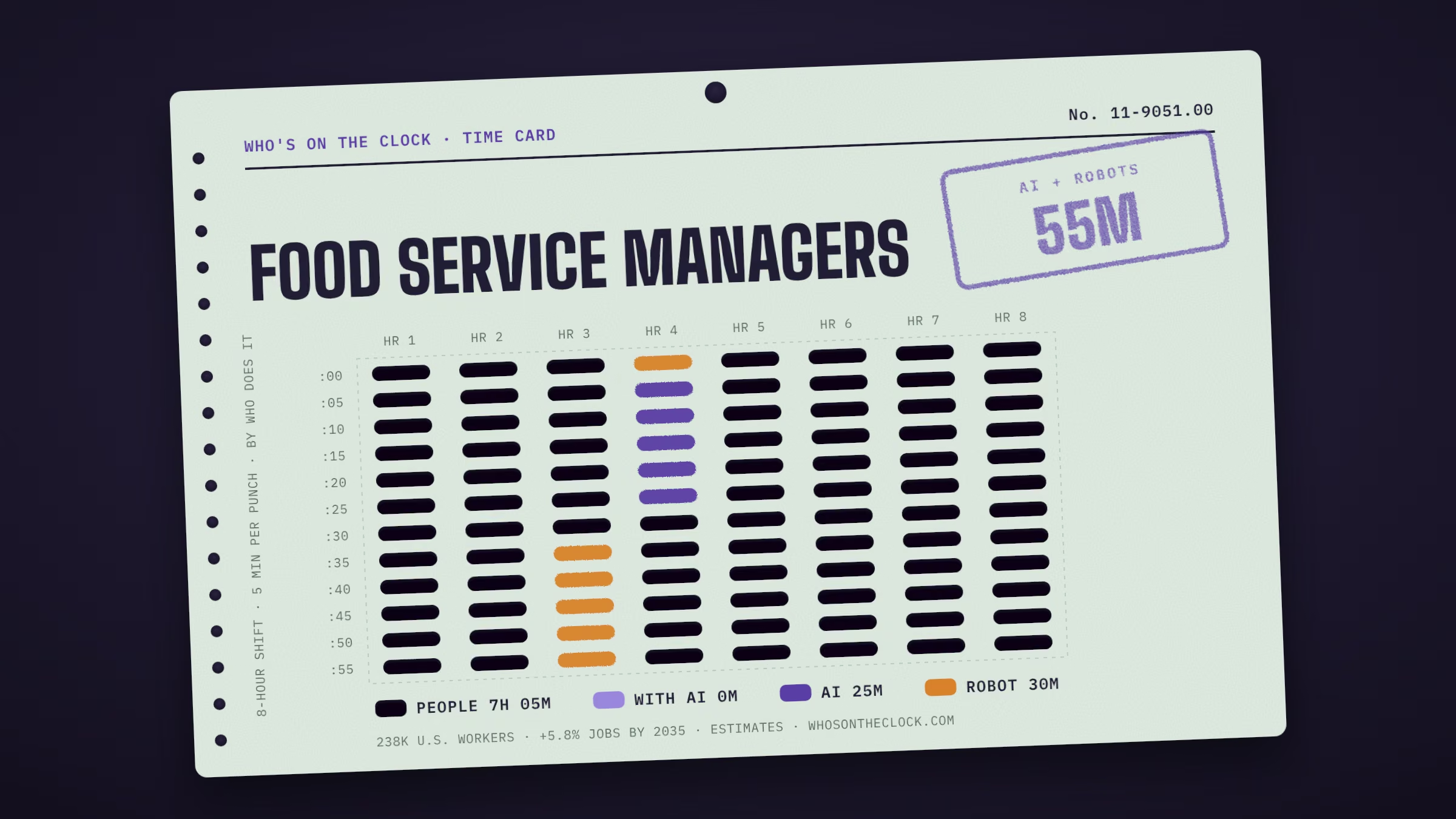
Plan, direct, or coordinate activities of an organization or department that serves food and beverages.
Time card
Untick tasks you don't do, or set your own times.
| Mine | Task, by time spent | Human | With AI | AI | Robot |
|---|---|---|---|---|---|
Perform some food preparation or service tasks, such as cooking, clearing tables, and serving food and drinks when necessary.49m a shift · Robots only in factory cellsWhy this label?Robots have done this only in factory setups built around the machine, so it stays Human for food service managers. How labels work | |||||
Monitor food preparation methods, portion sizes, and garnishing and presentation of food to ensure that food is prepared and presented in an acceptable manner.49m a shift · No AI or robot evidence foundWhy this label?No AI use or robot deployment showed up for this task in our data. That isn't proof it's safe; it may just be rare in the data. How labels work | |||||
Coordinate assignments of cooking personnel to ensure economical use of food and timely preparation.30m a shift · No AI or robot evidence foundWhy this label?No AI use or robot deployment showed up for this task in our data. That isn't proof it's safe; it may just be rare in the data. How labels work | |||||
Organize and direct worker training programs, resolve personnel problems, hire new staff, and evaluate employee performance in dining and lodging facilities.30m a shift · No AI or robot evidence foundWhy this label?No AI use or robot deployment showed up for this task in our data. That isn't proof it's safe; it may just be rare in the data. How labels work | |||||
Greet guests, escort them to their seats, and present them with menus and wine lists.30m a shift · Robots deployed · e.g. Servi Plus ('Jane')Why this label?Marked Robot because Servi Plus ('Jane') (in real use) has done this task in a real workplace. It shows a robot can do it somewhere, not that most food service managers work alongside one. How labels work | |||||
Investigate and resolve complaints regarding food quality, service, or accommodations.25m a shift · Observed in AI useWhy this label?Marked AI because this task shows up regularly in real AI conversations (Anthropic Economic Index, 2025 usage), and in most of them AI does the task on its own rather than helping a person. Many workplaces may not use AI for it at all. How labels work | |||||
Maintain food and equipment inventories, and keep inventory records.25m a shift · Robots only in factory cellsWhy this label?Robots have done this only in factory setups built around the machine, so it stays Human for food service managers. How labels work | |||||
Monitor budgets and payroll records, and review financial transactions to ensure that expenditures are authorized and budgeted.25m a shift · No AI or robot evidence foundWhy this label?No AI use or robot deployment showed up for this task in our data. That isn't proof it's safe; it may just be rare in the data. How labels work | |||||
Count money and make bank deposits.20m a shift · Robots only in factory cellsWhy this label?Robots have done this only in factory setups built around the machine, so it stays Human for food service managers. How labels work | |||||
Schedule staff hours and assign duties.20m a shift · No AI or robot evidence foundWhy this label?No AI use or robot deployment showed up for this task in our data. That isn't proof it's safe; it may just be rare in the data. How labels work | |||||
Schedule and receive food and beverage deliveries, checking delivery contents to verify product quality and quantity.20m a shift · Robots only in factory cellsWhy this label?Robots have done this only in factory setups built around the machine, so it stays Human for food service managers. How labels work | |||||
Monitor compliance with health and fire regulations regarding food preparation and serving, and building maintenance in lodging and dining facilities.20m a shift · No AI or robot evidence foundWhy this label?This is physical work, and no robot has been shown doing it yet. How labels work | |||||
Order and purchase equipment and supplies.15m a shift · No AI or robot evidence foundWhy this label?No AI use or robot deployment showed up for this task in our data. That isn't proof it's safe; it may just be rare in the data. How labels work | |||||
Review work procedures and operational problems to determine ways to improve service, performance, or safety.15m a shift · No AI or robot evidence foundWhy this label?No AI use or robot deployment showed up for this task in our data. That isn't proof it's safe; it may just be rare in the data. How labels work | |||||
Establish standards for personnel performance and customer service.10m a shift · No AI or robot evidence foundWhy this label?No AI use or robot deployment showed up for this task in our data. That isn't proof it's safe; it may just be rare in the data. How labels work | |||||
Keep records required by government agencies regarding sanitation or food subsidies.10m a shift · No AI or robot evidence foundWhy this label?No AI use or robot deployment showed up for this task in our data. That isn't proof it's safe; it may just be rare in the data. How labels work | |||||
Assess staffing needs and recruit staff, using methods such as newspaper advertisements or attendance at job fairs.10m a shift · No AI or robot evidence foundWhy this label?No AI use or robot deployment showed up for this task in our data. That isn't proof it's safe; it may just be rare in the data. How labels work | |||||
Estimate food, liquor, wine, and other beverage consumption to anticipate amounts to be purchased or requisitioned.10m a shift · No AI or robot evidence foundWhy this label?No AI use or robot deployment showed up for this task in our data. That isn't proof it's safe; it may just be rare in the data. How labels work | |||||
Arrange for equipment maintenance and repairs, and coordinate a variety of services, such as waste removal and pest control.10m a shift · No AI or robot evidence foundWhy this label?No AI use or robot deployment showed up for this task in our data. That isn't proof it's safe; it may just be rare in the data. How labels work | |||||
Monitor employee and patron activities to ensure liquor regulations are obeyed.10m a shift · No AI or robot evidence foundWhy this label?No AI use or robot deployment showed up for this task in our data. That isn't proof it's safe; it may just be rare in the data. How labels work | |||||
Record the number, type, and cost of items sold to determine which items may be unpopular or less profitable.10m a shift · No AI or robot evidence foundWhy this label?No AI use or robot deployment showed up for this task in our data. That isn't proof it's safe; it may just be rare in the data. How labels work | |||||
Plan menus and food utilization, based on anticipated number of guests, nutritional value, palatability, popularity, and costs.10m a shift · No AI or robot evidence foundWhy this label?No AI use or robot deployment showed up for this task in our data. That isn't proof it's safe; it may just be rare in the data. How labels work | |||||
Review menus and analyze recipes to determine labor and overhead costs, and assign prices to menu items.10m a shift · No AI or robot evidence foundWhy this label?No AI use or robot deployment showed up for this task in our data. That isn't proof it's safe; it may just be rare in the data. How labels work | |||||
Schedule use of facilities or catering services for events such as banquets or receptions, and negotiate details of arrangements with clients.10m a shift · No AI or robot evidence foundWhy this label?No AI use or robot deployment showed up for this task in our data. That isn't proof it's safe; it may just be rare in the data. How labels work | |||||
Test cooked food by tasting and smelling it to ensure palatability and flavor conformity.5m a shift · Robots only in factory cellsWhy this label?Robots have done this only in factory setups built around the machine, so it stays Human for food service managers. How labels work | |||||
Establish and enforce nutritional standards for dining establishments, based on accepted industry standards.5m a shift · No AI or robot evidence foundWhy this label?No AI use or robot deployment showed up for this task in our data. That isn't proof it's safe; it may just be rare in the data. How labels work | |||||
Take dining reservations.time not estimated · No AI or robot evidence foundWhy this label?No AI use or robot deployment showed up for this task in our data. That isn't proof it's safe; it may just be rare in the data. How labels work | |||||
Create specialty dishes and develop recipes to be used in dining facilities.time not estimated · No AI or robot evidence foundWhy this label?No AI use or robot deployment showed up for this task in our data. That isn't proof it's safe; it may just be rare in the data. How labels work |