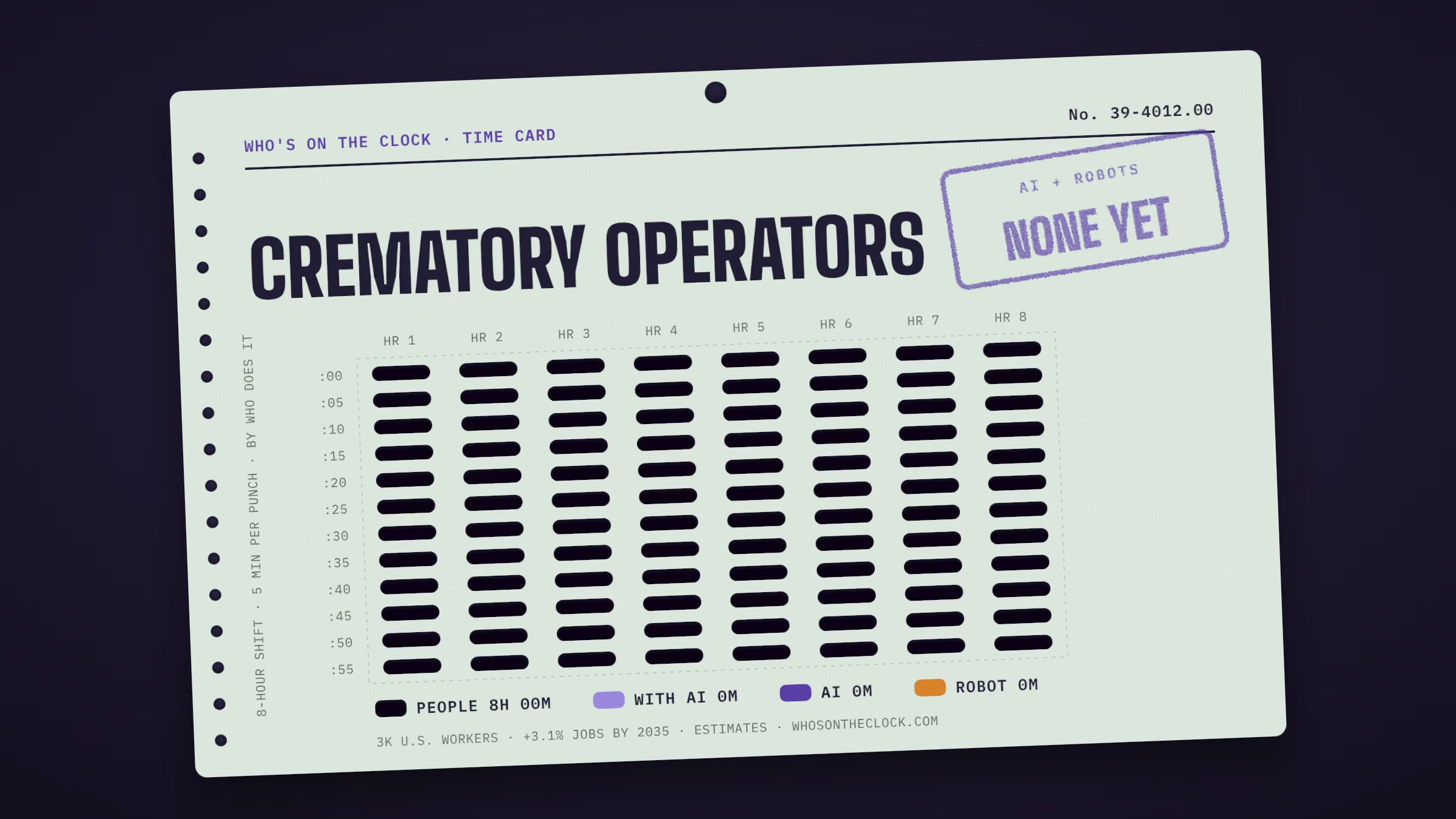
Operate crematory equipment to reduce human or animal remains to bone fragments in accordance with state and local regulations. Duties may include preparing the body for cremation and performing general maintenance on crematory equipment. May use traditional flame-based cremation, calcination, or alkaline hydrolysis.
Time card
Untick tasks you don't do, or set your own times.
| Mine | Task, by time spent | Human | With AI | AI | Robot |
|---|---|---|---|---|---|
Place corpses into crematory machines to reduce remains to bone fragments using flame, heat, or alkaline hydrolysis.1h 45m a shift · Robots only in factory cellsWhy this label?Robots have done this only in factory setups built around the machine, so it stays Human for crematory operators. How labels work | |||||
Clean the crematorium, including tables, floors, and equipment.53m a shift · Robots only in factory cellsWhy this label?Robots have done this only in factory setups built around the machine, so it stays Human for crematory operators. How labels work | |||||
Pick up and handle human or pet remains in a respectful manner.53m a shift · Robots only in factory cellsWhy this label?Robots have done this only in factory setups built around the machine, so it stays Human for crematory operators. How labels work | |||||
Sweep or vacuum the cremation chamber to retrieve remains for storage in an urn or other container.53m a shift · No AI or robot evidence foundWhy this label?This is physical work, and no robot has been shown doing it yet. How labels work | |||||
Transport the deceased to a funeral home or crematory using a van, hearse, or other vehicle.53m a shift · Robots only in factory cellsWhy this label?Robots have done this only in factory setups built around the machine, so it stays Human for crematory operators. How labels work | |||||
Pulverize remaining bone fragments into smaller pieces, using specialized equipment, such as a cremulator or grinder.39m a shift · Robots only in factory cellsWhy this label?Robots have done this only in factory setups built around the machine, so it stays Human for crematory operators. How labels work | |||||
Embalm, dress, or otherwise prepare the deceased for viewing.26m a shift · No AI or robot evidence foundWhy this label?This is physical work, and no robot has been shown doing it yet. How labels work | |||||
Explain the cremation process to family or friends of the deceased.26m a shift · No AI or robot evidence foundWhy this label?No AI use or robot deployment showed up for this task in our data. That isn't proof it's safe; it may just be rare in the data. How labels work | |||||
Read documentation to confirm the identity of the deceased.26m a shift · No AI or robot evidence foundWhy this label?No AI use or robot deployment showed up for this task in our data. That isn't proof it's safe; it may just be rare in the data. How labels work | |||||
Offer counsel and comfort to bereaved families or friends.20m a shift · No AI or robot evidence foundWhy this label?No AI use or robot deployment showed up for this task in our data. That isn't proof it's safe; it may just be rare in the data. How labels work | |||||
Document divided remains to ensure parts are not misplaced.13m a shift · No AI or robot evidence foundWhy this label?No AI use or robot deployment showed up for this task in our data. That isn't proof it's safe; it may just be rare in the data. How labels work | |||||
Remove jewelry, watches, or other personal items from the deceased prior to cremation.13m a shift · No AI or robot evidence foundWhy this label?This is physical work, and no robot has been shown doing it yet. How labels work |