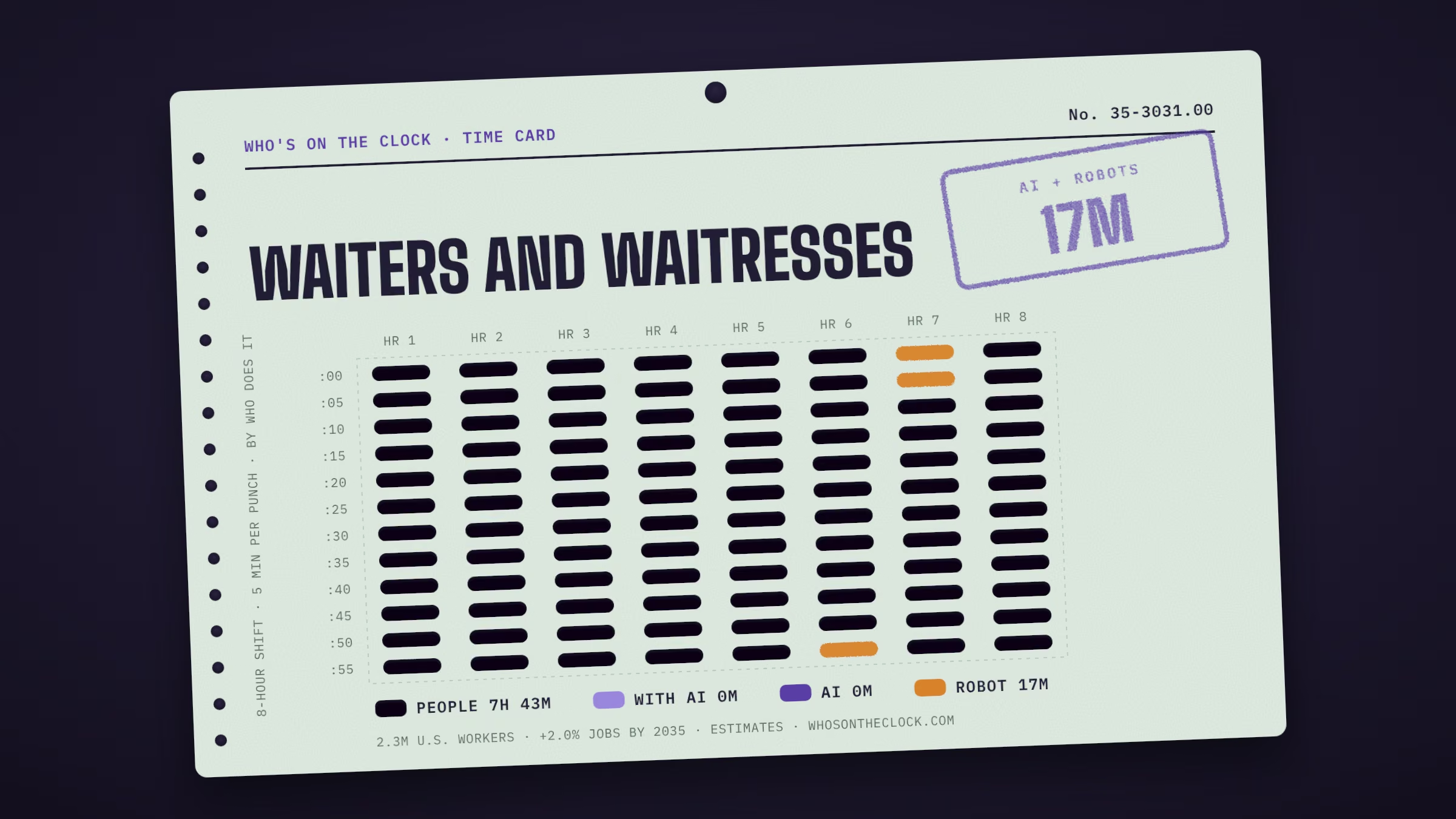
Take orders and serve food and beverages to patrons at tables in dining establishment.
Time card
Untick tasks you don't do, or set your own times.
| Mine | Task, by time spent | Human | With AI | AI | Robot |
|---|---|---|---|---|---|
Serve food or beverages to patrons, and prepare or serve specialty dishes at tables as required.1h 1m a shift · Robots only in factory cellsWhy this label?Robots have done this only in factory setups built around the machine, so it stays Human for waiters and waitresses. How labels work | |||||
Take orders from patrons for food or beverages.44m a shift · No AI or robot evidence foundWhy this label?No AI use or robot deployment showed up for this task in our data. That isn't proof it's safe; it may just be rare in the data. How labels work | |||||
Remove dishes and glasses from tables or counters, and take them to kitchen for cleaning.44m a shift · Robots only in factory cellsWhy this label?Robots have done this only in factory setups built around the machine, so it stays Human for waiters and waitresses. How labels work | |||||
Check with customers to ensure that they are enjoying their meals, and take action to correct any problems.35m a shift · No AI or robot evidence foundWhy this label?No AI use or robot deployment showed up for this task in our data. That isn't proof it's safe; it may just be rare in the data. How labels work | |||||
Collect payments from customers.26m a shift · Robots only in factory cellsWhy this label?Robots have done this only in factory setups built around the machine, so it stays Human for waiters and waitresses. How labels work | |||||
Write patrons' food orders on order slips, memorize orders, or enter orders into computers for transmittal to kitchen staff.26m a shift · No AI or robot evidence foundWhy this label?No AI use or robot deployment showed up for this task in our data. That isn't proof it's safe; it may just be rare in the data. How labels work | |||||
Clean tables or counters after patrons have finished dining.26m a shift · Robots only in factory cellsWhy this label?Robots have done this only in factory setups built around the machine, so it stays Human for waiters and waitresses. How labels work | |||||
Present menus to patrons and answer questions about menu items, making recommendations upon request.26m a shift · No AI or robot evidence foundWhy this label?No AI use or robot deployment showed up for this task in our data. That isn't proof it's safe; it may just be rare in the data. How labels work | |||||
Prepare hot, cold, and mixed drinks for patrons, and chill bottles of wine.26m a shift · Robots only in factory cellsWhy this label?Robots have done this only in factory setups built around the machine, so it stays Human for waiters and waitresses. How labels work | |||||
Perform cleaning duties, such as sweeping and mopping floors, vacuuming carpet, tidying up server station, taking out trash, or checking and cleaning bathroom.17m a shift · Robots only in factory cellsWhy this label?Robots have done this only in factory setups built around the machine, so it stays Human for waiters and waitresses. How labels work | |||||
Prepare tables for meals, including setting up items such as linens, silverware, and glassware.17m a shift · Robots only in factory cellsWhy this label?Robots have done this only in factory setups built around the machine, so it stays Human for waiters and waitresses. How labels work | |||||
Roll silverware, set up food stations, or set up dining areas to prepare for the next shift or for large parties.17m a shift · No AI or robot evidence foundWhy this label?This is physical work, and no robot has been shown doing it yet. How labels work | |||||
Assist host or hostess by answering phones to take reservations or to-go orders, and by greeting, seating, and thanking guests.17m a shift · Robots deployed · e.g. Servi Plus ('Jane')Why this label?Marked Robot because Servi Plus ('Jane') (in real use) has done this task in a real workplace. It shows a robot can do it somewhere, not that most waiters and waitresses work alongside one. How labels work | |||||
Check patrons' identification to ensure that they meet minimum age requirements for consumption of alcoholic beverages.9m a shift · No AI or robot evidence foundWhy this label?No AI use or robot deployment showed up for this task in our data. That isn't proof it's safe; it may just be rare in the data. How labels work | |||||
Prepare checks that itemize and total meal costs and sales taxes.9m a shift · No AI or robot evidence foundWhy this label?No AI use or robot deployment showed up for this task in our data. That isn't proof it's safe; it may just be rare in the data. How labels work | |||||
Stock service areas with supplies such as coffee, food, tableware, and linens.9m a shift · Robots only in factory cellsWhy this label?Robots have done this only in factory setups built around the machine, so it stays Human for waiters and waitresses. How labels work | |||||
Inform customers of daily specials.9m a shift · No AI or robot evidence foundWhy this label?No AI use or robot deployment showed up for this task in our data. That isn't proof it's safe; it may just be rare in the data. How labels work | |||||
Explain how various menu items are prepared, describing ingredients and cooking methods.9m a shift · No AI or robot evidence foundWhy this label?No AI use or robot deployment showed up for this task in our data. That isn't proof it's safe; it may just be rare in the data. How labels work | |||||
Fill salt, pepper, sugar, cream, condiment, and napkin containers.9m a shift · Robots only in factory cellsWhy this label?Robots have done this only in factory setups built around the machine, so it stays Human for waiters and waitresses. How labels work | |||||
Perform food preparation duties, such as preparing salads, appetizers, and cold dishes, portioning desserts, and brewing coffee.9m a shift · Robots only in factory cellsWhy this label?Robots have done this only in factory setups built around the machine, so it stays Human for waiters and waitresses. How labels work | |||||
Escort customers to their tables.9m a shift · Robots only in factory cellsWhy this label?Robots have done this only in factory setups built around the machine, so it stays Human for waiters and waitresses. How labels work | |||||
Provide guests with information about local areas, including directions.9m a shift · No AI or robot evidence foundWhy this label?No AI use or robot deployment showed up for this task in our data. That isn't proof it's safe; it may just be rare in the data. How labels work | |||||
Bring wine selections to tables with appropriate glasses, and pour the wines for customers.9m a shift · Robots only in factory cellsWhy this label?Robots have done this only in factory setups built around the machine, so it stays Human for waiters and waitresses. How labels work | |||||
Describe and recommend wines to customers.9m a shift · No AI or robot evidence foundWhy this label?No AI use or robot deployment showed up for this task in our data. That isn't proof it's safe; it may just be rare in the data. How labels work | |||||
Garnish and decorate dishes in preparation for serving.time not estimated · Robots only in factory cellsWhy this label?Robots have done this only in factory setups built around the machine, so it stays Human for waiters and waitresses. How labels work |