Home / Tasks / Update technical knowledge
In 2 of the 16 jobs that do this, AI or robots already show up on it, most often as help from AI. In the other 14, there's no evidence yet. Jobs spend a median of 17m of an 8-hour shift on it, and about 2.2 million U.S. workers hold these jobs.
Every job that does this
Each job words the task its own way. Minutes are that job's estimate for a typical shift; the label is the evidence for that job's version.
| Job and its version of the task | Per shift | Evidence |
|---|---|---|
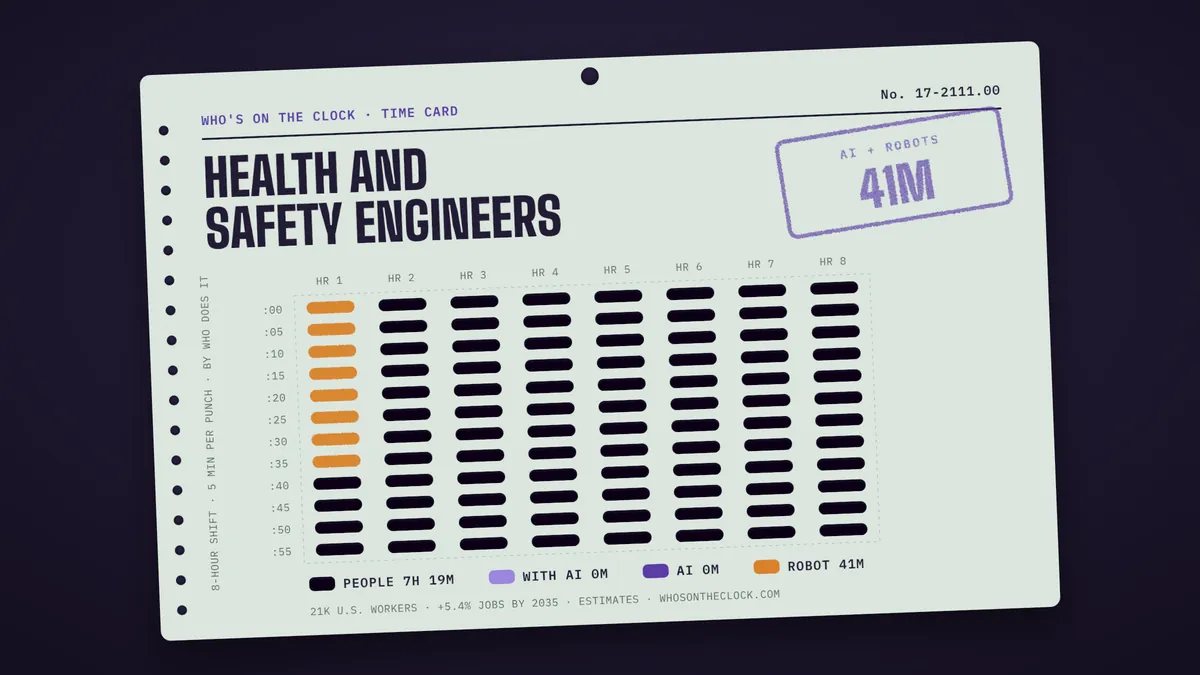
| Health and Safety EngineersMaintain and apply knowledge of current policies, regulations, and industrial processes. | 29m | No evidence yet |
| Computer Hardware EngineersUpdate knowledge and skills to keep up with rapid advancements in computer technology. | 24m | No evidence yet |
| Fuel Cell EngineersRead current literature, attend meetings or conferences, or talk with colleagues to stay abreast of new technology or competitive products. | 24m | No evidence yet |
| Nuclear EngineersKeep abreast of developments and changes in the nuclear field by reading technical journals or by independent study and research. | 18m | No evidence yet |
| Data ScientistsRead scientific articles, conference papers, or other sources of research to identify emerging analytic trends and technologies. | 18m | No evidence yet |
| Bioengineers and Biomedical EngineersRead current scientific or trade literature to stay abreast of scientific, industrial, or technological advances. | 18m | Often handed to AI |
| Geodetic SurveyorsRead current literature, talk with colleagues, continue education, or participate in professional organizations or conferences to keep abreast of developments in technology, equipment, or systems. | 17m | No evidence yet |
| Photonics EngineersRead current literature, talk with colleagues, continue education, or participate in professional organizations or conferences to keep abreast of developments in the field. | 17m | With AI |
| Radio Frequency Identification Device SpecialistsRead current literature, attend meetings or conferences, or talk with colleagues to stay abreast of industry research about new technologies. | 12m | No evidence yet |
| Electrical and Electronic Engineering Technologists and TechniciansParticipate in training or continuing education activities to stay abreast of engineering or industry advances. | 12m | No evidence yet |
| Fire-Prevention and Protection EngineersAttend workshops, seminars, or conferences to present or obtain information regarding fire prevention and protection. | 12m | No evidence yet |
| Landscape ArchitectsResearch latest products, technology, or design trends to stay current in the field. | 12m | No evidence yet |
| Validation EngineersParticipate in internal or external training programs to maintain knowledge of validation principles, industry trends, or novel technologies. | 12m | No evidence yet |
| Automotive EngineersRead current literature, attend meetings or conferences, or talk with colleagues to stay abreast of new automotive technology or competitive products. | 11m | No evidence yet |
| Manufacturing EngineersRead current literature, talk with colleagues, participate in educational programs, attend meetings or workshops, or participate in professional organizations or conferences to keep abreast of developments in the manufacturing field. | 11m | No evidence yet |
| Calibration Technologists and TechniciansAttend conferences, workshops, or other training sessions to learn about new tools or methods. | 6m | No evidence yet |
How to read this
This task type comes from O*NET's detailed work activities, which link similar tasks across jobs. A label applies to one job's version of the task: AI use comes from real AI conversations (Anthropic Economic Index) and robot evidence from deployments in real workplaces. "No evidence yet" may just mean the task is rare in the data. How we keep time.
See all 250 shared tasks, or find any job on the big clock.