Home / Tasks / Evaluate patient functioning, capabilities, or health
In 1 of the 17 jobs that do this, AI or robots already show up on it, most often as work people hand to AI. In the other 16, there's no evidence yet. Jobs spend a median of 20m of an 8-hour shift on it, and about 15.5 million U.S. workers hold these jobs.
Every job that does this
Each job words the task its own way. Minutes are that job's estimate for a typical shift; the label is the evidence for that job's version.
| Job and its version of the task | Per shift | Evidence |
|---|---|---|
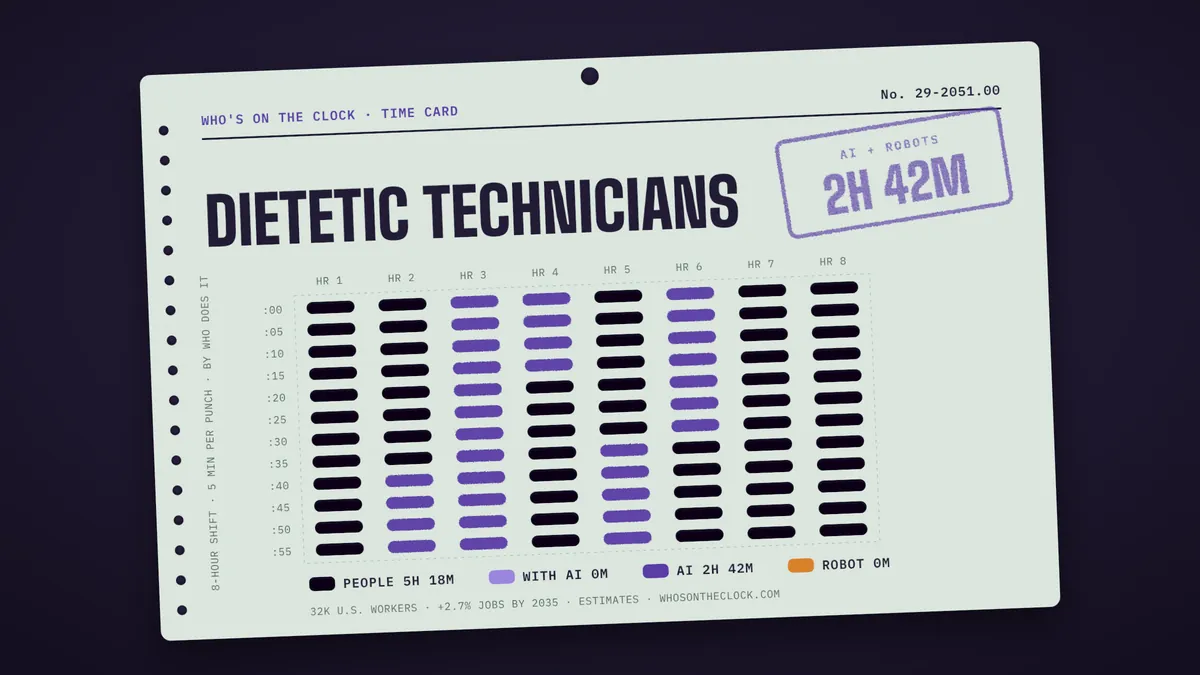
| Dietetic TechniciansConduct nutritional assessments of individuals, including obtaining and evaluating individuals' dietary histories, to plan nutritional programs. | 1h 40m | Often handed to AI |
| Advanced Practice Psychiatric NursesAssess patients' mental and physical status, based on the presenting symptoms and complaints. | 1h 7m | No evidence yet |
| Emergency Medicine PhysiciansConduct primary patient assessments that include information from prior medical care. | 1h 4m | No evidence yet |
| Occupational TherapistsTest and evaluate patients' physical and mental abilities and analyze medical data to determine realistic rehabilitation goals for patients. | 1h 2m | No evidence yet |
| MidwivesConduct ongoing prenatal health assessments, tracking changes in physical and emotional health. | 49m | No evidence yet |
| Low Vision Therapists, Orientation and Mobility Specialists, and Vision Rehabilitation TherapistsAssess clients' functioning in areas such as vision, orientation and mobility skills, social and emotional issues, cognition, physical abilities, and personal goals. | 32m | No evidence yet |
| Exercise PhysiologistsAssess physical performance requirements to aid in the development of individualized recovery or rehabilitation exercise programs. | 20m | No evidence yet |
| Music TherapistsAssess client functioning levels, strengths, and areas of need in terms of perceptual, sensory, affective, communicative, musical, physical, cognitive, social, spiritual, or other abilities. | 20m | No evidence yet |
| Genetic CounselorsAssess patients' psychological or emotional needs, such as those relating to stress, fear of test results, financial issues, and marital conflicts to make referral recommendations or assist patients in managing test outcomes. | 20m | No evidence yet |
| Clinical Nurse SpecialistsMonitor or evaluate medical conditions of patients in collaboration with other health care professionals. | 18m | No evidence yet |
| Athletic TrainersEvaluate athletes' readiness to play and provide participation clearances when necessary and warranted. | 15m | No evidence yet |
| Clinical and Counseling PsychologistsConduct assessments of patients' risk for harm to self or others. | 13m | No evidence yet |
| Acute Care NursesAssess the impact of illnesses or injuries on patients' health, function, growth, development, nutrition, sleep, rest, quality of life, or family, social and educational relationships. | 12m | No evidence yet |
| Mental Health CounselorsAssess patients for risk of suicide attempts. | 12m | No evidence yet |
| Critical Care NursesAssess patients' psychosocial status and needs, including areas such as sleep patterns, anxiety, grief, anger, and support systems. | 7m | No evidence yet |
| Postsecondary Psychology TeachersProvide clinical services to clients, such as assessing psychological problems and conducting psychotherapy. | 5m | No evidence yet |
| Sports Medicine PhysiciansObserve and evaluate athletes' mental well-being. | 5m | No evidence yet |
How to read this
This task type comes from O*NET's detailed work activities, which link similar tasks across jobs. A label applies to one job's version of the task: AI use comes from real AI conversations (Anthropic Economic Index) and robot evidence from deployments in real workplaces. "No evidence yet" may just mean the task is rare in the data. How we keep time.
See all 250 shared tasks, or find any job on the big clock.