Home / Tasks / Order medical diagnostic or clinical tests
None of the 21 jobs that do this have AI or robot evidence for it yet. Jobs spend a median of 29m of an 8-hour shift on it, and about 8.9 million U.S. workers hold these jobs.
Every job that does this
Each job words the task its own way. Minutes are that job's estimate for a typical shift; the label is the evidence for that job's version.
| Job and its version of the task | Per shift | Evidence |
|---|---|---|
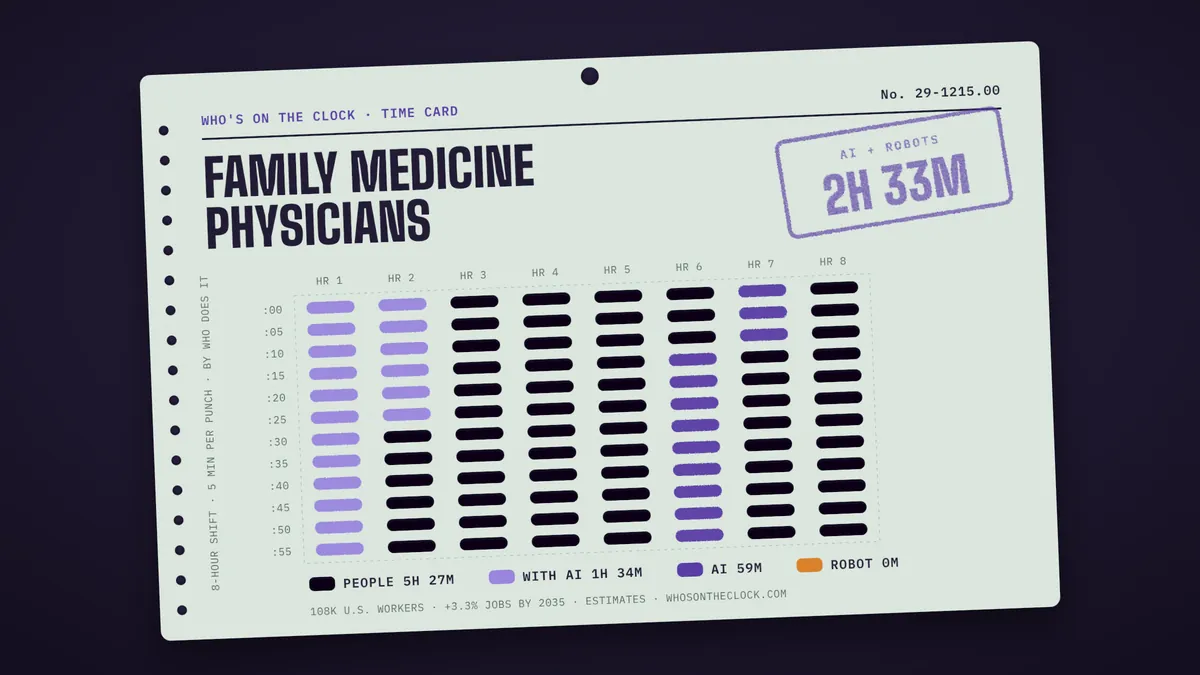
| Family Medicine PhysiciansOrder, perform, and interpret tests and analyze records, reports, and examination information to diagnose patients' condition. | 1h 19m | No evidence yet |
| HospitalistsOrder or interpret the results of tests such as laboratory tests and radiographs (x-rays). | 52m | No evidence yet |
| General PediatriciansExamine patients or order, perform, and interpret diagnostic tests to obtain information on medical condition and determine diagnosis. | 51m | No evidence yet |
| Emergency Medicine PhysiciansSelect, request, perform, or interpret diagnostic procedures, such as laboratory tests, electrocardiograms, emergency ultrasounds, and radiographs. | 40m | No evidence yet |
| OphthalmologistsPerform, order, or interpret the results of diagnostic or clinical tests. | 39m | No evidence yet |
| UrologistsOrder and interpret the results of diagnostic tests, such as prostate specific antigen (PSA) screening, to detect prostate cancer. | 36m | No evidence yet |
| Sports Medicine PhysiciansOrder and interpret the results of laboratory tests and diagnostic imaging procedures. | 34m | No evidence yet |
| Genetic CounselorsDetermine or coordinate treatment plans by requesting laboratory services, reviewing genetics or counseling literature, and considering histories or diagnostic data. | 33m | No evidence yet |
| Orthopedic SurgeonsOrder and interpret the results of laboratory tests and diagnostic imaging procedures. | 31m | No evidence yet |
| Allergists and ImmunologistsOrder or perform diagnostic tests such as skin pricks and intradermal, patch, or delayed hypersensitivity tests. | 30m | No evidence yet |
| Nurse PractitionersOrder, perform, or interpret the results of diagnostic tests, such as complete blood counts (CBCs), electrocardiograms (EKGs), and radiographs (x-rays). | 29m | No evidence yet |
| Physician AssistantsAdminister or order diagnostic tests, such as x-ray, electrocardiogram, and laboratory tests. | 24m | No evidence yet |
| Nurse MidwivesOrder and interpret diagnostic or laboratory tests. | 23m | No evidence yet |
| Acute Care NursesOrder, perform, or interpret the results of diagnostic tests and screening procedures based on assessment results, differential diagnoses, and knowledge about age, gender and health status of clients. | 19m | No evidence yet |
| CardiologistsOrder medical tests, such as echocardiograms, electrocardiograms, and angiograms. | 18m | No evidence yet |
| Registered NursesOrder, interpret, and evaluate diagnostic tests to identify and assess patient's condition. | 13m | No evidence yet |
| DermatologistsConduct or order diagnostic tests such as chest radiographs (x-rays), microbiologic tests, or endocrinologic tests. | 11m | No evidence yet |
| NeurologistsOrder or interpret results of laboratory analyses of patients' blood or cerebrospinal fluid. | 10m | No evidence yet |
| AnesthesiologistsOrder laboratory tests, x-rays, and other diagnostic procedures. | 9m | No evidence yet |
| Naturopathic PhysiciansOrder diagnostic imaging procedures such as radiographs (x-rays), ultrasounds, mammograms, and bone densitometry tests, or refer patients to other health professionals for these procedures. | 7m | No evidence yet |
| Exercise PhysiologistsOrder or recommend diagnostic procedures, such as stress tests, drug screenings, or urinary tests. | 7m | No evidence yet |
How to read this
This task type comes from O*NET's detailed work activities, which link similar tasks across jobs. A label applies to one job's version of the task: AI use comes from real AI conversations (Anthropic Economic Index) and robot evidence from deployments in real workplaces. "No evidence yet" may just mean the task is rare in the data. How we keep time.
See all 250 shared tasks, or find any job on the big clock.