Home / Tasks / Study blueprints or other instructions to determine equipment setup requirements
In 1 of the 23 jobs that do this, AI or robots already show up on it, most often as work people hand to AI. In the other 22, there's no evidence yet. Jobs spend a median of 18m of an 8-hour shift on it, and about 1.4 million U.S. workers hold these jobs.
Every job that does this
Each job words the task its own way. Minutes are that job's estimate for a typical shift; the label is the evidence for that job's version.
| Job and its version of the task | Per shift | Evidence |
|---|---|---|
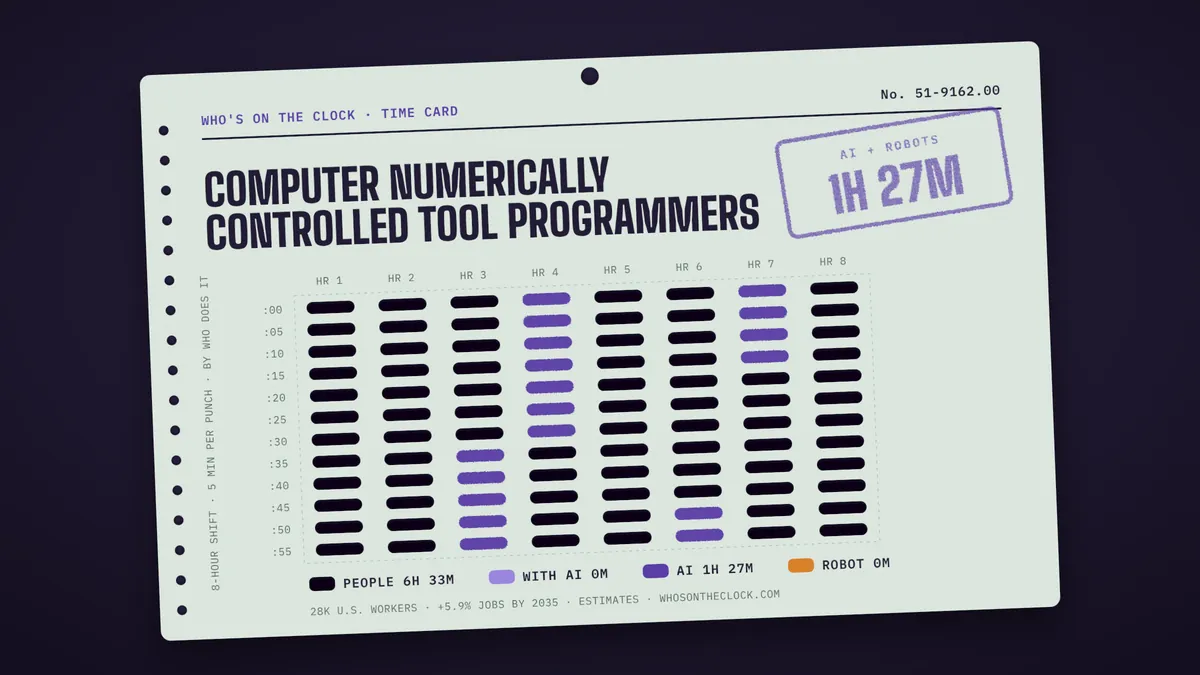
| Computer Numerically Controlled Tool ProgrammersAnalyze job orders, drawings, blueprints, specifications, printed circuit board pattern films, and design data to calculate dimensions, tool selection, machine speeds, and feed rates. | 52m | No evidence yet |
| Wood Model MakersRead blueprints, drawings, or written specifications, and consult with designers to determine sizes and shapes of patterns and required machine setups. | 38m | No evidence yet |
| First-Line Supervisors of Production and Operating WorkersRead and analyze charts, work orders, production schedules, and other records and reports to determine production requirements and to evaluate current production estimates and outputs. | 38m | No evidence yet |
| Wood PatternmakersRead blueprints, drawings, or written specifications to determine sizes and shapes of patterns and required machine setups. | 36m | No evidence yet |
| Drilling and Boring Machine Tool Setters, Operators, and Tenders, Metal and PlasticStudy machining instructions, job orders, or blueprints to determine dimensional or finish specifications, sequences of operations, setups, or tooling requirements. | 31m | No evidence yet |
| Adhesive Bonding Machine Operators and TendersRead work orders and communicate with coworkers to determine machine and equipment settings and adjustments and supply and product specifications. | 25m | No evidence yet |
| Tool Grinders, Filers, and SharpenersStudy blueprints or layouts of metal workpieces to determine grinding procedures, and to plan machine setups and operational sequences. | 24m | No evidence yet |
| Heat Treating Equipment Setters, Operators, and Tenders, Metal and PlasticRead production schedules and work orders to determine processing sequences, furnace temperatures, and heat cycle requirements for objects to be heat-treated. | 24m | No evidence yet |
| Forging Machine Setters, Operators, and Tenders, Metal and PlasticRead work orders or blueprints to determine specified tolerances and sequences of operations for machine setup. | 23m | No evidence yet |
| Rolling Machine Setters, Operators, and Tenders, Metal and PlasticRead rolling orders, blueprints, and mill schedules to determine setup specifications, work sequences, product dimensions, and installation procedures. | 23m | No evidence yet |
| Textile Cutting Machine Setters, Operators, and TendersStudy guides, samples, charts, and specification sheets or confer with supervisors or engineering staff to determine set-up requirements. | 19m | No evidence yet |
| Cutting and Slicing Machine Setters, Operators, and TendersReview work orders, blueprints, specifications, or job samples to determine components, settings, and adjustments for cutting and slicing machines. | 18m | Often handed to AI |
| Molding, Coremaking, and Casting Machine Setters, Operators, and Tenders, Metal and PlasticRead specifications, blueprints, and work orders to determine setups, temperatures, and time settings required to mold, form, or cast plastic materials, as well as to plan production sequences. | 18m | No evidence yet |
| Print Binding and Finishing WorkersRead work orders to determine instructions and specifications for machine set-up. | 18m | No evidence yet |
| Extruding, Forming, Pressing, and Compacting Machine Setters, Operators, and TendersReview work orders, specifications, or instructions to determine materials, ingredients, procedures, components, settings, and adjustments for extruding, forming, pressing, or compacting machines. | 18m | No evidence yet |
| Computer Numerically Controlled Tool OperatorsReview program specifications or blueprints to determine and set machine operations and sequencing, finished workpiece dimensions, or numerical control sequences. | 18m | No evidence yet |
| Biomass Plant TechniciansRead and interpret instruction manuals or technical drawings related to biomass-fueled power or biofuels production equipment or processes. | 12m | No evidence yet |
| Textile Bleaching and Dyeing Machine Operators and TendersStudy guides, charts, and specification sheets, and confer with supervisors to determine machine setup requirements. | 12m | No evidence yet |
| Textile Winding, Twisting, and Drawing Out Machine Setters, Operators, and TendersStudy guides, samples, charts, and specification sheets, or confer with supervisors or engineering staff to determine setup requirements. | 12m | No evidence yet |
| Plating Machine Setters, Operators, and Tenders, Metal and PlasticRead production schedules to determine setups of equipment and machines. | 12m | No evidence yet |
| Sawing Machine Setters, Operators, and Tenders, WoodExamine blueprints, drawings, work orders, or patterns to determine equipment set-up or selection details, procedures to be used, or dimensions of final products. | 12m | No evidence yet |
| Textile Knitting and Weaving Machine Setters, Operators, and TendersStudy guides, loom patterns, samples, charts, or specification sheets, or confer with supervisors or engineering staff to determine setup requirements. | 11m | No evidence yet |
| Petroleum Pump System Operators, Refinery Operators, and GaugersRead and analyze specifications, schedules, logs, test results, and laboratory recommendations to determine how to set equipment controls to produce the required qualities and quantities of products. | 11m | No evidence yet |
How to read this
This task type comes from O*NET's detailed work activities, which link similar tasks across jobs. A label applies to one job's version of the task: AI use comes from real AI conversations (Anthropic Economic Index) and robot evidence from deployments in real workplaces. "No evidence yet" may just mean the task is rare in the data. How we keep time.
See all 250 shared tasks, or find any job on the big clock.