Home / Tasks / Diagnose medical conditions
None of the 28 jobs that do this have AI or robot evidence for it yet. Jobs spend a median of 38m of an 8-hour shift on it, and about 16.4 million U.S. workers hold these jobs.
Every job that does this
Each job words the task its own way. Minutes are that job's estimate for a typical shift; the label is the evidence for that job's version.
| Job and its version of the task | Per shift | Evidence |
|---|---|---|
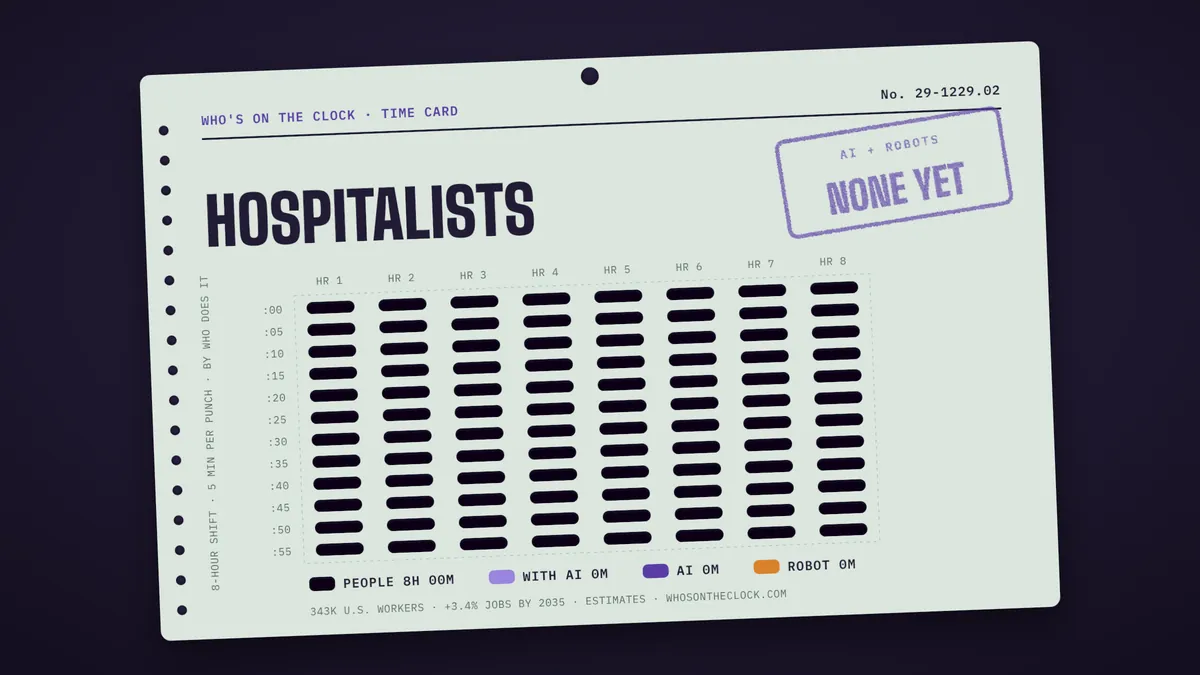
| HospitalistsDiagnose, treat, or provide continuous care to hospital inpatients. | 2h 25m | No evidence yet |
| UrologistsDiagnose or treat diseases or disorders of genitourinary organs and tracts including erectile dysfunction (ED), infertility, incontinence, bladder cancer, prostate cancer, urethral stones, or premature ejaculation. | 1h 58m | No evidence yet |
| Sports Medicine PhysiciansDiagnose or treat disorders of the musculoskeletal system. | 1h 50m | No evidence yet |
| PodiatristsDiagnose diseases and deformities of the foot using medical histories, physical examinations, x-rays, and laboratory test results. | 1h 37m | No evidence yet |
| Physician AssistantsMake tentative diagnoses and decisions about management and treatment of patients. | 1h 17m | No evidence yet |
| Allergists and ImmunologistsDiagnose or treat allergic or immunologic conditions. | 1h 10m | No evidence yet |
| Orthopedic SurgeonsDiagnose bodily disorders and orthopedic conditions, and provide treatments, such as medicines and surgeries, in clinics, hospital wards, or operating rooms. | 1h 1m | No evidence yet |
| OrthoptistsEvaluate, diagnose, or treat disorders of the visual system with an emphasis on binocular vision or abnormal eye movements. | 58m | No evidence yet |
| OphthalmologistsDiagnose or treat injuries, disorders, or diseases of the eye and eye structures including the cornea, sclera, conjunctiva, or eyelids. | 53m | No evidence yet |
| ChiropractorsDiagnose health problems by reviewing patients' health and medical histories, questioning, observing, and examining patients and interpreting x-rays. | 51m | No evidence yet |
| General Internal Medicine PhysiciansProvide and manage long-term, comprehensive medical care, including diagnosis and nonsurgical treatment of diseases, for adult patients in an office or hospital. | 44m | No evidence yet |
| Naturopathic PhysiciansDiagnose health conditions, based on patients' symptoms and health histories, laboratory and diagnostic radiology test results, or other physiological measurements, such as electrocardiograms and electroencephalographs. | 41m | No evidence yet |
| Emergency Medicine PhysiciansSelect, request, perform, or interpret diagnostic procedures, such as laboratory tests, electrocardiograms, emergency ultrasounds, and radiographs. | 40m | No evidence yet |
| DermatologistsDiagnose and treat pigmented lesions such as common acquired nevi, congenital nevi, dysplastic nevi, Spitz nevi, blue nevi, or melanoma. | 38m | No evidence yet |
| Pediatric SurgeonsExamine fetuses, infants, children, and adolescents, and diagnose health issues to determine need for intervention, such as surgery. | 33m | No evidence yet |
| Nurse PractitionersDiagnose or treat acute health care problems, such as illnesses, infections, or injuries. | 29m | No evidence yet |
| NeurologistsDiagnose neurological conditions based on interpretation of examination findings, histories, or test results. | 25m | No evidence yet |
| MidwivesIdentify, monitor, or treat pregnancy-related problems such as hypertension, gestational diabetes, pre-term labor, or retarded fetal growth. | 22m | No evidence yet |
| Physical Medicine and Rehabilitation PhysiciansDiagnose or treat performance-related conditions, such as sports injuries or repetitive-motion injuries. | 20m | No evidence yet |
| Acute Care NursesDiagnose acute or chronic conditions that could result in rapid physiological deterioration or life-threatening instability. | 19m | No evidence yet |
| Clinical Nurse SpecialistsProvide direct care by performing comprehensive health assessments, developing differential diagnoses, conducting specialized tests, or prescribing medications or treatments. | 18m | No evidence yet |
| Hearing Aid SpecialistsDiagnose and treat hearing or related disabilities under the direction of an audiologist. | 15m | No evidence yet |
| Low Vision Therapists, Orientation and Mobility Specialists, and Vision Rehabilitation TherapistsIdentify visual impairments related to basic life skills in areas such as self care, literacy, communication, health management, home management, and meal preparation. | 13m | No evidence yet |
| Ophthalmic Medical TechnologistsPerform ophthalmic triage, in the office or by phone, to assess severity of patients' conditions. | 13m | No evidence yet |
| Advanced Practice Psychiatric NursesDistinguish between physiologically- and psychologically-based disorders, and diagnose appropriately. | 6m | No evidence yet |
| PathologistsDiagnose infections, such as Hepatitis B and Acquired Immune Deficiency Syndrome (AIDS), by conducting tests to detect the antibodies that patients' immune systems make to fight such infections. | 5m | No evidence yet |
| AnesthesiologistsDiagnose illnesses, using examinations, tests, and reports. | 4m | No evidence yet |
| Registered NursesPerform physical examinations, make tentative diagnoses, and treat patients en route to hospitals or at disaster site triage centers. | under 1m | No evidence yet |
How to read this
This task type comes from O*NET's detailed work activities, which link similar tasks across jobs. A label applies to one job's version of the task: AI use comes from real AI conversations (Anthropic Economic Index) and robot evidence from deployments in real workplaces. "No evidence yet" may just mean the task is rare in the data. How we keep time.
See all 250 shared tasks, or find any job on the big clock.