Home / Tasks / Monitor patient conditions during treatments, procedures, or activities
In 1 of the 23 jobs that do this, AI or robots already show up on it, most often as work people hand to AI. In the other 22, there's no evidence yet. Jobs spend a median of 25m of an 8-hour shift on it, and about 16.2 million U.S. workers hold these jobs.
Every job that does this
Each job words the task its own way. Minutes are that job's estimate for a typical shift; the label is the evidence for that job's version.
| Job and its version of the task | Per shift | Evidence |
|---|---|---|
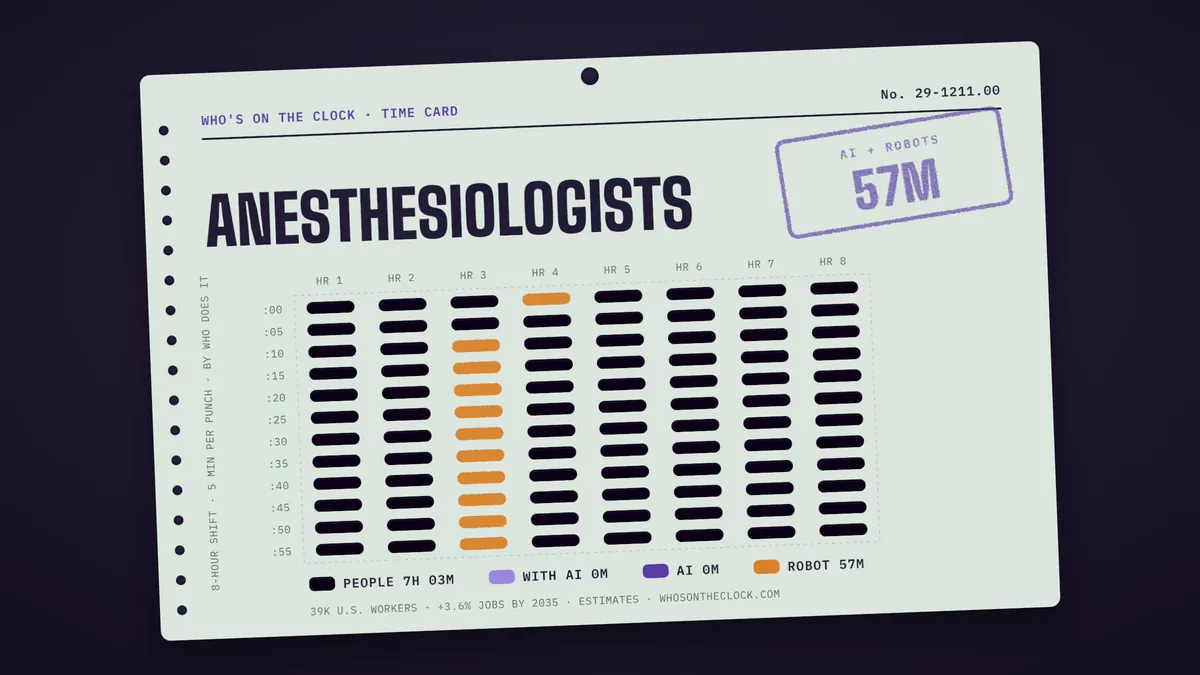
| AnesthesiologistsMonitor patient before, during, and after anesthesia and counteract adverse reactions or complications. | 2h 12m | No evidence yet |
| Anesthesiologist AssistantsAssist anesthesiologists in monitoring of patients, including electrocardiogram (EKG), direct arterial pressure, central venous pressure, arterial blood gas, hematocrit, or routine measurement of temperature, respiration, blood pressure or heart rate. | 1h 26m | No evidence yet |
| Exercise PhysiologistsProvide clinical oversight of exercise for participants at all risk levels. | 1h 20m | No evidence yet |
| Neurodiagnostic TechnologistsMonitor patients during tests or surgeries, using electroencephalographs (EEG), evoked potential (EP) instruments, or video recording equipment. | 1h 16m | No evidence yet |
| Licensed Practical and Licensed Vocational NursesObserve patients, charting and reporting changes in patients' conditions, such as adverse reactions to medication or treatment, and taking any necessary action. | 1h 12m | No evidence yet |
| Registered NursesMonitor, record, and report symptoms or changes in patients' conditions. | 53m | Often handed to AI |
| MidwivesMonitor maternal condition during labor by checking vital signs, monitoring uterine contractions, or performing physical examinations. | 49m | No evidence yet |
| Cardiovascular Technologists and TechniciansMonitor patients' blood pressure and heart rate using electrocardiogram (EKG) equipment during diagnostic or therapeutic procedures to notify the physician if something appears wrong. | 38m | No evidence yet |
| Veterinary Technologists and TechniciansAdminister anesthesia to animals, under the direction of a veterinarian, and monitor animals' responses to anesthetics so that dosages can be adjusted. | 38m | No evidence yet |
| Emergency Medicine PhysiciansMonitor patients' conditions, and reevaluate treatments, as necessary. | 35m | No evidence yet |
| Radiologic Technologists and TechniciansExplain procedures and observe patients to ensure safety and comfort during scan. | 32m | No evidence yet |
| Physical Medicine and Rehabilitation PhysiciansAssess characteristics of patients' pain, such as intensity, location, or duration, using standardized clinical measures. | 25m | No evidence yet |
| Acute Care NursesAdminister blood and blood product transfusions or intravenous infusions, monitoring patients for adverse reactions. | 25m | No evidence yet |
| Surgical TechnologistsMonitor and continually assess operating room conditions, including patient and surgical team needs. | 25m | No evidence yet |
| NeurologistsPrescribe or administer medications, such as anti-epileptic drugs, and monitor patients for behavioral and cognitive side effects. | 25m | No evidence yet |
| Diagnostic Medical SonographersObserve and care for patients throughout examinations to ensure their safety and comfort. | 25m | No evidence yet |
| Radiation TherapistsObserve and reassure patients during treatment and report unusual reactions to physician or turn equipment off if unexpected adverse reactions occur. | 24m | No evidence yet |
| Surgical AssistantsMonitor patient intra-operative status, including patient position, vital signs, or volume and color of blood. | 19m | No evidence yet |
| Clinical Nurse SpecialistsMonitor or evaluate medical conditions of patients in collaboration with other health care professionals. | 18m | No evidence yet |
| Nurse AnesthetistsEvaluate patients' post-surgical or post-anesthesia responses, taking appropriate corrective actions or requesting consultation if complications occur. | 17m | No evidence yet |
| Critical Care NursesAdminister blood and blood products, monitoring patients for signs and symptoms related to transfusion reactions. | 7m | No evidence yet |
| Respiratory TherapistsMonitor cardiac patients, using electrocardiography devices, such as a holter monitor. | 6m | No evidence yet |
| Nurse PractitionersDetect and respond to adverse drug reactions, with special attention to vulnerable populations such as infants, children, pregnant and lactating women, or older adults. | 6m | No evidence yet |
How to read this
This task type comes from O*NET's detailed work activities, which link similar tasks across jobs. A label applies to one job's version of the task: AI use comes from real AI conversations (Anthropic Economic Index) and robot evidence from deployments in real workplaces. "No evidence yet" may just mean the task is rare in the data. How we keep time.
See all 250 shared tasks, or find any job on the big clock.