Home / Tasks / Operate on patients to treat conditions
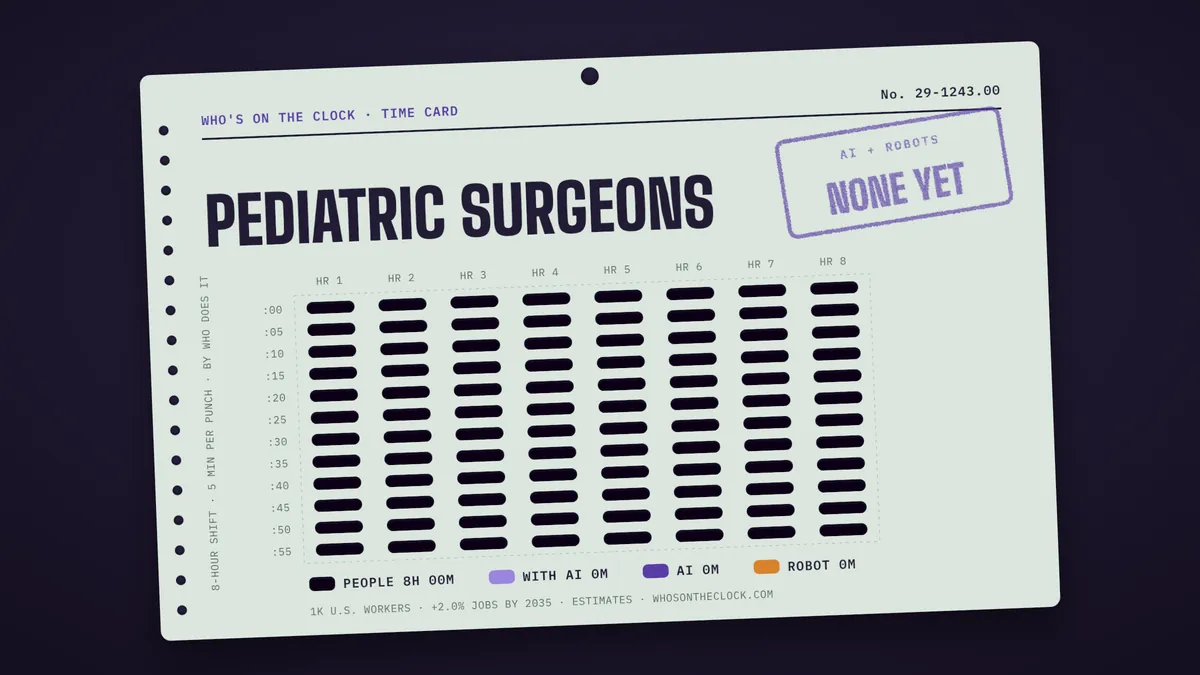
None of the 18 jobs that do this have AI or robot evidence for it yet. Jobs spend a median of 24m of an 8-hour shift on it, and about 892,000 U.S. workers hold these jobs.
Every job that does this
Each job words the task its own way. Minutes are that job's estimate for a typical shift; the label is the evidence for that job's version.
| Job and its version of the task | Per shift | Evidence |
|---|---|---|
| Pediatric SurgeonsOperate on fetuses, infants, children, and adolescents to correct deformities, repair injuries, prevent and treat diseases, or improve or restore patients' functions. | 2h 21m | No evidence yet |
| VeterinariansTreat sick or injured animals by prescribing medication, setting bones, dressing wounds, or performing surgery. | 1h 57m | No evidence yet |
| PodiatristsSurgically treat conditions such as corns, calluses, ingrown nails, tumors, shortened tendons, bunions, cysts, or abscesses. | 1h 37m | No evidence yet |
| Orthopedic SurgeonsDiagnose bodily disorders and orthopedic conditions, and provide treatments, such as medicines and surgeries, in clinics, hospital wards, or operating rooms. | 1h 1m | No evidence yet |
| Obstetricians and GynecologistsPerform cesarean sections or other surgical procedures as needed to preserve patients' health and deliver babies safely. | 55m | No evidence yet |
| DermatologistsPerform skin surgery to improve appearance, make early diagnoses, or control diseases such as skin cancer. | 54m | No evidence yet |
| Surgical AssistantsApply sutures, staples, clips, or other materials to close skin, facia, or subcutaneous wound layers. | 50m | No evidence yet |
| UrologistsPerform abdominal, pelvic, or retroperitoneal surgeries. | 45m | No evidence yet |
| RadiologistsPerform interventional procedures such as image-guided biopsy, percutaneous transluminal angioplasty, transhepatic biliary drainage, or nephrostomy catheter placement. | 24m | No evidence yet |
| OphthalmologistsPerform laser surgeries to alter, remove, reshape, or replace ocular tissue. | 15m | No evidence yet |
| General DentistsPerform oral or periodontal surgery on the jaw or mouth. | 12m | No evidence yet |
| Emergency Medicine PhysiciansPerform such medical procedures as emergent cricothyrotomy, endotracheal intubation, and emergency thoracotomy. | 12m | No evidence yet |
| CardiologistsPerform minimally invasive surgical procedures, such as implanting pacemakers and defibrillators. | 9m | No evidence yet |
| Oral and Maxillofacial SurgeonsPerform minor cosmetic procedures, such as chin and cheekbone enhancements. | 6m | No evidence yet |
| MidwivesSuture perineal lacerations. | 5m | No evidence yet |
| General Internal Medicine PhysiciansOperate on patients to remove, repair, or improve functioning of diseased or injured body parts and systems. | under 1m | No evidence yet |
| General PediatriciansOperate on patients to remove, repair, or improve functioning of diseased or injured body parts and systems. | under 1m | No evidence yet |
| Naturopathic PhysiciansPerform minor surgical procedures, such as removing warts, moles, or cysts, sampling tissues for skin cancer or lipomas, and applying or removing sutures. | under 1m | No evidence yet |
How to read this
This task type comes from O*NET's detailed work activities, which link similar tasks across jobs. A label applies to one job's version of the task: AI use comes from real AI conversations (Anthropic Economic Index) and robot evidence from deployments in real workplaces. "No evidence yet" may just mean the task is rare in the data. How we keep time.
See all 250 shared tasks, or find any job on the big clock.