Home / Tasks / Treat chronic diseases or disorders
None of the 20 jobs that do this have AI or robot evidence for it yet. Jobs spend a median of 39m of an 8-hour shift on it, and about 2.8 million U.S. workers hold these jobs.
Every job that does this
Each job words the task its own way. Minutes are that job's estimate for a typical shift; the label is the evidence for that job's version.
| Job and its version of the task | Per shift | Evidence |
|---|---|---|
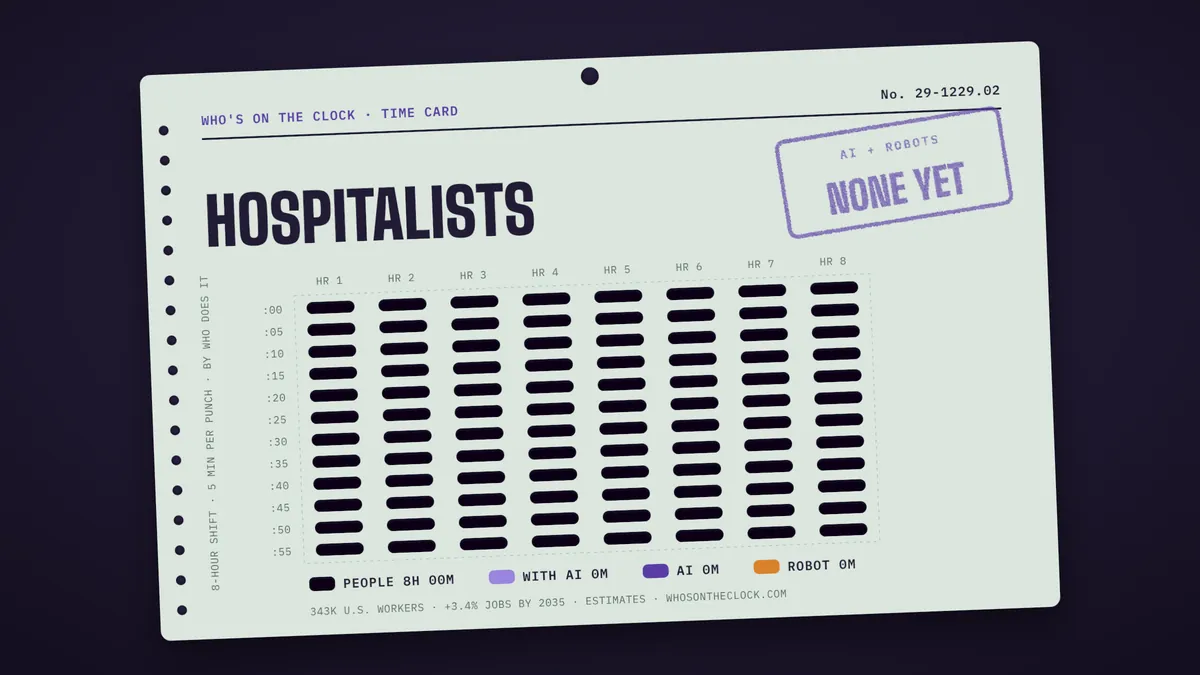
| HospitalistsDiagnose, treat, or provide continuous care to hospital inpatients. | 2h 25m | No evidence yet |
| PodiatristsTreat bone, muscle, and joint disorders affecting the feet and ankles. | 1h 26m | No evidence yet |
| Obstetricians and GynecologistsTreat diseases of female organs. | 1h 14m | No evidence yet |
| Physical Medicine and Rehabilitation PhysiciansProvide inpatient or outpatient medical management of neuromuscular disorders, musculoskeletal trauma, acute and chronic pain, deformity or amputation, cardiac or pulmonary disease, or other disabling conditions. | 1h 10m | No evidence yet |
| General PediatriciansTreat children who have minor illnesses, acute and chronic health problems, and growth and development concerns. | 1h 1m | No evidence yet |
| General Internal Medicine PhysiciansTreat internal disorders, such as hypertension, heart disease, diabetes, or problems of the lung, brain, kidney, or gastrointestinal tract. | 55m | No evidence yet |
| OphthalmologistsDiagnose or treat injuries, disorders, or diseases of the eye and eye structures including the cornea, sclera, conjunctiva, or eyelids. | 53m | No evidence yet |
| UrologistsTreat urologic disorders using alternatives to traditional surgery such as extracorporeal shock wave lithotripsy, laparoscopy, or laser techniques. | 45m | No evidence yet |
| Orthopedic SurgeonsDiagnose or treat disorders of the musculoskeletal system. | 44m | No evidence yet |
| OrthoptistsProvide nonsurgical interventions, including corrective lenses, patches, drops, fusion exercises, or stereograms, to treat conditions such as strabismus, heterophoria, and convergence insufficiency. | 39m | No evidence yet |
| Nurse PractitionersDiagnose or treat chronic health care problems, such as high blood pressure and diabetes. | 35m | No evidence yet |
| DermatologistsProvide therapies such as intralesional steroids, chemical peels, or comodo removal to treat age spots, sun damage, rough skin, discolored skin, or oily skin. | 22m | No evidence yet |
| Allergists and ImmunologistsProvide therapies, such as allergen immunotherapy or immunoglobin therapy, to treat immune conditions. | 20m | No evidence yet |
| Respiratory TherapistsPerform bronchopulmonary drainage and assist or instruct patients in performance of breathing exercises. | 19m | No evidence yet |
| PharmacistsProvide specialized services to help patients manage conditions, such as diabetes, asthma, smoking cessation, or high blood pressure. | 18m | No evidence yet |
| NeurologistsPerform specialized treatments in areas such as sleep disorders, neuroimmunology, neuro-oncology, behavioral neurology, and neurogenetics. | 15m | No evidence yet |
| Hearing Aid SpecialistsDiagnose and treat hearing or related disabilities under the direction of an audiologist. | 15m | No evidence yet |
| OptometristsProvide vision therapy and low-vision rehabilitation. | 13m | No evidence yet |
| Sports Medicine PhysiciansEvaluate and manage chronic pain conditions. | 10m | No evidence yet |
| Oral and Maxillofacial SurgeonsPerform minor facial rejuvenation procedures, including the use of Botox and laser technology. | 6m | No evidence yet |
How to read this
This task type comes from O*NET's detailed work activities, which link similar tasks across jobs. A label applies to one job's version of the task: AI use comes from real AI conversations (Anthropic Economic Index) and robot evidence from deployments in real workplaces. "No evidence yet" may just mean the task is rare in the data. How we keep time.
See all 250 shared tasks, or find any job on the big clock.