Home / Tasks / Clean workpieces or finished products
In 1 of the 20 jobs that do this, AI or robots already show up on it, most often as robots doing it. In the other 19, there's no evidence yet. Jobs spend a median of 24m of an 8-hour shift on it, and about 1.4 million U.S. workers hold these jobs.
Every job that does this
Each job words the task its own way. Minutes are that job's estimate for a typical shift; the label is the evidence for that job's version.
| Job and its version of the task | Per shift | Evidence |
|---|---|---|
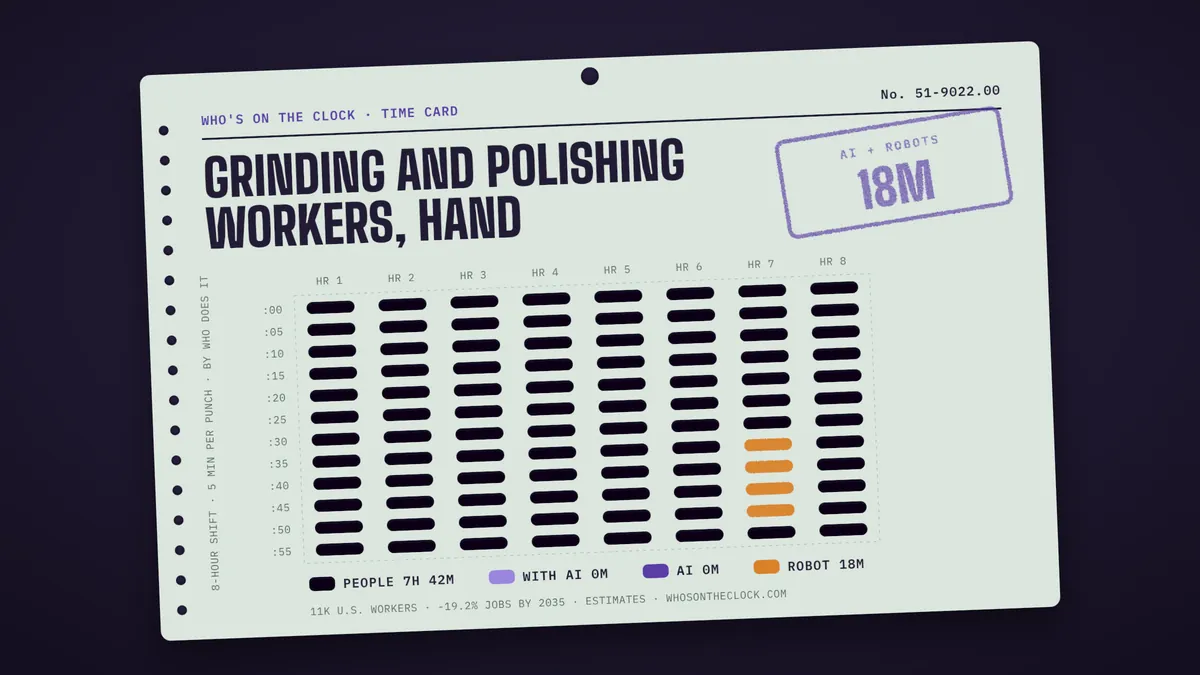
| Grinding and Polishing Workers, HandGrind, sand, clean, or polish objects or parts to correct defects or to prepare surfaces for further finishing, using hand tools and power tools. | 3h 30m | No evidence yet |
| Painting, Coating, and Decorating WorkersClean surfaces of workpieces in preparation for coating, using cleaning fluids, solvents, brushes, scrapers, steam, sandpaper, or cloth. | 1h 3m | No evidence yet |
| Timing Device Assemblers and AdjustersClean and lubricate timepiece parts and assemblies, using solvents, buff sticks, and oil. | 33m | No evidence yet |
| Jewelers and Precious Stone and Metal WorkersClean and polish metal items and jewelry pieces, using jewelers' tools, polishing wheels, and chemical baths. | 32m | No evidence yet |
| Molders, Shapers, and CastersClean, finish, and lubricate molds and mold parts. | 30m | No evidence yet |
| Patternmakers, Metal and PlasticClean and finish patterns or templates, using emery cloths, files, scrapers, and power grinders. | 30m | No evidence yet |
| Etchers and EngraversClean and polish engraved areas. | 28m | No evidence yet |
| Ophthalmic Laboratory TechniciansClean finished lenses and eyeglasses, using cloths and solvents. | 27m | No evidence yet |
| Welders, Cutters, Solderers, and BrazersPrepare all material surfaces to be welded, ensuring that there is no loose or thick scale, slag, rust, moisture, grease, or other foreign matter. | 24m | No evidence yet |
| Semiconductor Processing TechniciansClean semiconductor wafers using cleaning equipment, such as chemical baths, automatic wafer cleaners, or blow-off wands. | 24m | Robots |
| Helpers for Production WorkersWash work areas, machines, equipment, vehicles, or products. | 19m | No evidence yet |
| Plating Machine Setters, Operators, and Tenders, Metal and PlasticRinse coated objects in cleansing liquids and dry them with cloths, centrifugal driers, or by tumbling in sawdust-filled barrels. | 17m | No evidence yet |
| Automotive Glass Installers and RepairersCheck for and remove moisture or contamination in damaged areas and keep areas dry until repairs are complete. | 13m | No evidence yet |
| Furniture FinishersWash surfaces to prepare them for finish application. | 13m | No evidence yet |
| Hand Cutters and TrimmersClean, treat, buff, or polish finished items, using grinders, brushes, chisels, and cleaning solutions and polishing materials. | 12m | No evidence yet |
| Electrical and Electronic Equipment AssemblersClean parts, using cleaning solutions, air hoses, and cloths. | 12m | No evidence yet |
| Electromechanical Equipment AssemblersClean and lubricate parts and subassemblies, using grease paddles or oilcans. | 12m | No evidence yet |
| Aircraft Structure, Surfaces, Rigging, and Systems AssemblersClean, oil, or coat system components, as necessary, before assembly or attachment. | 12m | No evidence yet |
| Tire BuildersClean and paint completed tires. | 6m | No evidence yet |
| Watch and Clock RepairersDemagnetize mechanisms, using demagnetizing machines. | 6m | No evidence yet |
How to read this
This task type comes from O*NET's detailed work activities, which link similar tasks across jobs. A label applies to one job's version of the task: AI use comes from real AI conversations (Anthropic Economic Index) and robot evidence from deployments in real workplaces. "No evidence yet" may just mean the task is rare in the data. How we keep time.
See all 250 shared tasks, or find any job on the big clock.