Home / Tasks / Operate diagnostic or therapeutic medical instruments or equipment
In 3 of the 26 jobs that do this, AI or robots already show up on it, most often as robots doing it. In the other 23, there's no evidence yet. Jobs spend a median of 25m of an 8-hour shift on it, and about 9.9 million U.S. workers hold these jobs.
Every job that does this
Each job words the task its own way. Minutes are that job's estimate for a typical shift; the label is the evidence for that job's version.
| Job and its version of the task | Per shift | Evidence |
|---|---|---|
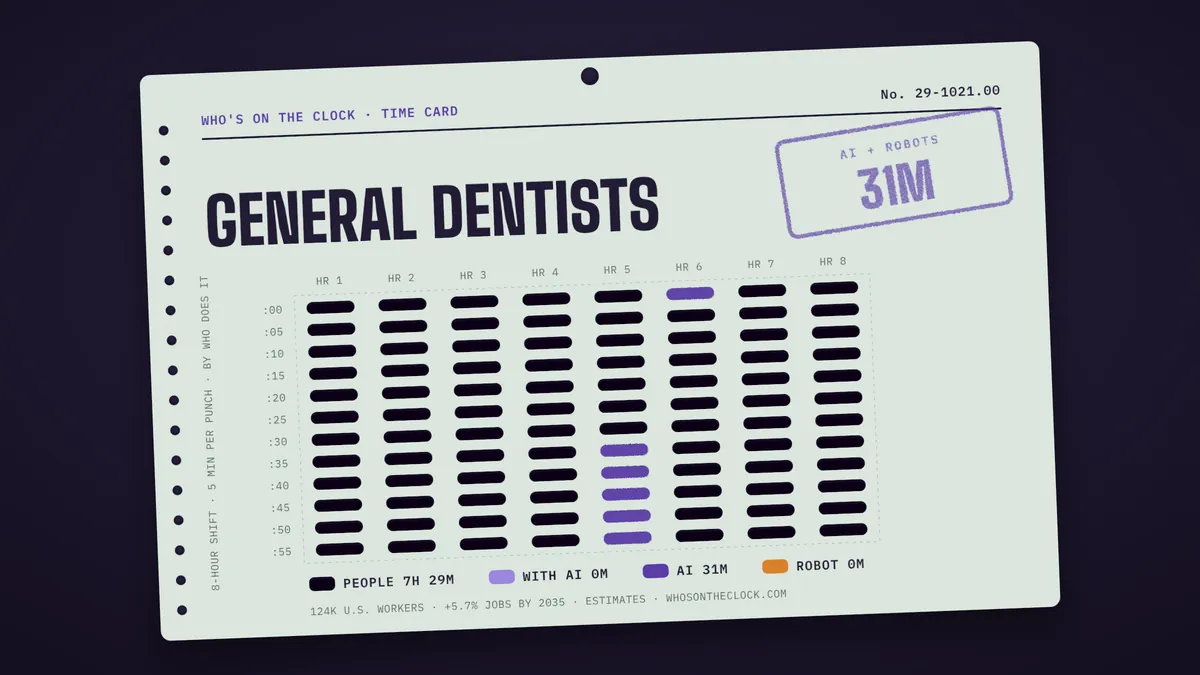
| General DentistsUse dental air turbines, hand instruments, dental appliances, or surgical implements. | 1h 40m | No evidence yet |
| Respiratory TherapistsSet up and operate devices, such as mechanical ventilators, therapeutic gas administration apparatus, environmental control systems, or aerosol generators, following specified parameters of treatment. | 1h 24m | No evidence yet |
| Athletic TrainersCare for athletic injuries, using physical therapy equipment, techniques, or medication. | 1h 21m | No evidence yet |
| Radiation TherapistsAdminister prescribed doses of radiation to specific body parts, using radiation therapy equipment according to established practices and standards. | 1h 13m | Robots |
| AudiologistsAdminister hearing tests and examine patients to collect information on type and degree of impairment, using specialized instruments and electronic equipment. | 1h 7m | No evidence yet |
| Speech-Language PathologistsAdminister hearing or speech and language evaluations, tests, or examinations to patients to collect information on type and degree of impairments, using written or oral tests or special instruments. | 38m | No evidence yet |
| Hearing Aid SpecialistsPerform basic screening procedures, such as pure tone screening, otoacoustic screening, immittance screening, and screening of ear canal status using otoscope. | 36m | No evidence yet |
| UrologistsTreat lower urinary tract dysfunctions using equipment such as diathermy machines, catheters, cystoscopes, or radium emanation tubes. | 36m | No evidence yet |
| ParamedicsOperate equipment, such as electrocardiograms (EKGs), external defibrillators, or bag valve mask resuscitators, in advanced life support environments. | 36m | No evidence yet |
| Psychiatric TechniciansTake and record measures of patients' physical condition, using devices such as thermometers or blood pressure gauges. | 32m | No evidence yet |
| Surgical AssistantsClamp, ligate, or cauterize blood vessels to control bleeding during surgical entry, using hemostatic clamps, suture ligatures, or electrocautery equipment. | 31m | No evidence yet |
| Dental HygienistsExamine gums, using probes, to locate periodontal recessed gums and signs of gum disease. | 30m | No evidence yet |
| Surgical TechnologistsOperate, assemble, adjust, or monitor sterilizers, lights, suction machines, or diagnostic equipment to ensure proper operation. | 25m | No evidence yet |
| CardiologistsConduct electrocardiogram (EKG), phonocardiogram, echocardiogram, or other cardiovascular tests to record patients' cardiac activity, using specialized electronic test equipment, recording devices, or laboratory instruments. | 23m | No evidence yet |
| Exercise PhysiologistsConduct stress tests, using electrocardiograph (EKG) machines. | 20m | No evidence yet |
| Critical Care NursesPerform approved therapeutic or diagnostic procedures, based upon patients' clinical status. | 20m | No evidence yet |
| Neurodiagnostic TechnologistsSet up, program, or record montages or electrical combinations when testing peripheral nerve, spinal cord, subcortical, or cortical responses. | 19m | No evidence yet |
| Ophthalmic Medical TechnologistsAssess refractive condition of eyes, using retinoscope. | 19m | Robots |
| Acute Care NursesSet up, operate, or monitor invasive equipment and devices, such as colostomy or tracheotomy equipment, mechanical ventilators, catheters, gastrointestinal tubes, and central lines. | 19m | No evidence yet |
| Nurse AnesthetistsInsert peripheral or central intravenous catheters. | 17m | No evidence yet |
| Ophthalmic Medical TechniciansAssess refractive conditions of eyes, using retinoscopes. | 13m | Robots |
| Dispensing OpticiansDetermine clients' current lens prescriptions, when necessary, using lensometers or lens analyzers and clients' eyeglasses. | 13m | No evidence yet |
| Physical TherapistsAdminister treatment involving application of physical agents, using equipment, moist packs, ultraviolet or infrared lamps, or ultrasound machines. | 13m | No evidence yet |
| Cardiovascular Technologists and TechniciansSet up 24-hour Holter and event monitors, scan and interpret tapes, and report results to physicians. | 13m | No evidence yet |
| Licensed Practical and Licensed Vocational NursesAssemble and use equipment, such as catheters, tracheotomy tubes, or oxygen suppliers. | 7m | No evidence yet |
| Magnetic Resonance Imaging TechnologistsConnect physiological leads to physiological acquisition control (PAC) units. | 6m | No evidence yet |
How to read this
This task type comes from O*NET's detailed work activities, which link similar tasks across jobs. A label applies to one job's version of the task: AI use comes from real AI conversations (Anthropic Economic Index) and robot evidence from deployments in real workplaces. "No evidence yet" may just mean the task is rare in the data. How we keep time.
See all 250 shared tasks, or find any job on the big clock.