Home / Tasks / Plan production or operational procedures or sequences
None of the 17 jobs that do this have AI or robot evidence for it yet. Jobs spend a median of 17m of an 8-hour shift on it, and about 3.8 million U.S. workers hold these jobs.
Every job that does this
Each job words the task its own way. Minutes are that job's estimate for a typical shift; the label is the evidence for that job's version.
| Job and its version of the task | Per shift | Evidence |
|---|---|---|
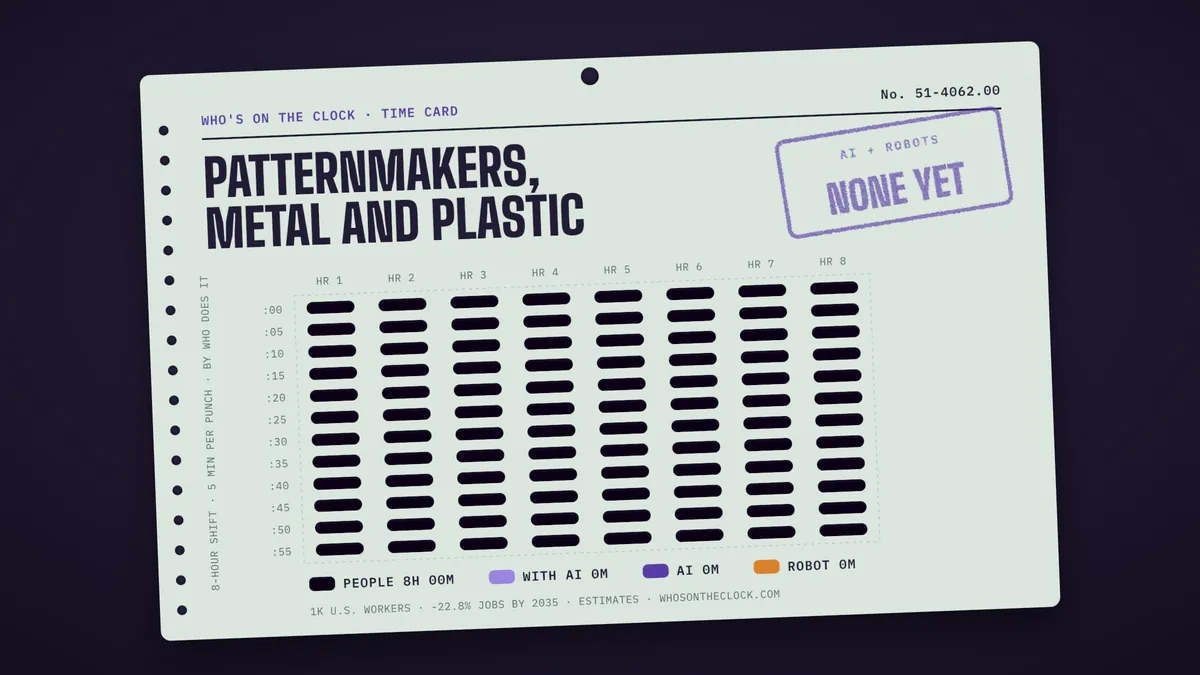
| Patternmakers, Metal and PlasticRead and interpret blueprints or drawings of parts to be cast or patterns to be made, compute dimensions, and plan operational sequences. | 47m | No evidence yet |
| Power Distributors and DispatchersPrepare switching orders that will isolate work areas without causing power outages, referring to drawings of power systems. | 47m | No evidence yet |
| Layout Workers, Metal and PlasticPlan locations and sequences of cutting, drilling, bending, rolling, punching, and welding operations, using compasses, protractors, dividers, and rules. | 41m | No evidence yet |
| Engine and Other Machine AssemblersRead and interpret assembly blueprints or specifications manuals, and plan assembly or building operations. | 36m | No evidence yet |
| First-Line Supervisors of Production and Operating WorkersPlan and establish work schedules, assignments, and production sequences to meet production goals. | 32m | No evidence yet |
| Dispensing OpticiansPrepare work orders and instructions for grinding lenses and fabricating eyeglasses. | 26m | No evidence yet |
| Nuclear Power Reactor OperatorsDevelop or implement actions such as lockouts, tagouts, or clearances to allow equipment to be safely repaired. | 25m | No evidence yet |
| Digital Forensics AnalystsDevelop plans for investigating alleged computer crimes, violations, or suspicious activity. | 18m | No evidence yet |
| Petroleum Pump System Operators, Refinery Operators, and GaugersPlan movement of products through lines to processing, storage, and shipping units, using knowledge of system interconnections and capacities. | 17m | No evidence yet |
| Team AssemblersDetermine work assignments and procedures. | 12m | No evidence yet |
| Wood PatternmakersDivide patterns into sections according to shapes of castings to facilitate removal of patterns from molds. | 12m | No evidence yet |
| Computer Numerically Controlled Tool ProgrammersSort shop orders into groups to maximize materials utilization and minimize machine setup time. | 12m | No evidence yet |
| Terrazzo Workers and FinishersModify mixing, grouting, grinding, or cleaning procedures, according to type of installation or material used. | 6m | No evidence yet |
| Stationary Engineers and Boiler OperatorsDevelop operation, safety, and maintenance procedures or assist in their development. | 6m | No evidence yet |
| Cutting, Punching, and Press Machine Setters, Operators, and Tenders, Metal and PlasticPlan sequences of operations, applying knowledge of physical properties of workpiece materials. | 6m | No evidence yet |
| MachinistsEstablish work procedures for fabricating new structural products, using a variety of metalworking machines. | 6m | No evidence yet |
| First-Line Supervisors of Helpers, Laborers, and Material Movers, HandExamine freight to determine loading sequences. | 5m | No evidence yet |
How to read this
This task type comes from O*NET's detailed work activities, which link similar tasks across jobs. A label applies to one job's version of the task: AI use comes from real AI conversations (Anthropic Economic Index) and robot evidence from deployments in real workplaces. "No evidence yet" may just mean the task is rare in the data. How we keep time.
See all 250 shared tasks, or find any job on the big clock.