Home / Tasks / Recommend technical design or process changes to improve efficiency, quality, or performance
None of the 21 jobs that do this have AI or robot evidence for it yet. Jobs spend a median of 19m of an 8-hour shift on it, and about 3.9 million U.S. workers hold these jobs.
Every job that does this
Each job words the task its own way. Minutes are that job's estimate for a typical shift; the label is the evidence for that job's version.
| Job and its version of the task | Per shift | Evidence |
|---|---|---|
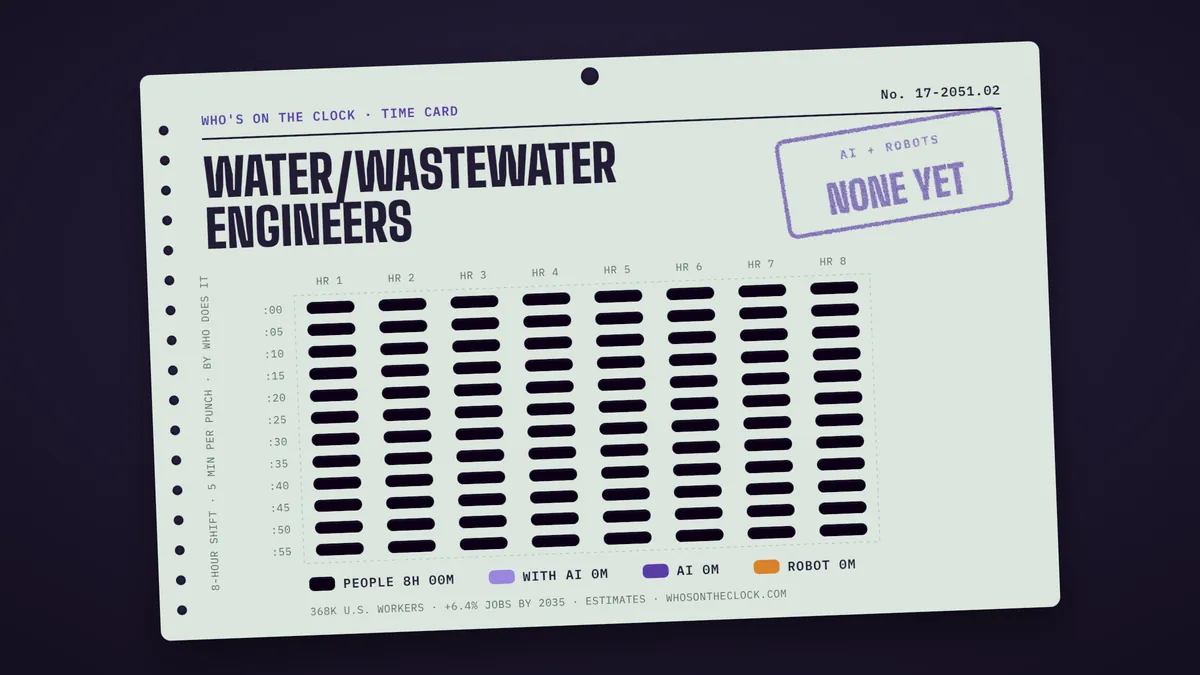
| Water/Wastewater EngineersProvide technical direction or supervision to junior engineers, engineering or computer-aided design (CAD) technicians, or other technical personnel. | 46m | No evidence yet |
| Civil EngineersProvide technical advice to industrial or managerial personnel regarding design, construction, program modifications, or structural repairs. | 40m | No evidence yet |
| Wind Energy EngineersRecommend process or infrastructure changes to improve wind turbine performance, reduce operational costs, or comply with regulations. | 36m | No evidence yet |
| Computer Hardware EngineersProvide technical support to designers, marketing and sales departments, suppliers, engineers and other team members throughout the product development and implementation process. | 30m | No evidence yet |
| Solar Energy Systems EngineersReview specifications and recommend engineering or manufacturing changes to achieve solar design objectives. | 30m | No evidence yet |
| Materials EngineersReview new product plans, and make recommendations for material selection, based on design objectives such as strength, weight, heat resistance, electrical conductivity, and cost. | 30m | No evidence yet |
| Industrial EngineersRecommend methods for improving utilization of personnel, material, and utilities. | 28m | No evidence yet |
| Validation EngineersRecommend resolution of identified deviations from established product or process standards. | 23m | No evidence yet |
| Manufacturing EngineersDetermine root causes of failures or recommend changes in designs, tolerances, or processing methods, using statistical procedures. | 22m | No evidence yet |
| Industrial Engineering Technologists and TechniciansRecommend corrective or preventive actions to assure or improve product quality or reliability. | 19m | No evidence yet |
| Mechanical Engineering Technologists and TechniciansConduct failure analyses, document results, and recommend corrective actions. | 19m | No evidence yet |
| Mechatronics EngineersProvide consultation or training on topics such as mechatronics or automated control. | 19m | No evidence yet |
| Fuel Cell EngineersRecommend or implement changes to fuel cell system designs. | 18m | No evidence yet |
| Electronics EngineersRecommend repair or design modifications of electronics components or systems, based on factors such as environment, service, cost, or system capabilities. | 18m | No evidence yet |
| Human Factors Engineers and ErgonomistsProvide human factors technical expertise on topics, such as advanced user-interface technology development or the role of human users in automated or autonomous sub-systems in advanced vehicle systems. | 12m | No evidence yet |
| Automotive Engineering TechniciansRecommend tests or testing conditions in accordance with designs, customer requirements, or industry standards to ensure test validity. | 12m | No evidence yet |
| Mechanical EngineersProvide feedback to design engineers on customer problems or needs. | 11m | No evidence yet |
| Photonics TechniciansRecommend optical or optic equipment design or material changes to reduce costs or processing times. | 6m | No evidence yet |
| Architectural and Civil DraftersRepresent architect or engineer on construction site, ensuring builder compliance with design specifications and advising on design corrections, under supervision. | 6m | No evidence yet |
| Energy EngineersRecommend best fuel for specific sites or circumstances. | 6m | No evidence yet |
| Bioengineers and Biomedical EngineersAdvise manufacturing staff regarding problems with fermentation, filtration, or other bioproduction processes. | 6m | No evidence yet |
How to read this
This task type comes from O*NET's detailed work activities, which link similar tasks across jobs. A label applies to one job's version of the task: AI use comes from real AI conversations (Anthropic Economic Index) and robot evidence from deployments in real workplaces. "No evidence yet" may just mean the task is rare in the data. How we keep time.
See all 250 shared tasks, or find any job on the big clock.