Home / Tasks / Treat medical emergencies
None of the 19 jobs that do this have AI or robot evidence for it yet. Jobs spend a median of 12m of an 8-hour shift on it, and about 11.8 million U.S. workers hold these jobs.
Every job that does this
Each job words the task its own way. Minutes are that job's estimate for a typical shift; the label is the evidence for that job's version.
| Job and its version of the task | Per shift | Evidence |
|---|---|---|
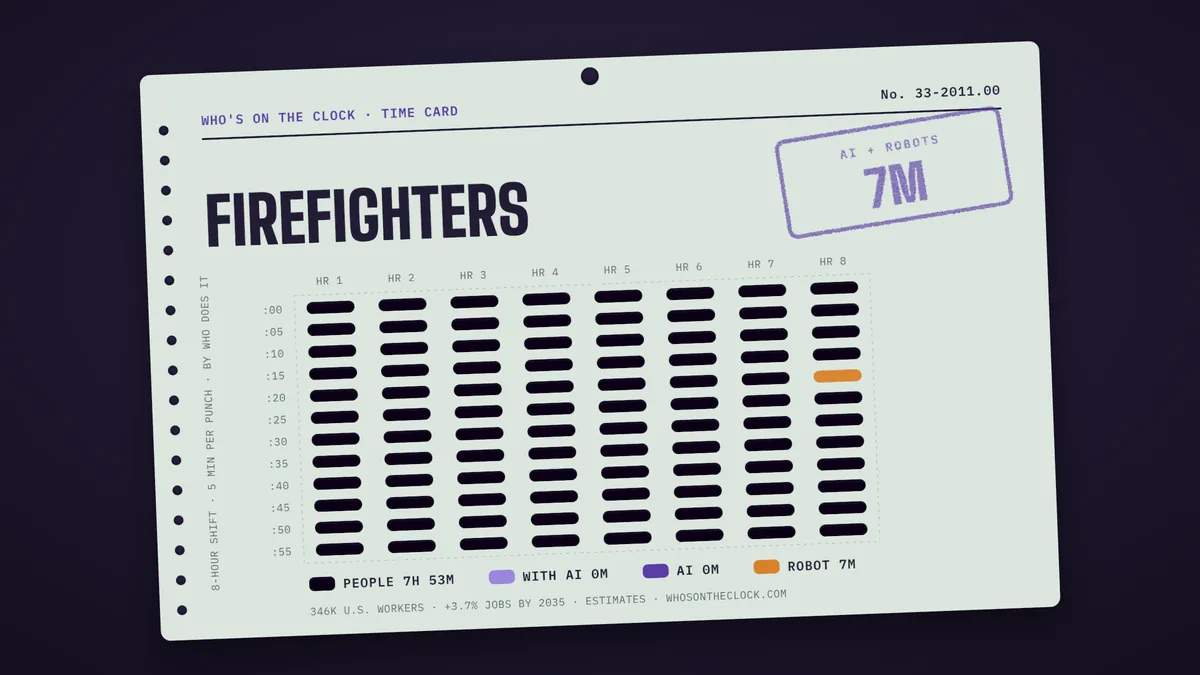
| FirefightersAdminister first aid and cardiopulmonary resuscitation to injured persons or provide emergency medical care such as basic or advanced life support. | 1h 15m | No evidence yet |
| ParamedicsAdminister first aid treatment or life support care to sick or injured persons in prehospital settings. | 1h 11m | No evidence yet |
| Emergency Medical TechniciansAdminister first aid treatment or life support care to sick or injured persons in prehospital settings. | 58m | No evidence yet |
| Critical Care NursesMonitor patients for changes in status and indications of conditions such as sepsis or shock and institute appropriate interventions. | 53m | No evidence yet |
| Oral and Maxillofacial SurgeonsProvide emergency treatment of facial injuries including facial lacerations, intra-oral lacerations, and fractured facial bones. | 31m | No evidence yet |
| Respiratory TherapistsProvide emergency care, such as artificial respiration, external cardiac massage, or assistance with cardiopulmonary resuscitation. | 19m | No evidence yet |
| Nurse PractitionersDiagnose or treat complex, unstable, comorbid, episodic, or emergency conditions in collaboration with other health care providers as necessary. | 18m | No evidence yet |
| MidwivesProvide necessary medical care for infants at birth, including emergency care such as resuscitation. | 16m | No evidence yet |
| CardiologistsAdminister emergency cardiac care for life-threatening heart problems, such as cardiac arrest and heart attack. | 14m | No evidence yet |
| Acute Care NursesPerform emergency medical procedures, such as basic cardiac life support (BLS), advanced cardiac life support (ACLS), and other condition-stabilizing interventions. | 12m | No evidence yet |
| Emergency Medicine PhysiciansPerform emergency resuscitations on patients. | 12m | No evidence yet |
| Exercise PhysiologistsProvide emergency or other appropriate medical care to participants with symptoms or signs of physical distress. | 7m | No evidence yet |
| Music TherapistsIdentify and respond to emergency physical or mental health situations. | 7m | No evidence yet |
| Veterinary Technologists and TechniciansAdminister emergency first aid, such as performing emergency resuscitation or other life saving procedures. | 6m | No evidence yet |
| Diagnostic Medical SonographersPerform medical procedures, such as administering oxygen, inserting and removing airways, taking vital signs, or giving emergency treatment, such as first aid or cardiopulmonary resuscitation (CPR). | 6m | No evidence yet |
| Nurse AnesthetistsRespond to emergency situations by providing airway management, administering emergency fluids or drugs, or using basic or advanced cardiac life support techniques. | 6m | No evidence yet |
| Nurse MidwivesInitiate emergency interventions to stabilize patients. | 6m | No evidence yet |
| Anesthesiologist AssistantsRespond to emergency situations by providing cardiopulmonary resuscitation (CPR), basic cardiac life support (BLS), advanced cardiac life support (ACLS), or pediatric advanced life support (PALS). | 5m | No evidence yet |
| Registered NursesPerform physical examinations, make tentative diagnoses, and treat patients en route to hospitals or at disaster site triage centers. | under 1m | No evidence yet |
How to read this
This task type comes from O*NET's detailed work activities, which link similar tasks across jobs. A label applies to one job's version of the task: AI use comes from real AI conversations (Anthropic Economic Index) and robot evidence from deployments in real workplaces. "No evidence yet" may just mean the task is rare in the data. How we keep time.
See all 250 shared tasks, or find any job on the big clock.