Home / Tasks / Analyze patient data to determine patient needs or treatment goals
In 2 of the 27 jobs that do this, AI or robots already show up on it, most often as work people hand to AI. In the other 25, there's no evidence yet. Jobs spend a median of 24m of an 8-hour shift on it, and about 13.7 million U.S. workers hold these jobs.
Every job that does this
Each job words the task its own way. Minutes are that job's estimate for a typical shift; the label is the evidence for that job's version.
| Job and its version of the task | Per shift | Evidence |
|---|---|---|
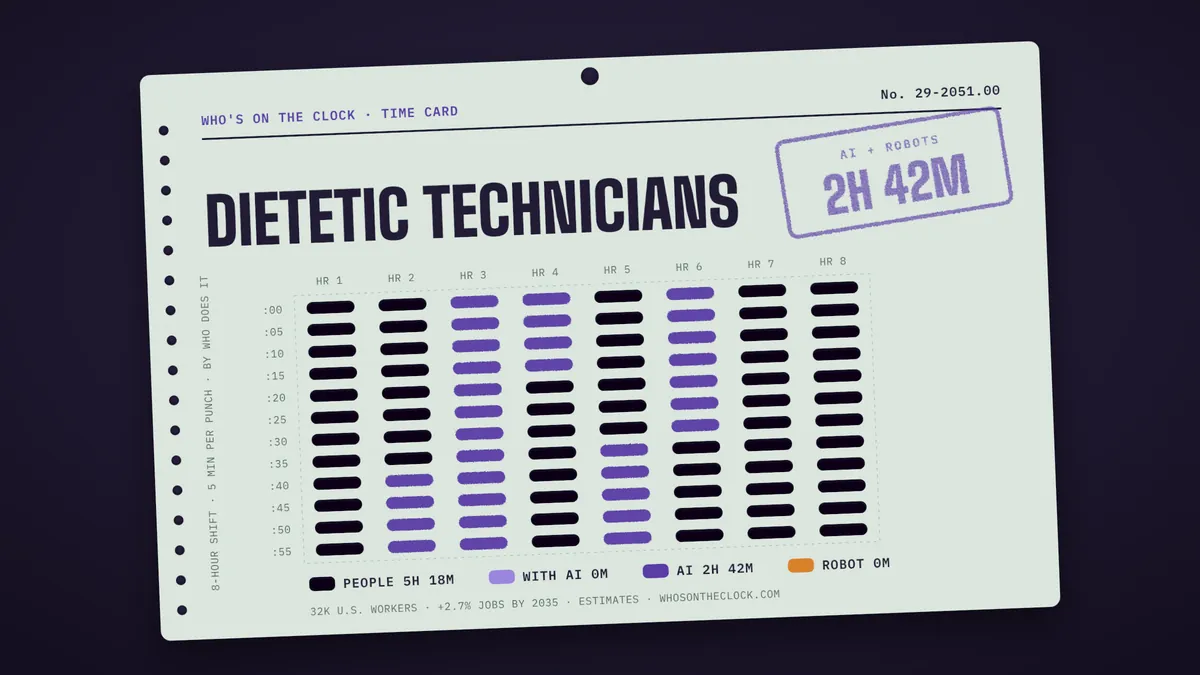
| Dietetic TechniciansConduct nutritional assessments of individuals, including obtaining and evaluating individuals' dietary histories, to plan nutritional programs. | 1h 40m | Often handed to AI |
| ParamedicsAssess nature and extent of illness or injury to establish and prioritize medical procedures. | 1h 11m | No evidence yet |
| Occupational TherapistsTest and evaluate patients' physical and mental abilities and analyze medical data to determine realistic rehabilitation goals for patients. | 1h 2m | No evidence yet |
| Acute Care NursesAssess urgent and emergent health conditions, using both physiologically and technologically derived data. | 56m | No evidence yet |
| Physical TherapistsPerform and document an initial exam, evaluating data to identify problems and determine a diagnosis prior to intervention. | 51m | No evidence yet |
| Oral and Maxillofacial SurgeonsEvaluate the position of the wisdom teeth to determine whether problems exist currently or might occur in the future. | 44m | No evidence yet |
| Emergency Medical TechniciansAssess nature and extent of illness or injury to establish and prioritize medical procedures. | 44m | No evidence yet |
| Athletic TrainersConduct an initial assessment of an athlete's injury or illness to provide emergency or continued care and to determine whether they should be referred to physicians for definitive diagnosis and treatment. | 40m | No evidence yet |
| OrthodontistsStudy diagnostic records, such as medical or dental histories, plaster models of the teeth, photos of a patient's face and teeth, and X-rays, to develop patient treatment plans. | 38m | No evidence yet |
| Dietitians and NutritionistsRecord and evaluate patient and family health and food history, including symptoms, environmental toxic exposure, allergies, medication factors, and preventive health-care measures. | 37m | No evidence yet |
| Genetic CounselorsDetermine or coordinate treatment plans by requesting laboratory services, reviewing genetics or counseling literature, and considering histories or diagnostic data. | 33m | No evidence yet |
| Speech-Language PathologistsEvaluate hearing or speech and language test results, barium swallow results, or medical or background information to diagnose and plan treatment for speech, language, fluency, voice, or swallowing disorders. | 32m | No evidence yet |
| Pediatric SurgeonsAnalyze patient's medical history, medication allergies, physical condition, and examination results to verify operation's necessity and to determine best procedure. | 25m | No evidence yet |
| Advanced Practice Psychiatric NursesEvaluate patients' behavior to formulate diagnoses or assess treatments. | 24m | No evidence yet |
| Orthopedic SurgeonsAnalyze patient's medical history, medication allergies, physical condition, and examination results to verify operation's necessity and to determine best procedure. | 22m | No evidence yet |
| Radiologic Technologists and TechniciansDetermine patients' x-ray needs by reading requests or instructions from physicians. | 19m | No evidence yet |
| Emergency Medicine PhysiciansEvaluate patients' vital signs or laboratory data to determine emergency intervention needs and priority of treatment. | 17m | No evidence yet |
| Nurse AnesthetistsAssess patients' medical histories to predict anesthesia response. | 17m | No evidence yet |
| Art TherapistsAnalyze or synthesize client data to draw conclusions or make recommendations for art therapy. | 13m | No evidence yet |
| Low Vision Therapists, Orientation and Mobility Specialists, and Vision Rehabilitation TherapistsAdminister tests and interpret test results to develop rehabilitation plans for clients. | 13m | No evidence yet |
| Clinical Nurse SpecialistsPlan, evaluate, or modify treatment programs, based on information gathered by observing and interviewing patients or by analyzing patient records. | 12m | No evidence yet |
| DermatologistsEvaluate patients to determine eligibility for cosmetic procedures such as liposuction, laser resurfacing, or microdermabrasion. | 11m | No evidence yet |
| Sports Medicine PhysiciansEvaluate and manage chronic pain conditions. | 10m | No evidence yet |
| Nursing AssistantsReview patients' dietary restrictions, food allergies, and preferences to ensure patient receives appropriate diet. | 7m | No evidence yet |
| Music TherapistsAnalyze or synthesize client data to draw conclusions or make recommendations for therapy. | 7m | Often handed to AI |
| General DentistsAnalyze or evaluate dental needs to determine changes or trends in patterns of dental disease. | 6m | No evidence yet |
| MidwivesAssess the status of post-date pregnancies to determine treatments and interventions. | 5m | No evidence yet |
How to read this
This task type comes from O*NET's detailed work activities, which link similar tasks across jobs. A label applies to one job's version of the task: AI use comes from real AI conversations (Anthropic Economic Index) and robot evidence from deployments in real workplaces. "No evidence yet" may just mean the task is rare in the data. How we keep time.
See all 250 shared tasks, or find any job on the big clock.