Home / Tasks / Maintain medical or professional knowledge
In 6 of the 31 jobs that do this, AI or robots already show up on it, most often as help from AI. In the other 25, there's no evidence yet. Jobs spend a median of 14m of an 8-hour shift on it, and about 16.7 million U.S. workers hold these jobs.
Every job that does this
Each job words the task its own way. Minutes are that job's estimate for a typical shift; the label is the evidence for that job's version.
| Job and its version of the task | Per shift | Evidence |
|---|---|---|
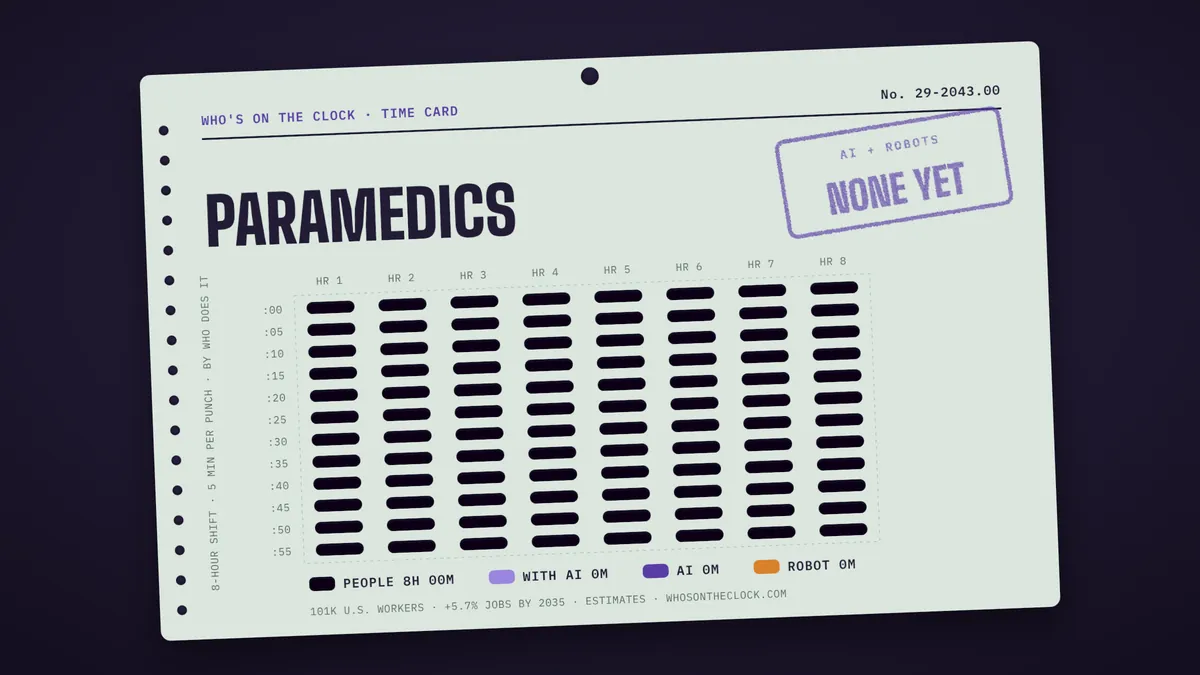
| ParamedicsAttend training classes to maintain certification licensure, keep abreast of new developments in the field, or maintain existing knowledge. | 27m | No evidence yet |
| PsychiatristsTeach, take continuing education classes, attend conferences or seminars, or conduct research and publish findings to increase understanding of mental, emotional, or behavioral states or disorders. | 26m | No evidence yet |
| PathologistsRead current literature, talk with colleagues, or participate in professional organizations or conferences to keep abreast of developments in pathology. | 24m | With AI |
| Emergency Medical TechniciansAttend training classes to maintain certification licensure, keep abreast of new developments in the field, or maintain existing knowledge. | 22m | No evidence yet |
| Hearing Aid SpecialistsRead current literature, talk with colleagues, and participate in professional organizations or conferences to keep abreast of developments in audiology. | 22m | With AI |
| DermatologistsRead current literature, talk with colleagues, and participate in professional organizations or conferences to keep abreast of developments in dermatology. | 22m | With AI |
| Naturopathic PhysiciansMaintain professional development through activities such as postgraduate education, continuing education, preceptorships, and residency programs. | 20m | No evidence yet |
| Genetic CounselorsRead current literature, talk with colleagues, or participate in professional organizations or conferences to keep abreast of developments in genetics. | 20m | Often handed to AI |
| Low Vision Therapists, Orientation and Mobility Specialists, and Vision Rehabilitation TherapistsParticipate in professional development activities, such as reading literature, continuing education, attending conferences, and collaborating with colleagues. | 19m | No evidence yet |
| Medical Records SpecialistsConsult classification manuals to locate information about disease processes. | 19m | No evidence yet |
| Clinical Nurse SpecialistsRead current literature, talk with colleagues, or participate in professional organizations or conferences to keep abreast of developments in nursing. | 18m | No evidence yet |
| HospitalistsParticipate in continuing education activities to maintain or enhance knowledge and skills. | 16m | No evidence yet |
| Allergists and ImmunologistsEngage in self-directed learning and continuing education activities. | 15m | No evidence yet |
| NeurologistsParticipate in continuing education activities to maintain and expand competence. | 15m | No evidence yet |
| Sports Medicine PhysiciansParticipate in continuing education activities to improve and maintain knowledge and skills. | 14m | No evidence yet |
| RadiologistsParticipate in continuing education activities to maintain and develop expertise. | 14m | No evidence yet |
| Speech-Language PathologistsParticipate in conferences, training, continuing education courses, or publish research results to share knowledge of new hearing or speech disorder treatment methods or technologies. | 13m | No evidence yet |
| Advanced Practice Psychiatric NursesParticipate in activities aimed at professional growth and development, including conferences or continuing education activities. | 12m | No evidence yet |
| AudiologistsParticipate in conferences or training to update or share knowledge of new hearing or balance disorder treatment methods or technologies. | 12m | No evidence yet |
| Nurse PractitionersRead current literature, talk with colleagues, or participate in professional organizations or conferences to keep abreast of developments in nursing. | 12m | No evidence yet |
| Nurse MidwivesRead current literature, talk with colleagues, or participate in professional organizations or conferences to keep abreast of developments in midwifery. | 11m | With AI |
| Anesthesiologist AssistantsParticipate in seminars, workshops, or other professional activities to keep abreast of developments in anesthesiology. | 11m | No evidence yet |
| VeterinariansAttend lectures, conferences, or continuing education courses. | 11m | No evidence yet |
| Art TherapistsReview research or literature in art therapy, psychology, or related disciplines. | 7m | Often handed to AI |
| Music TherapistsApply selected research findings to practice. | 7m | No evidence yet |
| Critical Care NursesParticipate in professional organizations and continuing education to improve practice knowledge and skills. | 7m | No evidence yet |
| Neurodiagnostic TechnologistsParticipate in research projects, conferences, or technical meetings. | 6m | No evidence yet |
| Acute Care NursesRead current literature, talk with colleagues, and participate in professional organizations or conferences to keep abreast of developments in acute care. | 6m | No evidence yet |
| CytotechnologistsAttend continuing education programs that address laboratory issues. | 6m | No evidence yet |
| Orthotists and ProsthetistsUpdate skills and knowledge by attending conferences and seminars. | 6m | No evidence yet |
| Nurse AnesthetistsRead current literature, talk with colleagues, and participate in professional organizations or conferences to keep abreast of developments in nursing. | 6m | No evidence yet |
How to read this
This task type comes from O*NET's detailed work activities, which link similar tasks across jobs. A label applies to one job's version of the task: AI use comes from real AI conversations (Anthropic Economic Index) and robot evidence from deployments in real workplaces. "No evidence yet" may just mean the task is rare in the data. How we keep time.
See all 250 shared tasks, or find any job on the big clock.