Home / Tasks / Examine patients to assess general physical condition
None of the 29 jobs that do this have AI or robot evidence for it yet. Jobs spend a median of 38m of an 8-hour shift on it, and about 13.0 million U.S. workers hold these jobs.
Every job that does this
Each job words the task its own way. Minutes are that job's estimate for a typical shift; the label is the evidence for that job's version.
| Job and its version of the task | Per shift | Evidence |
|---|---|---|
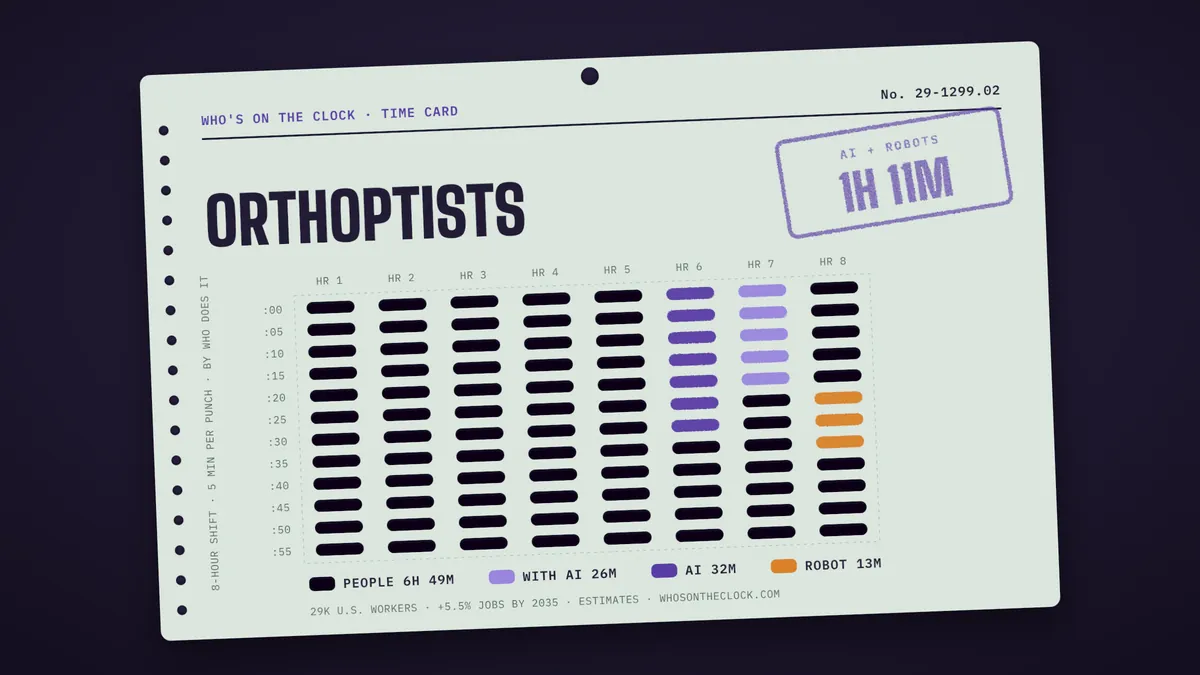
| OrthoptistsExamine patients with problems related to ocular motility, binocular vision, amblyopia, or strabismus. | 1h 24m | No evidence yet |
| VeterinariansExamine animals to detect and determine the nature of diseases or injuries. | 1h 20m | No evidence yet |
| Physician AssistantsExamine patients to obtain information about their physical condition. | 1h 17m | No evidence yet |
| AudiologistsAdminister hearing tests and examine patients to collect information on type and degree of impairment, using specialized instruments and electronic equipment. | 1h 7m | No evidence yet |
| Orthotists and ProsthetistsExamine, interview, and measure patients to determine their appliance needs and to identify factors that could affect appliance fit. | 1h 5m | No evidence yet |
| ChiropractorsEvaluate the functioning of the neuromuscularskeletal system and the spine using systems of chiropractic diagnosis. | 58m | No evidence yet |
| DermatologistsConduct complete skin examinations. | 54m | No evidence yet |
| AnesthesiologistsExamine patient, obtain medical history, and use diagnostic tests to determine risk during surgical, obstetrical, and other medical procedures. | 53m | No evidence yet |
| Physical TherapistsPerform and document an initial exam, evaluating data to identify problems and determine a diagnosis prior to intervention. | 51m | No evidence yet |
| General PediatriciansExamine patients or order, perform, and interpret diagnostic tests to obtain information on medical condition and determine diagnosis. | 51m | No evidence yet |
| MidwivesMonitor maternal condition during labor by checking vital signs, monitoring uterine contractions, or performing physical examinations. | 49m | No evidence yet |
| NeurologistsExamine patients to obtain information about functional status of areas, such as vision, physical strength, coordination, reflexes, sensations, language skills, cognitive abilities, and mental status. | 45m | No evidence yet |
| Naturopathic PhysiciansConduct physical examinations and physiological function tests for diagnostic purposes. | 41m | No evidence yet |
| Allergists and ImmunologistsConduct physical examinations of patients. | 40m | No evidence yet |
| Sports Medicine PhysiciansRecord athletes' medical histories, and perform physical examinations. | 38m | No evidence yet |
| Orthopedic SurgeonsExamine patient to obtain information on medical condition and surgical risk. | 35m | No evidence yet |
| Nurse MidwivesMonitor fetal development by listening to fetal heartbeat, taking external uterine measurements, identifying fetal position, or estimating fetal size and weight. | 34m | No evidence yet |
| Pediatric SurgeonsExamine fetuses, infants, children, and adolescents, and diagnose health issues to determine need for intervention, such as surgery. | 33m | No evidence yet |
| Psychiatric TechniciansTake and record measures of patients' physical condition, using devices such as thermometers or blood pressure gauges. | 32m | No evidence yet |
| Social and Human Service AssistantsAssess clients' cognitive abilities and physical and emotional needs to determine appropriate interventions. | 32m | No evidence yet |
| Nurse AnesthetistsPerform pre-anesthetic screenings, including physical evaluations and patient interviews, and document results. | 23m | No evidence yet |
| Clinical Nurse SpecialistsObserve, interview, and assess patients to identify care needs. | 18m | No evidence yet |
| Radiation TherapistsCheck for side effects, such as skin irritation, nausea, or hair loss to assess patients' reaction to treatment. | 18m | No evidence yet |
| Nurse PractitionersPerform routine or annual physical examinations. | 18m | No evidence yet |
| AcupuncturistsAssess patients' general physical appearance to make diagnoses. | 15m | No evidence yet |
| PsychiatristsExamine or conduct laboratory or diagnostic tests on patients to provide information on general physical condition or mental disorder. | 10m | No evidence yet |
| Advanced Practice Psychiatric NursesProvide routine physical health screenings to detect or monitor problems such as heart disease and diabetes. | 6m | No evidence yet |
| Physical Medicine and Rehabilitation PhysiciansConduct physical tests, such as functional capacity evaluations, to determine injured workers' capabilities to perform the physical demands of their jobs. | 5m | No evidence yet |
| Registered NursesPerform physical examinations, make tentative diagnoses, and treat patients en route to hospitals or at disaster site triage centers. | under 1m | No evidence yet |
How to read this
This task type comes from O*NET's detailed work activities, which link similar tasks across jobs. A label applies to one job's version of the task: AI use comes from real AI conversations (Anthropic Economic Index) and robot evidence from deployments in real workplaces. "No evidence yet" may just mean the task is rare in the data. How we keep time.
See all 250 shared tasks, or find any job on the big clock.