Home / Tasks / Explain medical procedures or test results to patients or family members
In 7 of the 25 jobs that do this, AI or robots already show up on it, most often as work people hand to AI. In the other 18, there's no evidence yet. Jobs spend a median of 25m of an 8-hour shift on it, and about 6.1 million U.S. workers hold these jobs.
Every job that does this
Each job words the task its own way. Minutes are that job's estimate for a typical shift; the label is the evidence for that job's version.
| Job and its version of the task | Per shift | Evidence |
|---|---|---|
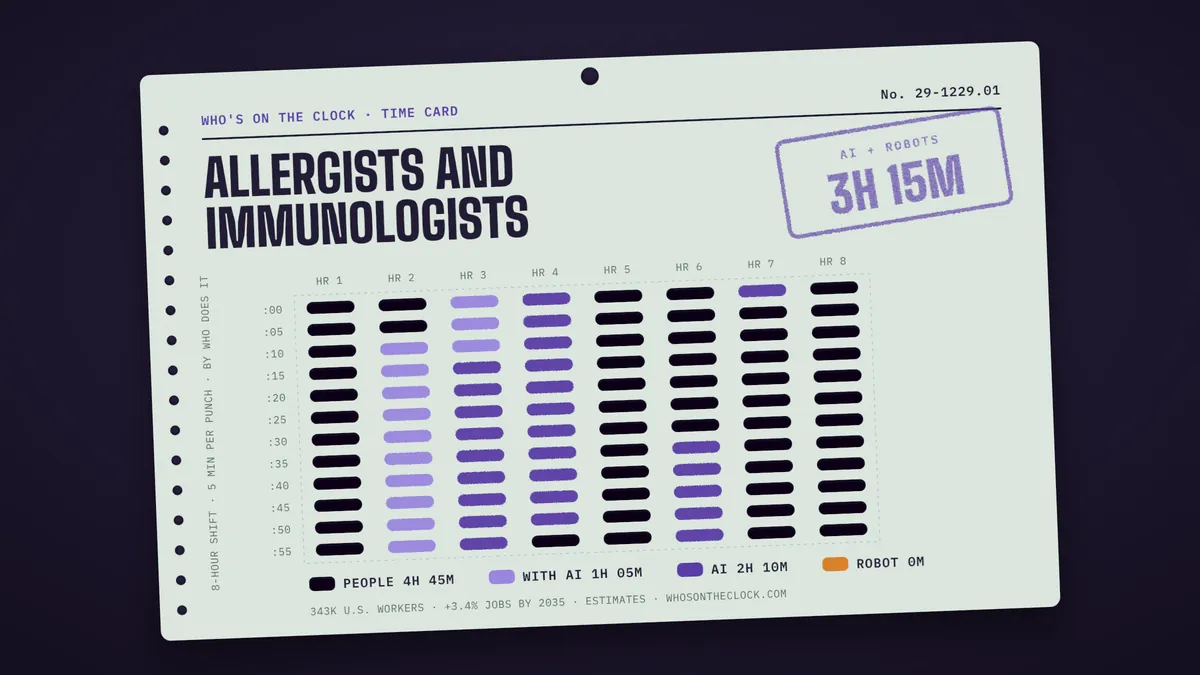
| Allergists and ImmunologistsEducate patients about diagnoses, prognoses, or treatments. | 1h | Often handed to AI |
| Family Medicine PhysiciansExplain procedures and discuss test results or prescribed treatments with patients. | 59m | Often handed to AI |
| OrthoptistsProvide instructions to patients or family members concerning diagnoses or treatment plans. | 45m | No evidence yet |
| General Internal Medicine PhysiciansExplain procedures and discuss test results or prescribed treatments with patients. | 39m | Often handed to AI |
| Nuclear Medicine TechnologistsExplain test procedures and safety precautions to patients and provide them with assistance during test procedures. | 38m | No evidence yet |
| Obstetricians and GynecologistsExplain procedures and discuss test results or prescribed treatments with patients. | 37m | Often handed to AI |
| Diagnostic Medical SonographersPrepare patient for exam by explaining procedure, transferring patient to ultrasound table, scrubbing skin and applying gel, and positioning patient properly. | 37m | No evidence yet |
| Advanced Practice Psychiatric NursesEducate patients and family members about mental health and medical conditions, preventive health measures, medications, or treatment plans. | 36m | Often handed to AI |
| General PediatriciansExplain procedures and discuss test results or prescribed treatments with patients and parents or guardians. | 36m | With AI |
| Radiologic Technologists and TechniciansExplain procedures and observe patients to ensure safety and comfort during scan. | 32m | No evidence yet |
| CardiologistsExplain procedures and discuss test results or prescribed treatments with patients. | 28m | Often handed to AI |
| Cardiovascular Technologists and TechniciansExplain testing procedures to patients to obtain cooperation and reduce anxiety. | 25m | No evidence yet |
| Neurodiagnostic TechnologistsExplain testing procedures to patients, answering questions or reassuring patients, as needed. | 25m | No evidence yet |
| Radiation TherapistsEducate, prepare, and reassure patients and their families by answering questions, providing physical assistance, and reinforcing physicians' advice regarding treatment reactions or post-treatment care. | 24m | No evidence yet |
| Nurse MidwivesExplain procedures to patients, family members, staff members or others. | 23m | No evidence yet |
| PsychiatristsAdvise or inform guardians, relatives, or significant others of patients' conditions or treatment. | 21m | No evidence yet |
| Pediatric SurgeonsInform parents and guardians of child's health problems and surgical procedures through various channels, such as in-person and telecommunication systems. | 21m | No evidence yet |
| Exercise PhysiologistsExplain exercise program or physiological testing procedures to participants. | 20m | No evidence yet |
| Licensed Practical and Licensed Vocational NursesPrepare patients for examinations, tests, or treatments and explain procedures. | 20m | No evidence yet |
| Respiratory TherapistsExplain treatment procedures to patients to gain cooperation and allay fears. | 19m | No evidence yet |
| Magnetic Resonance Imaging TechnologistsExplain magnetic resonance imaging (MRI) procedures to patients, patient representatives, or family members. | 19m | No evidence yet |
| Sports Medicine PhysiciansInform coaches, trainers, or other interested parties regarding the medical conditions of athletes. | 10m | No evidence yet |
| Genetic CounselorsExplain diagnostic procedures such as chorionic villus sampling (CVS), ultrasound, fetal blood sampling, and amniocentesis. | 7m | No evidence yet |
| Physical TherapistsProvide information to the patient about the proposed intervention, its material risks and expected benefits, and any reasonable alternatives. | 6m | No evidence yet |
| RadiologistsProvide counseling to radiologic patients to explain the processes, risks, benefits, or alternative treatments. | 5m | No evidence yet |
How to read this
This task type comes from O*NET's detailed work activities, which link similar tasks across jobs. A label applies to one job's version of the task: AI use comes from real AI conversations (Anthropic Economic Index) and robot evidence from deployments in real workplaces. "No evidence yet" may just mean the task is rare in the data. How we keep time.
See all 250 shared tasks, or find any job on the big clock.