Home / Tasks / Prescribe medications
None of the 32 jobs that do this have AI or robot evidence for it yet. Jobs spend a median of 23m of an 8-hour shift on it, and about 16.5 million U.S. workers hold these jobs.
Every job that does this
Each job words the task its own way. Minutes are that job's estimate for a typical shift; the label is the evidence for that job's version.
| Job and its version of the task | Per shift | Evidence |
|---|---|---|
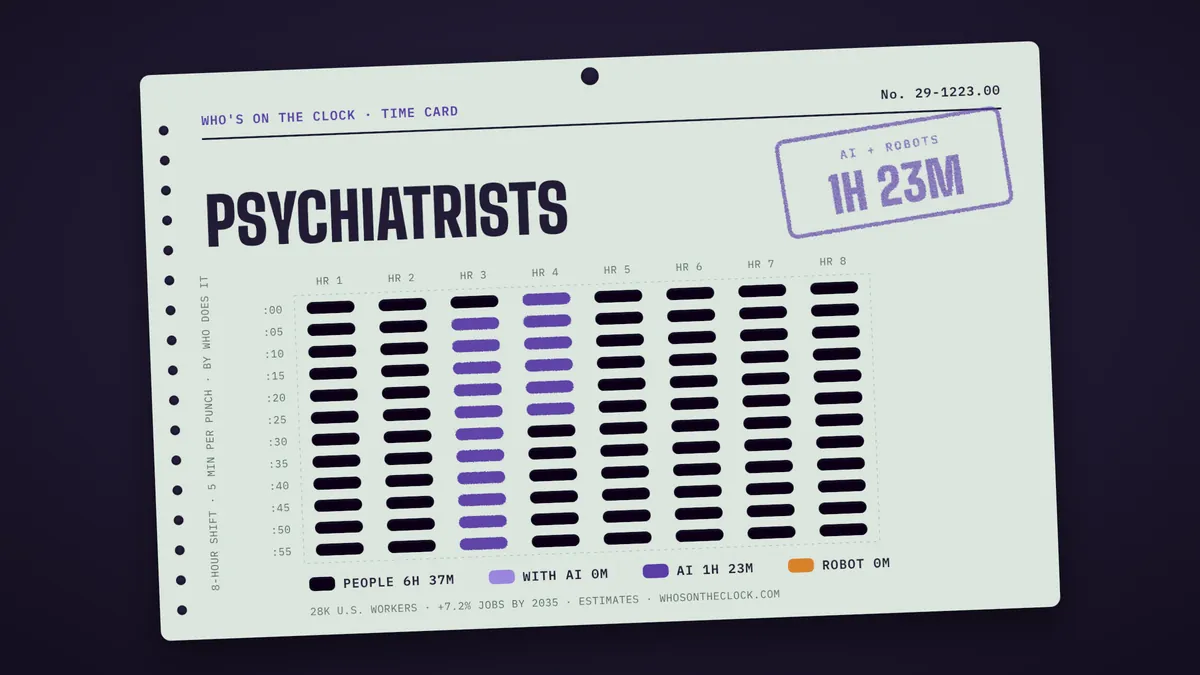
| PsychiatristsPrescribe, direct, or administer psychotherapeutic treatments or medications to treat mental, emotional, or behavioral disorders. | 2h 5m | No evidence yet |
| VeterinariansTreat sick or injured animals by prescribing medication, setting bones, dressing wounds, or performing surgery. | 1h 57m | No evidence yet |
| Family Medicine PhysiciansPrescribe or administer treatment, therapy, medication, vaccination, and other specialized medical care to treat or prevent illness, disease, or injury. | 1h 24m | No evidence yet |
| Orthopedic SurgeonsDiagnose bodily disorders and orthopedic conditions, and provide treatments, such as medicines and surgeries, in clinics, hospital wards, or operating rooms. | 1h 1m | No evidence yet |
| General Internal Medicine PhysiciansPrescribe or administer medication, therapy, and other specialized medical care to treat or prevent illness, disease, or injury. | 55m | No evidence yet |
| General PediatriciansPrescribe or administer treatment, therapy, medication, vaccination, and other specialized medical care to treat or prevent illness, disease, or injury in infants and children. | 51m | No evidence yet |
| Naturopathic PhysiciansAdminister, dispense, or prescribe natural medicines, such as food or botanical extracts, herbs, dietary supplements, vitamins, nutraceuticals, and amino acids. | 47m | No evidence yet |
| HospitalistsPrescribe medications or treatment regimens to hospital inpatients. | 41m | No evidence yet |
| PodiatristsPrescribe medications, corrective devices, physical therapy, or surgery. | 38m | No evidence yet |
| Physician AssistantsPrescribe therapy or medication with physician approval. | 36m | No evidence yet |
| Advanced Practice Psychiatric NursesWrite prescriptions for psychotropic medications as allowed by state regulations and collaborative practice agreements. | 30m | No evidence yet |
| Allergists and ImmunologistsPrescribe medication such as antihistamines, antibiotics, and nasal, oral, topical, or inhaled glucocorticosteroids. | 30m | No evidence yet |
| OphthalmologistsPrescribe or administer topical or systemic medications to treat ophthalmic conditions and to manage pain. | 29m | No evidence yet |
| DermatologistsPrescribe hormonal agents or topical treatments such as contraceptives, spironolactone, antiandrogens, oral corticosteroids, retinoids, benzoyl peroxide, or antibiotics. | 27m | No evidence yet |
| NeurologistsPrescribe or administer medications, such as anti-epileptic drugs, and monitor patients for behavioral and cognitive side effects. | 25m | No evidence yet |
| Obstetricians and GynecologistsPrescribe or administer therapy, medication, and other specialized medical care to treat or prevent illness, disease, or injury. | 23m | No evidence yet |
| OptometristsPrescribe medications to treat eye diseases if state laws permit. | 19m | No evidence yet |
| Clinical Nurse SpecialistsProvide direct care by performing comprehensive health assessments, developing differential diagnoses, conducting specialized tests, or prescribing medications or treatments. | 18m | No evidence yet |
| CardiologistsPrescribe heart medication to treat or prevent heart problems. | 18m | No evidence yet |
| AnesthesiologistsProvide medical care and consultation in many settings, prescribing medication and treatment and referring patients for surgery. | 18m | No evidence yet |
| Emergency Medicine PhysiciansSelect and prescribe medications to address patient needs. | 17m | No evidence yet |
| Pediatric SurgeonsDescribe preoperative and postoperative treatments and procedures, such as sedatives, diets, antibiotics, or preparation and treatment of the patient's operative area, to parents or guardians of the patient. | 17m | No evidence yet |
| UrologistsPrescribe or administer antibiotics, antiseptics, or compresses to treat infection or injury. | 14m | No evidence yet |
| PharmacistsWork in hospitals or clinics or for Health Management Organizations (HMOs), dispensing prescriptions, serving as a medical team consultant, or specializing in specific drug therapy areas, such as oncology or nuclear pharmacotherapy. | 12m | No evidence yet |
| Nurse PractitionersPrescribe medications based on efficacy, safety, and cost as legally authorized. | 12m | No evidence yet |
| Nurse MidwivesPrescribe medications as permitted by state regulations. | 11m | No evidence yet |
| Sports Medicine PhysiciansPrescribe medications for the treatment of athletic-related injuries. | 10m | No evidence yet |
| Registered NursesPrescribe or recommend drugs, medical devices, or other forms of treatment, such as physical therapy, inhalation therapy, or related therapeutic procedures. | 7m | No evidence yet |
| General DentistsWrite prescriptions for antibiotics or other medications. | 6m | No evidence yet |
| Nurse AnesthetistsSelect and prescribe post-anesthesia medications or treatments to patients. | 6m | No evidence yet |
| RadiologistsPrescribe radionuclides and dosages to be administered to individual patients. | 5m | No evidence yet |
| Acute Care NursesPrescribe medications and observe patients' reactions, modifying prescriptions as needed. | under 1m | No evidence yet |
How to read this
This task type comes from O*NET's detailed work activities, which link similar tasks across jobs. A label applies to one job's version of the task: AI use comes from real AI conversations (Anthropic Economic Index) and robot evidence from deployments in real workplaces. "No evidence yet" may just mean the task is rare in the data. How we keep time.
See all 250 shared tasks, or find any job on the big clock.