Home / Tasks / Watch operating equipment to detect malfunctions
In 10 of the 26 jobs that do this, AI or robots already show up on it, most often as robots doing it. In the other 16, there's no evidence yet. Jobs spend a median of 41m of an 8-hour shift on it, and about 2.2 million U.S. workers hold these jobs.
Every job that does this
Each job words the task its own way. Minutes are that job's estimate for a typical shift; the label is the evidence for that job's version.
| Job and its version of the task | Per shift | Evidence |
|---|---|---|
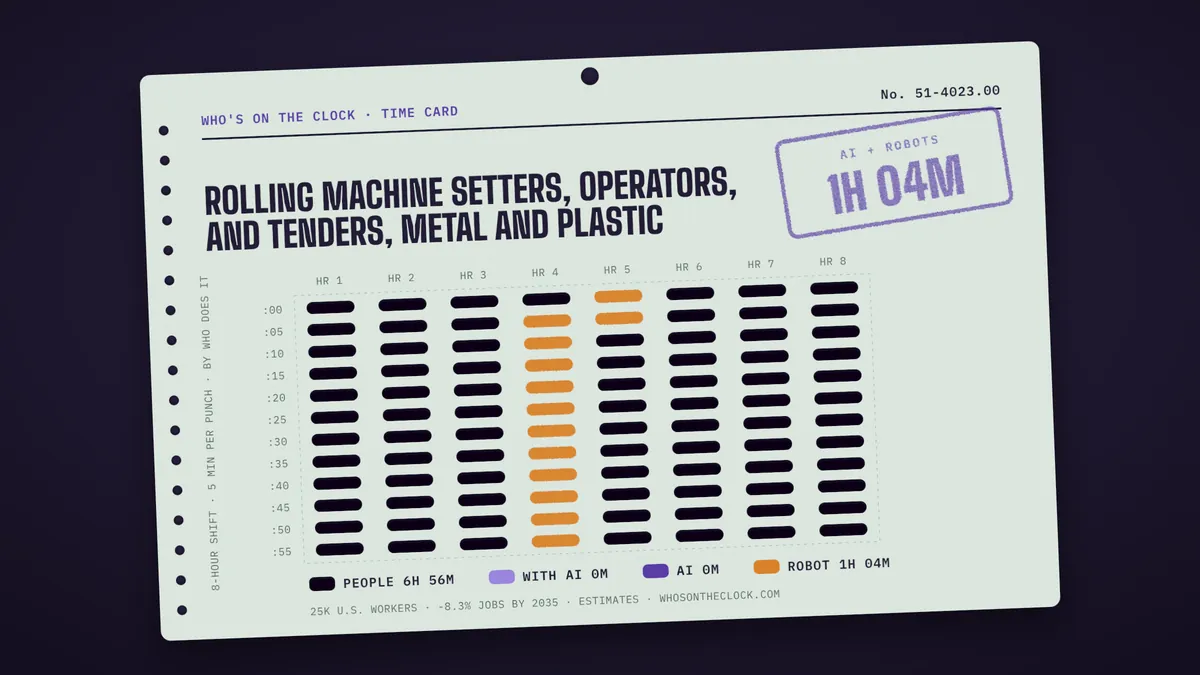
| Rolling Machine Setters, Operators, and Tenders, Metal and PlasticMonitor machine cycles and mill operation to detect jamming and to ensure that products conform to specifications. | 1h 45m | No evidence yet |
| Paper Goods Machine Setters, Operators, and TendersObserve operation of various machines to detect and correct machine malfunctions such as improper forming, glue flow, or pasteboard tension. | 1h 26m | No evidence yet |
| Grinding, Lapping, Polishing, and Buffing Machine Tool Setters, Operators, and Tenders, Metal and PlasticObserve machine operations to detect any problems, making necessary adjustments to correct problems. | 1h 24m | No evidence yet |
| Power Plant OperatorsMonitor power plant equipment and indicators to detect evidence of operating problems. | 1h 20m | Robots |
| Adhesive Bonding Machine Operators and TendersMonitor machine operations to detect malfunctions and report or resolve problems. | 1h 8m | No evidence yet |
| Multiple Machine Tool Setters, Operators, and Tenders, Metal and PlasticObserve machine operation to detect workpiece defects or machine malfunctions, adjusting machines as necessary. | 1h 4m | Robots |
| Print Binding and Finishing WorkersMonitor machine operations to detect malfunctions or to determine whether adjustments are needed. | 1h | Robots |
| Drilling and Boring Machine Tool Setters, Operators, and Tenders, Metal and PlasticObserve drilling or boring machine operations to detect any problems. | 56m | No evidence yet |
| Stationary Engineers and Boiler OperatorsMonitor and inspect equipment, computer terminals, switches, valves, gauges, alarms, safety devices, and meters to detect leaks or malfunctions and to ensure that equipment is operating efficiently and safely. | 54m | Robots |
| Tool Grinders, Filers, and SharpenersMonitor machine operations to determine whether adjustments are necessary, stopping machines when problems occur. | 49m | Robots |
| Packaging and Filling Machine Operators and TendersMonitor the production line, watching for problems such as pile-ups, jams, or glue that isn't sticking properly. | 43m | No evidence yet |
| Cutting and Slicing Machine Setters, Operators, and TendersMonitor operation of cutting or slicing machines to detect malfunctions or to determine whether supplies need replenishment. | 43m | No evidence yet |
| Textile Winding, Twisting, and Drawing Out Machine Setters, Operators, and TendersObserve operations to detect defects, malfunctions, or supply shortages. | 41m | Robots |
| Chemical Equipment Operators and TendersPatrol work areas to detect leaks or equipment malfunctions or to monitor operating conditions. | 34m | Robots |
| Sewing Machine OperatorsMonitor machine operation to detect problems such as defective stitching, breaks in thread, or machine malfunctions. | 32m | No evidence yet |
| Food and Tobacco Roasting, Baking, and Drying Machine Operators and TendersObserve flow of materials and listen for machine malfunctions, such as jamming or spillage, and notify supervisors if corrective actions fail. | 31m | No evidence yet |
| Extruding and Forming Machine Setters, Operators, and Tenders, Synthetic and Glass FibersStart metering pumps and observe operation of machines and equipment to ensure continuous flow of filaments extruded through spinnerettes and to detect processing defects. | 30m | No evidence yet |
| Photographic Process Workers and Processing Machine OperatorsMonitor equipment operation to detect malfunctions. | 21m | No evidence yet |
| Helpers for Production WorkersObserve equipment operations so that malfunctions can be detected, and notify operators of any malfunctions. | 19m | No evidence yet |
| Food BatchmakersObserve and listen to equipment to detect possible malfunctions, such as leaks or plugging, and report malfunctions or undesirable tastes to supervisors. | 18m | Robots |
| Nuclear Power Reactor OperatorsNote malfunctions of equipment, instruments, or controls and report these conditions to supervisors. | 12m | No evidence yet |
| Computer Numerically Controlled Tool OperatorsListen to machines during operation to detect sounds such as those made by dull cutting tools or excessive vibration, and adjust machines to compensate for problems. | 12m | Robots |
| Metal-Refining Furnace Operators and TendersObserve operations inside furnaces, using television screens, to ensure that problems do not occur. | 11m | No evidence yet |
| Petroleum Pump System Operators, Refinery Operators, and GaugersVerify that incoming and outgoing products are moving through the correct meters, and that meters are working properly. | 11m | No evidence yet |
| Food Cooking Machine Operators and TendersListen for malfunction alarms, and shut down equipment and notify supervisors when necessary. | 7m | Robots |
| Welders, Cutters, Solderers, and BrazersDetect faulty operation of equipment or defective materials and notify supervisors. | 6m | No evidence yet |
How to read this
This task type comes from O*NET's detailed work activities, which link similar tasks across jobs. A label applies to one job's version of the task: AI use comes from real AI conversations (Anthropic Economic Index) and robot evidence from deployments in real workplaces. "No evidence yet" may just mean the task is rare in the data. How we keep time.
See all 250 shared tasks, or find any job on the big clock.