Home / Tasks / Monitor patient progress or responses to treatments
In 1 of the 33 jobs that do this, AI or robots already show up on it, most often as work people hand to AI. In the other 32, there's no evidence yet. Jobs spend a median of 26m of an 8-hour shift on it, and about 16.4 million U.S. workers hold these jobs.
Every job that does this
Each job words the task its own way. Minutes are that job's estimate for a typical shift; the label is the evidence for that job's version.
| Job and its version of the task | Per shift | Evidence |
|---|---|---|
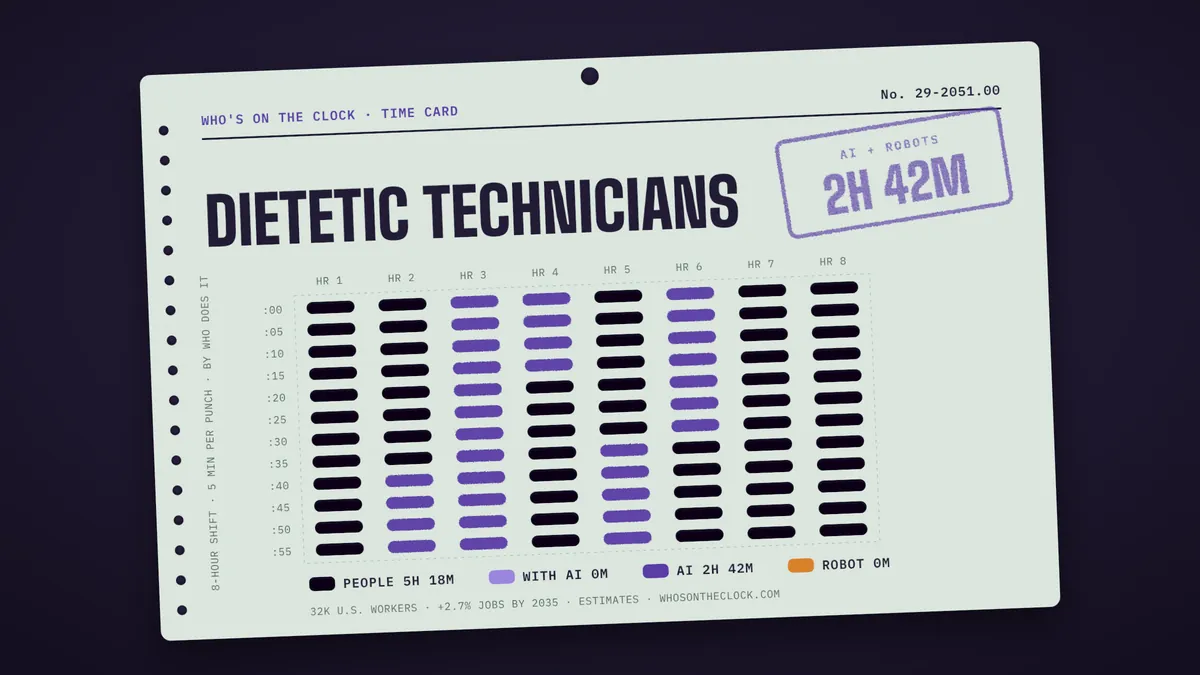
| Dietetic TechniciansObserve and monitor patient food intake and body weight, and report changes, progress, and dietary problems to dietician. | 1h 40m | No evidence yet |
| ParamedicsObserve, record, and report to physician the patient's condition or injury, the treatment provided, and reactions to drugs or treatment. | 1h 29m | No evidence yet |
| Family Medicine PhysiciansMonitor patients' conditions and progress and reevaluate treatments as necessary. | 59m | No evidence yet |
| Emergency Medical TechniciansObserve, record, and report to physician the patient's condition or injury, the treatment provided, and reactions to drugs or treatment. | 58m | No evidence yet |
| Pediatric SurgeonsMonitor patient's recovery, making follow-up visits and using postoperative assessment techniques, such as blood and imaging tests. | 50m | No evidence yet |
| Recreational TherapistsObserve, analyze, and record patients' participation, reactions, and progress during treatment sessions, modifying treatment programs as needed. | 49m | No evidence yet |
| Occupational Therapy AssistantsObserve and record patients' progress, attitudes, and behavior and maintain this information in client records. | 45m | No evidence yet |
| CardiologistsMonitor patients' conditions and progress, and reevaluate treatments, as necessary. | 37m | No evidence yet |
| Advanced Practice Psychiatric NursesMonitor patients' medication usage and results. | 36m | No evidence yet |
| Art TherapistsObserve and document client reactions, progress, or other outcomes related to art therapy. | 33m | No evidence yet |
| Anesthesiologist AssistantsMonitor and document patients' progress during post-anesthesia period. | 32m | No evidence yet |
| Occupational TherapistsEvaluate patients' progress and prepare reports that detail progress. | 31m | No evidence yet |
| General PediatriciansMonitor patients' conditions and progress and reevaluate treatments as necessary. | 31m | No evidence yet |
| Obstetricians and GynecologistsMonitor patients' conditions and progress and reevaluate treatments as necessary. | 28m | No evidence yet |
| Occupational Therapy AidesObserve patients' attendance, progress, attitudes, and accomplishments and record and maintain information in client records. | 27m | Often handed to AI |
| Music TherapistsObserve and document client reactions, progress, or other outcomes related to music therapy. | 26m | No evidence yet |
| Physical Therapist AssistantsObserve patients during treatments to compile and evaluate data on their responses and progress and provide results to physical therapist in person or through progress notes. | 26m | No evidence yet |
| Physical TherapistsEvaluate effects of treatment at various stages and adjust treatments to achieve maximum benefit. | 26m | No evidence yet |
| Speech-Language PathologistsMonitor patients' progress and adjust treatments accordingly. | 25m | No evidence yet |
| Physician AssistantsVisit and observe patients on hospital rounds or house calls, updating charts, ordering therapy, and reporting back to physician. | 24m | No evidence yet |
| Physical Therapist AidesObserve patients during treatment to compile and evaluate data on patients' responses and progress and report to physical therapist. | 23m | No evidence yet |
| Physical Medicine and Rehabilitation PhysiciansMonitor effectiveness of pain management interventions, such as medication or spinal injections. | 20m | No evidence yet |
| Registered NursesMonitor all aspects of patient care, including diet and physical activity. | 20m | No evidence yet |
| Critical Care NursesMonitor patients' fluid intake and output to detect emerging problems, such as fluid and electrolyte imbalances. | 20m | No evidence yet |
| Low Vision Therapists, Orientation and Mobility Specialists, and Vision Rehabilitation TherapistsMonitor clients' progress to determine whether changes in rehabilitation plans are needed. | 19m | No evidence yet |
| AudiologistsMonitor patients' progress and provide ongoing observation of hearing or balance status. | 18m | No evidence yet |
| AnesthesiologistsDecide when patients have recovered or stabilized enough to be sent to another room or ward or to be sent home following outpatient surgery. | 18m | No evidence yet |
| General Internal Medicine PhysiciansMonitor patients' conditions and progress and reevaluate treatments as necessary. | 17m | No evidence yet |
| Sports Medicine PhysiciansSupervise the rehabilitation of injured athletes. | 14m | No evidence yet |
| Emergency Medicine PhysiciansAssess patients' pain levels or sedation requirements. | 12m | No evidence yet |
| Veterinary Assistants and Laboratory Animal CaretakersAdminister anesthetics during surgery and monitor the effects on animals. | 7m | No evidence yet |
| Surgical AssistantsAssess skin integrity or other body conditions upon completion of the procedure to determine if damage has occurred from body positioning. | 6m | No evidence yet |
| Acute Care NursesPrescribe medications and observe patients' reactions, modifying prescriptions as needed. | under 1m | No evidence yet |
How to read this
This task type comes from O*NET's detailed work activities, which link similar tasks across jobs. A label applies to one job's version of the task: AI use comes from real AI conversations (Anthropic Economic Index) and robot evidence from deployments in real workplaces. "No evidence yet" may just mean the task is rare in the data. How we keep time.
See all 250 shared tasks, or find any job on the big clock.