Home / Tasks / Test performance of electrical, electronic, mechanical, or integrated systems or equipment
In 1 of the 30 jobs that do this, AI or robots already show up on it, most often as robots doing it. In the other 29, there's no evidence yet. Jobs spend a median of 23m of an 8-hour shift on it, and about 2.9 million U.S. workers hold these jobs.
Every job that does this
Each job words the task its own way. Minutes are that job's estimate for a typical shift; the label is the evidence for that job's version.
| Job and its version of the task | Per shift | Evidence |
|---|---|---|
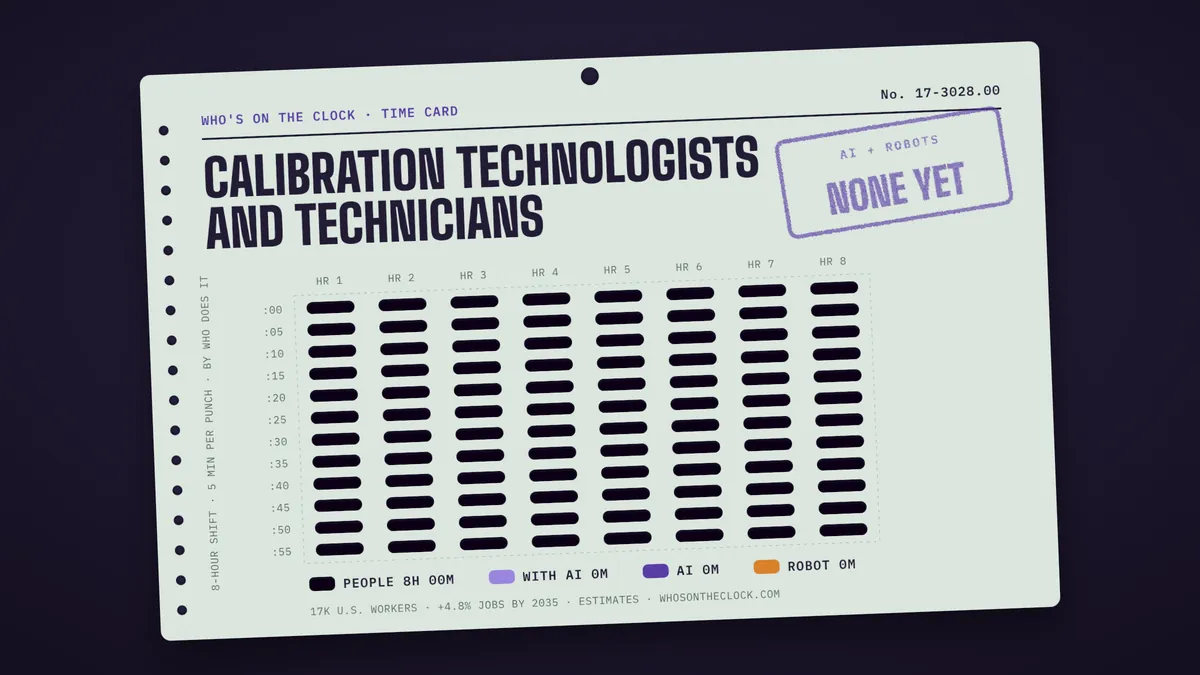
| Calibration Technologists and TechniciansConduct calibration tests to determine performance or reliability of mechanical, structural, or electromechanical equipment. | 1h 27m | No evidence yet |
| Aerospace Engineering and Operations Technologists and TechniciansTest aircraft systems under simulated operational conditions, performing systems readiness tests and pre- and post-operational checkouts, to establish design or fabrication parameters. | 1h 20m | No evidence yet |
| Computer Hardware EngineersBuild, test, and modify product prototypes, using working models or theoretical models constructed with computer simulation. | 1h 1m | No evidence yet |
| Aerospace EngineersPlan or conduct experimental, environmental, operational, or stress tests on models or prototypes of aircraft or aerospace systems or equipment. | 1h | No evidence yet |
| Mechatronics EngineersImplement or test design solutions. | 56m | No evidence yet |
| Electrical and Electronic Engineering Technologists and TechniciansSet up and operate specialized or standard test equipment to diagnose, test, or analyze the performance of electronic components, assemblies, or systems. | 55m | No evidence yet |
| Electro-Mechanical and Mechatronics Technologists and TechniciansTest performance of electromechanical assemblies, using test instruments such as oscilloscopes, electronic voltmeters, or bridges. | 51m | No evidence yet |
| Robotics EngineersBuild, configure, or test robots or robotic applications. | 47m | No evidence yet |
| Penetration TestersDevelop and execute tests that simulate the techniques of known cyber threat actors. | 47m | No evidence yet |
| Nanosystems EngineersDesign or conduct tests of new nanotechnology products, processes, or systems. | 40m | No evidence yet |
| Agricultural EngineersTest agricultural machinery and equipment to ensure adequate performance. | 36m | No evidence yet |
| Automotive EngineersConduct or direct system-level automotive testing. | 34m | No evidence yet |
| Nuclear EngineersConduct tests of nuclear fuel behavior and cycles or performance of nuclear machinery and equipment to optimize performance of existing plants. | 30m | No evidence yet |
| Automotive Engineering TechniciansInspect or test parts to determine nature or cause of defects or malfunctions. | 30m | No evidence yet |
| Lighting TechniciansTest lighting equipment function and desired lighting effects. | 23m | No evidence yet |
| Mechanical EngineersConduct research that tests or analyzes the feasibility, design, operation, or performance of equipment, components, or systems. | 23m | No evidence yet |
| Non-Destructive Testing SpecialistsConduct liquid penetrant tests to locate surface cracks by coating objects with fluorescent dyes, cleaning excess penetrant, and applying developer. | 22m | No evidence yet |
| Microsystems EngineersConduct harsh environmental testing, accelerated aging, device characterization, or field trials to validate devices, using inspection tools, testing protocols, peripheral instrumentation, or modeling and simulation software. | 22m | No evidence yet |
| Photonics TechniciansTerminate, cure, polish, or test fiber cables with mechanical connectors. | 19m | No evidence yet |
| Mechanical Engineering Technologists and TechniciansSet up and conduct tests of complete units and components under operational conditions to investigate proposals for improving equipment performance. | 19m | No evidence yet |
| Environmental Engineering Technologists and TechniciansDecontaminate or test field equipment used to clean or test pollutants from soil, air, or water. | 18m | No evidence yet |
| Robotics TechniciansTest performance of robotic assemblies, using instruments such as oscilloscopes, electronic voltmeters, or bridges. | 18m | No evidence yet |
| Disc JockeysConduct sound checks to ensure equipment is working and appropriate for the venue. | 16m | No evidence yet |
| Nanotechnology Engineering Technologists and TechniciansPerform functional tests of nano-enhanced assemblies, components, or systems, using equipment such as torque gauges or conductivity meters. | 13m | No evidence yet |
| Radio Frequency Identification Device SpecialistsTest tags or labels to ensure readability. | 12m | No evidence yet |
| Photonics EngineersAnalyze, fabricate, or test fiber-optic links. | 11m | No evidence yet |
| Human Factors Engineers and ErgonomistsOperate testing equipment, such as heat stress meters, octave band analyzers, motion analysis equipment, inclinometers, light meters, thermoanemometers, sling psychrometers, or colorimetric detection tubes. | 6m | Robots |
| Marine Engineers and Naval ArchitectsCheck, test, and maintain automatic controls and alarm systems. | 6m | No evidence yet |
| Petroleum EngineersTest machinery and equipment to ensure that it is safe and conforms to performance specifications. | 6m | No evidence yet |
| BoilermakersConduct pressure tests on vessels, such as boilers. | under 1m | No evidence yet |
How to read this
This task type comes from O*NET's detailed work activities, which link similar tasks across jobs. A label applies to one job's version of the task: AI use comes from real AI conversations (Anthropic Economic Index) and robot evidence from deployments in real workplaces. "No evidence yet" may just mean the task is rare in the data. How we keep time.
See all 250 shared tasks, or find any job on the big clock.