Home / Tasks / Conduct research to increase knowledge about medical issues
In 1 of the 37 jobs that do this, AI or robots already show up on it, most often as robots doing it. In the other 36, there's no evidence yet. Jobs spend a median of 6m of an 8-hour shift on it, and about 9.6 million U.S. workers hold these jobs.
Every job that does this
Each job words the task its own way. Minutes are that job's estimate for a typical shift; the label is the evidence for that job's version.
| Job and its version of the task | Per shift | Evidence |
|---|---|---|
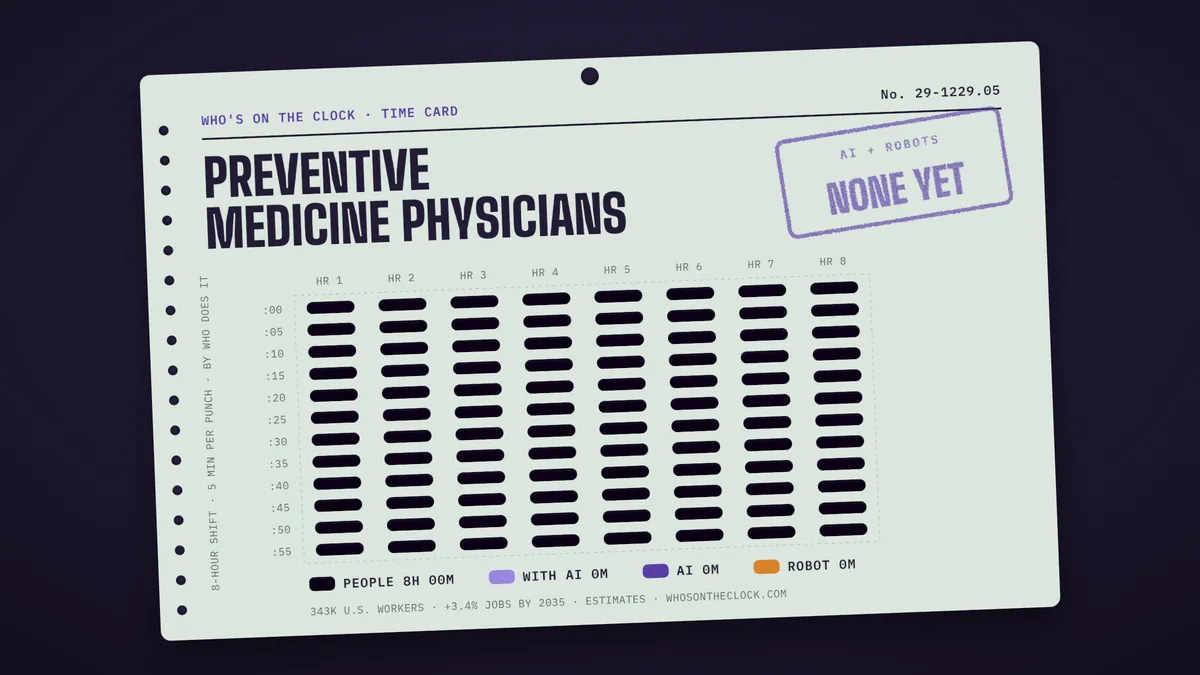
| Preventive Medicine PhysiciansPerform epidemiological investigations of acute and chronic diseases. | 41m | No evidence yet |
| PsychiatristsTeach, take continuing education classes, attend conferences or seminars, or conduct research and publish findings to increase understanding of mental, emotional, or behavioral states or disorders. | 26m | No evidence yet |
| Pediatric SurgeonsConduct research to develop and test surgical techniques that can improve operating procedures and outcomes. | 21m | No evidence yet |
| Dietetic TechniciansProvide dietitians with assistance researching food, nutrition, or food service systems. | 19m | No evidence yet |
| NeuropsychologistsConduct research on neuropsychological disorders. | 18m | No evidence yet |
| Clinical Nurse SpecialistsParticipate in clinical research projects, such as by reviewing protocols, reviewing patient records, monitoring compliance, and meeting with regulatory authorities. | 12m | No evidence yet |
| Allergists and ImmunologistsConduct laboratory or clinical research on allergy or immunology topics. | 10m | No evidence yet |
| NeurologistsParticipate in neuroscience research activities. | 10m | No evidence yet |
| Sports Medicine PhysiciansConduct research in the prevention or treatment of injuries or medical conditions related to sports and exercise. | 10m | No evidence yet |
| PathologistsConduct research and present scientific findings. | 9m | No evidence yet |
| CardiologistsConduct research to develop or test medications, treatments, or procedures that prevent or control disease or injury. | 9m | No evidence yet |
| Orthopedic SurgeonsConduct research to develop and test surgical techniques that can improve operating procedures and outcomes related to musculoskeletal injuries and diseases. | 9m | No evidence yet |
| Exercise PhysiologistsPlan or conduct exercise physiology research projects. | 7m | No evidence yet |
| Genetic CounselorsCollect for, or share with, research projects patient data on specific genetic disorders or syndromes. | 7m | No evidence yet |
| OrthoptistsParticipate in clinical research projects. | 6m | No evidence yet |
| Occupational Health and Safety TechniciansCollect data regarding potential hazards from new equipment or products linked to green practices. | 6m | Robots |
| Neurodiagnostic TechnologistsParticipate in research projects, conferences, or technical meetings. | 6m | No evidence yet |
| Dietitians and NutritionistsPlan, conduct, and evaluate dietary, nutritional, and epidemiological research. | 6m | No evidence yet |
| Medical and Clinical Laboratory TechniciansPerform medical research to further control or cure disease. | 6m | No evidence yet |
| Medical DosimetristsConduct radiation oncology-related research, such as improving computer treatment planning systems or developing new treatment devices. | 6m | No evidence yet |
| AudiologistsConduct or direct research on hearing or balance topics and report findings to help in the development of procedures, technology, or treatments. | 6m | No evidence yet |
| Orthotists and ProsthetistsResearch new ways to construct and use orthopedic and prosthetic devices. | 6m | No evidence yet |
| Nurse MidwivesConduct clinical research on topics such as maternal or infant health care, contraceptive methods, breastfeeding, and gynecological care. | 6m | No evidence yet |
| General Internal Medicine PhysiciansConduct research to develop or test medications, treatments, or procedures to prevent or control disease or injury. | 6m | No evidence yet |
| DermatologistsConduct clinical or basic research. | 5m | No evidence yet |
| VeterinariansResearch diseases to which animals could be susceptible. | 5m | No evidence yet |
| General PediatriciansConduct research to study anatomy and develop or test medications, treatments, or procedures to prevent or control disease or injury. | 5m | No evidence yet |
| Athletic TrainersConduct research or provide instruction on subject matter related to athletic training or sports medicine. | 5m | No evidence yet |
| OphthalmologistsConduct clinical or laboratory-based research in ophthalmology. | 5m | No evidence yet |
| Obstetricians and GynecologistsConduct research to develop or test medications, treatments, or procedures to prevent or control disease or injury. | 5m | No evidence yet |
| AnesthesiologistsConduct medical research to aid in controlling and curing disease, to investigate new medications, and to develop and test new medical techniques. | 4m | No evidence yet |
| Occupational TherapistsConduct research in occupational therapy. | under 1m | No evidence yet |
| Physical TherapistsConduct or support research and apply research findings to practice. | under 1m | No evidence yet |
| Speech-Language PathologistsConduct or direct research on speech or hearing topics and report findings for use in developing procedures, technologies, or treatments. | under 1m | No evidence yet |
| Music TherapistsConduct, or assist in the conduct of, music therapy research. | under 1m | No evidence yet |
| Registered NursesEngage in research activities related to nursing. | under 1m | No evidence yet |
| MidwivesCollaborate in research studies. | under 1m | No evidence yet |
How to read this
This task type comes from O*NET's detailed work activities, which link similar tasks across jobs. A label applies to one job's version of the task: AI use comes from real AI conversations (Anthropic Economic Index) and robot evidence from deployments in real workplaces. "No evidence yet" may just mean the task is rare in the data. How we keep time.
See all 250 shared tasks, or find any job on the big clock.