Home / Tasks / Read work orders or other instructions to determine product specifications or materials requirements
In 1 of the 38 jobs that do this, AI or robots already show up on it, most often as work people hand to AI. In the other 37, there's no evidence yet. Jobs spend a median of 23m of an 8-hour shift on it, and about 3.7 million U.S. workers hold these jobs.
Every job that does this
Each job words the task its own way. Minutes are that job's estimate for a typical shift; the label is the evidence for that job's version.
| Job and its version of the task | Per shift | Evidence |
|---|---|---|
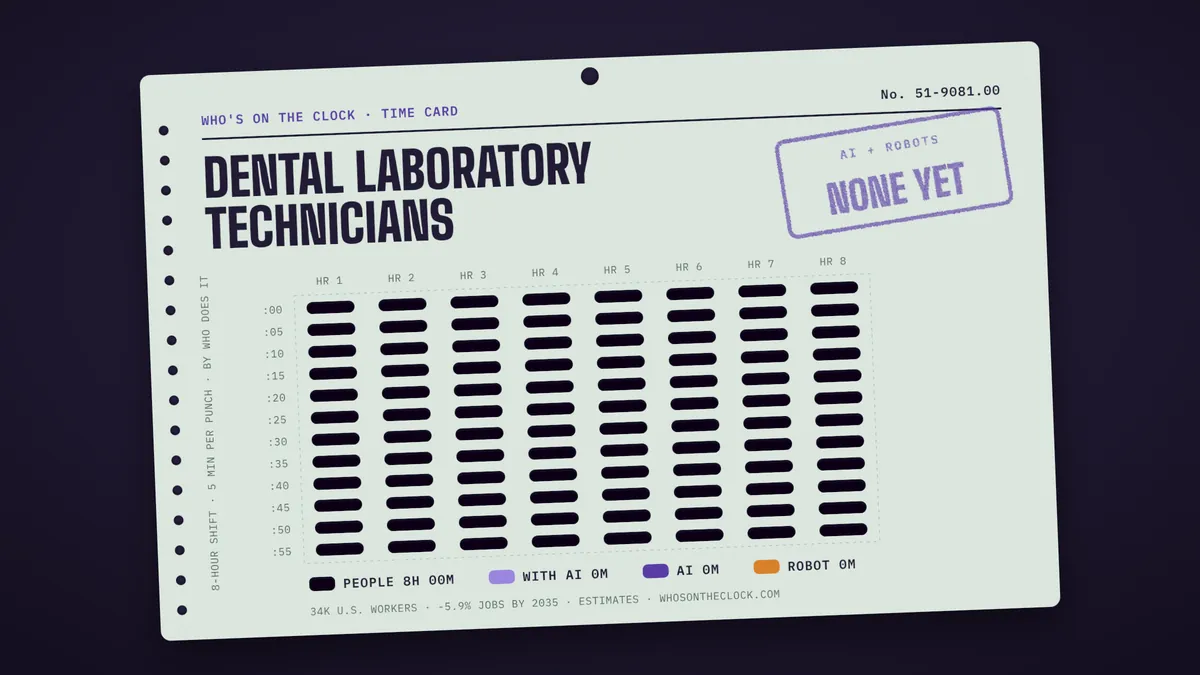
| Dental Laboratory TechniciansRead prescriptions or specifications and examine models or impressions to determine the design of dental products to be constructed. | 39m | No evidence yet |
| Model Makers, Metal and PlasticStudy blueprints, drawings, and sketches to determine material dimensions, required equipment, and operations sequences. | 37m | No evidence yet |
| Electrical and Electronic Equipment AssemblersRead and interpret schematic drawings, diagrams, blueprints, specifications, work orders, or reports to determine materials requirements or assembly instructions. | 36m | Often handed to AI |
| Ophthalmic Laboratory TechniciansExamine prescriptions, work orders, or broken or used eyeglasses to determine specifications for lenses, contact lenses, or other optical elements. | 33m | No evidence yet |
| Drilling and Boring Machine Tool Setters, Operators, and Tenders, Metal and PlasticStudy machining instructions, job orders, or blueprints to determine dimensional or finish specifications, sequences of operations, setups, or tooling requirements. | 31m | No evidence yet |
| Milling and Planing Machine Setters, Operators, and Tenders, Metal and PlasticStudy blueprints, layouts, sketches, or work orders to assess workpiece specifications and to determine tooling instructions, tools and materials needed, and sequences of operations. | 30m | No evidence yet |
| Structural Metal Fabricators and FittersStudy engineering drawings and blueprints to determine materials requirements and task sequences. | 29m | No evidence yet |
| Medical Appliance TechniciansRead prescriptions or specifications to determine the type of product or device to be fabricated and the materials and tools required. | 25m | No evidence yet |
| Team AssemblersReview work orders and blueprints to ensure work is performed according to specifications. | 25m | No evidence yet |
| Adhesive Bonding Machine Operators and TendersRead work orders and communicate with coworkers to determine machine and equipment settings and adjustments and supply and product specifications. | 25m | No evidence yet |
| Inspectors, Testers, Sorters, Samplers, and WeighersRead blueprints, data, manuals, or other materials to determine specifications, inspection and testing procedures, adjustment methods, certification processes, formulas, or measuring instruments required. | 24m | No evidence yet |
| Coil Winders, Tapers, and FinishersReview work orders and specifications to determine materials needed and types of parts to be processed. | 24m | No evidence yet |
| Grinding, Lapping, Polishing, and Buffing Machine Tool Setters, Operators, and Tenders, Metal and PlasticStudy blueprints, work orders, or machining instructions to determine product specifications, tool requirements, and operational sequences. | 24m | No evidence yet |
| Cabinetmakers and Bench CarpentersEstablish the specifications of articles to be constructed or repaired, or plan the methods or operations for shaping or assembling parts, based on blueprints, drawings, diagrams, or oral or written instructions. | 24m | No evidence yet |
| Welding, Soldering, and Brazing Machine Setters, Operators, and TendersRead blueprints, work orders, or production schedules to determine product or job instructions or specifications. | 24m | No evidence yet |
| Printing Press OperatorsExamine job orders to determine quantities to be printed, stock specifications, colors, or special printing instructions. | 24m | No evidence yet |
| Rolling Machine Setters, Operators, and Tenders, Metal and PlasticRead rolling orders, blueprints, and mill schedules to determine setup specifications, work sequences, product dimensions, and installation procedures. | 23m | No evidence yet |
| Lathe and Turning Machine Tool Setters, Operators, and Tenders, Metal and PlasticStudy blueprints, layouts or charts, and job orders for information on specifications and tooling instructions, and to determine material requirements and operational sequences. | 23m | No evidence yet |
| Multiple Machine Tool Setters, Operators, and Tenders, Metal and PlasticRead blueprints or job orders to determine product specifications and tooling instructions and to plan operational sequences. | 23m | No evidence yet |
| Photographic Process Workers and Processing Machine OperatorsRead work orders to determine required processes, techniques, materials, or equipment. | 21m | No evidence yet |
| UpholsterersRead work orders, and apply knowledge and experience with materials to determine types and amounts of materials required to cover workpieces. | 19m | No evidence yet |
| Hand Cutters and TrimmersRead work orders to determine dimensions, cutting locations, and quantities to cut. | 18m | No evidence yet |
| Molders, Shapers, and CastersRead work orders or examine parts to determine parts or sections of products to be produced. | 18m | No evidence yet |
| Cutting, Punching, and Press Machine Setters, Operators, and Tenders, Metal and PlasticRead work orders or production schedules to determine specifications, such as materials to be used, locations of cutting lines, or dimensions and tolerances. | 18m | No evidence yet |
| Semiconductor Processing TechniciansStudy work orders, instructions, formulas, and processing charts to determine specifications and sequence of operations. | 18m | No evidence yet |
| Gas Plant OperatorsRead logsheets to determine product demand and disposition, or to detect malfunctions. | 18m | No evidence yet |
| Mixing and Blending Machine Setters, Operators, and TendersRead work orders to determine production specifications or information. | 18m | No evidence yet |
| Extruding, Forming, Pressing, and Compacting Machine Setters, Operators, and TendersReview work orders, specifications, or instructions to determine materials, ingredients, procedures, components, settings, and adjustments for extruding, forming, pressing, or compacting machines. | 18m | No evidence yet |
| Furnace, Kiln, Oven, Drier, and Kettle Operators and TendersRead and interpret work orders and instructions to determine work assignments, process specifications, and production schedules. | 17m | No evidence yet |
| Food Cooking Machine Operators and TendersRead work orders, recipes, or formulas to determine cooking times and temperatures, and ingredient specifications. | 13m | No evidence yet |
| Shoe Machine Operators and TendersStudy work orders or shoe part tags to obtain information about workloads, specifications, and the types of materials to be used. | 12m | No evidence yet |
| Food and Tobacco Roasting, Baking, and Drying Machine Operators and TendersRead work orders to determine quantities and types of products to be baked, dried, or roasted. | 12m | No evidence yet |
| Sawing Machine Setters, Operators, and Tenders, WoodExamine blueprints, drawings, work orders, or patterns to determine equipment set-up or selection details, procedures to be used, or dimensions of final products. | 12m | No evidence yet |
| Crushing, Grinding, and Polishing Machine Setters, Operators, and TendersRead work orders to determine production specifications and information. | 11m | No evidence yet |
| Chemical Equipment Operators and TendersRead plant specifications to determine products, ingredients, or prescribed modifications of plant procedures. | 11m | No evidence yet |
| Tailors, Dressmakers, and Custom SewersExamine tags on garments to determine alterations that are needed. | 7m | No evidence yet |
| Furniture FinishersFollow blueprints to produce specific designs. | 6m | No evidence yet |
| Shoe and Leather Workers and RepairersRead prescriptions or specifications, and take measurements to establish the type of product to be made, using calipers, tape measures, or rules. | 6m | No evidence yet |
How to read this
This task type comes from O*NET's detailed work activities, which link similar tasks across jobs. A label applies to one job's version of the task: AI use comes from real AI conversations (Anthropic Economic Index) and robot evidence from deployments in real workplaces. "No evidence yet" may just mean the task is rare in the data. How we keep time.
See all 250 shared tasks, or find any job on the big clock.