Home / Tasks / Analyze test data or images to inform diagnosis or treatment
In 7 of the 37 jobs that do this, AI or robots already show up on it, most often as work people hand to AI. In the other 30, there's no evidence yet. Jobs spend a median of 30m of an 8-hour shift on it, and about 16.6 million U.S. workers hold these jobs.
Every job that does this
Each job words the task its own way. Minutes are that job's estimate for a typical shift; the label is the evidence for that job's version.
| Job and its version of the task | Per shift | Evidence |
|---|---|---|
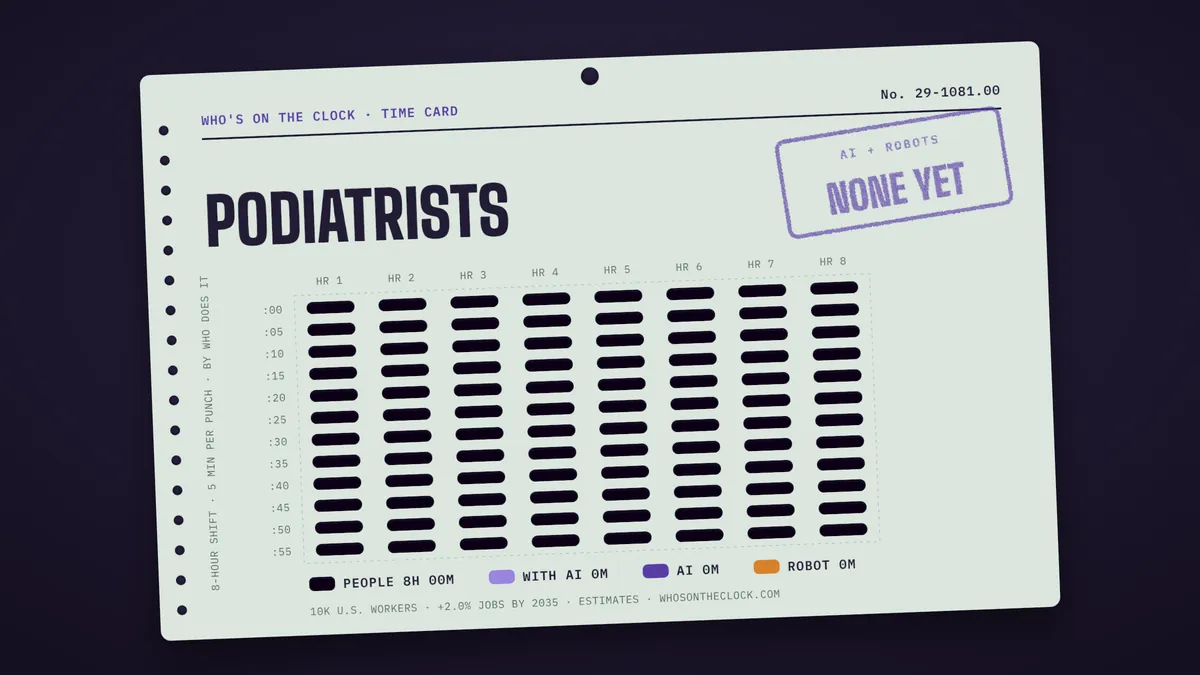
| PodiatristsDiagnose diseases and deformities of the foot using medical histories, physical examinations, x-rays, and laboratory test results. | 1h 37m | No evidence yet |
| Family Medicine PhysiciansOrder, perform, and interpret tests and analyze records, reports, and examination information to diagnose patients' condition. | 1h 19m | No evidence yet |
| OptometristsAnalyze test results and develop a treatment plan. | 1h 5m | No evidence yet |
| General Internal Medicine PhysiciansAnalyze records, reports, test results, or examination information to diagnose medical condition of patient. | 55m | Often handed to AI |
| PsychiatristsAnalyze and evaluate patient data or test findings to diagnose nature or extent of mental disorder. | 52m | No evidence yet |
| HospitalistsOrder or interpret the results of tests such as laboratory tests and radiographs (x-rays). | 52m | No evidence yet |
| AudiologistsEvaluate hearing and balance disorders to determine diagnoses and courses of treatment. | 49m | No evidence yet |
| Emergency Medicine PhysiciansAnalyze records, examination information, or test results to diagnose medical conditions. | 46m | With AI |
| Genetic CounselorsAnalyze genetic information to identify patients or families at risk for specific disorders or syndromes. | 46m | No evidence yet |
| Naturopathic PhysiciansDiagnose health conditions, based on patients' symptoms and health histories, laboratory and diagnostic radiology test results, or other physiological measurements, such as electrocardiograms and electroencephalographs. | 41m | No evidence yet |
| Critical Care NursesEvaluate patients' vital signs or laboratory data to determine emergency intervention needs. | 39m | No evidence yet |
| OphthalmologistsPerform, order, or interpret the results of diagnostic or clinical tests. | 39m | No evidence yet |
| UrologistsOrder and interpret the results of diagnostic tests, such as prostate specific antigen (PSA) screening, to detect prostate cancer. | 36m | No evidence yet |
| Physician AssistantsInterpret diagnostic test results for deviations from normal. | 36m | Often handed to AI |
| Sports Medicine PhysiciansOrder and interpret the results of laboratory tests and diagnostic imaging procedures. | 34m | No evidence yet |
| Obstetricians and GynecologistsAnalyze records, reports, test results, or examination information to diagnose medical condition of patient. | 32m | Often handed to AI |
| Orthopedic SurgeonsOrder and interpret the results of laboratory tests and diagnostic imaging procedures. | 31m | No evidence yet |
| Allergists and ImmunologistsInterpret diagnostic test results to make appropriate differential diagnoses. | 30m | Often handed to AI |
| AcupuncturistsAnalyze physical findings and medical histories to make diagnoses according to Oriental medicine traditions. | 30m | No evidence yet |
| Nurse PractitionersOrder, perform, or interpret the results of diagnostic tests, such as complete blood counts (CBCs), electrocardiograms (EKGs), and radiographs (x-rays). | 29m | No evidence yet |
| VeterinariansOperate diagnostic equipment, such as radiographic or ultrasound equipment, and interpret the resulting images. | 27m | No evidence yet |
| OrthoptistsInterpret clinical or diagnostic test results. | 26m | With AI |
| Medical and Clinical Laboratory TechniciansAnalyze and record test data to issue reports that use charts, graphs, or narratives. | 25m | Often handed to AI |
| PathologistsAnalyze and interpret results from tests, such as microbial or parasite tests, urine analyses, hormonal assays, fine needle aspirations (FNAs), and polymerase chain reactions (PCRs). | 24m | No evidence yet |
| Nurse MidwivesOrder and interpret diagnostic or laboratory tests. | 23m | No evidence yet |
| MidwivesEvaluate patients' laboratory and medical records, requesting assistance from other practitioners when necessary. | 22m | No evidence yet |
| NeurologistsInterpret the results of neuroimaging studies, such as Magnetic Resonance Imaging (MRI), Single Photon Emission Computed Tomography (SPECT), and Positron Emission Tomography (PET) scans. | 20m | No evidence yet |
| CardiologistsCompare measurements of heart wall thickness and chamber sizes to standards to identify abnormalities, using the results of an echocardiogram. | 18m | No evidence yet |
| Pediatric SurgeonsInterpret results of preoperative tests and physical examinations. | 17m | No evidence yet |
| ChiropractorsAnalyze x-rays to locate the sources of patients' difficulties and to rule out fractures or diseases as sources of problems. | 15m | No evidence yet |
| RadiologistsReview or transmit images and information using picture archiving or communications systems. | 14m | No evidence yet |
| Registered NursesOrder, interpret, and evaluate diagnostic tests to identify and assess patient's condition. | 13m | No evidence yet |
| Cardiovascular Technologists and TechniciansCompare measurements of heart wall thickness and chamber sizes to standard norms to identify abnormalities. | 13m | No evidence yet |
| Acute Care NursesInterpret information obtained from electrocardiograms (EKGs) or radiographs (x-rays). | 12m | No evidence yet |
| Diagnostic Medical SonographersDetermine whether scope of exam should be extended, based on findings. | 6m | No evidence yet |
| Advanced Practice Psychiatric NursesInterpret diagnostic or laboratory tests, such as electrocardiograms (EKGs) and renal functioning tests. | 6m | No evidence yet |
| Nurse AnesthetistsPerform or evaluate the results of diagnostic tests, such as radiographs (x-rays) and electrocardiograms (EKGs). | 6m | No evidence yet |
How to read this
This task type comes from O*NET's detailed work activities, which link similar tasks across jobs. A label applies to one job's version of the task: AI use comes from real AI conversations (Anthropic Economic Index) and robot evidence from deployments in real workplaces. "No evidence yet" may just mean the task is rare in the data. How we keep time.
See all 250 shared tasks, or find any job on the big clock.