Home / Tasks / Collaborate with healthcare professionals to plan or provide treatment
None of the 53 jobs that do this have AI or robot evidence for it yet. Jobs spend a median of 22m of an 8-hour shift on it, and about 21.9 million U.S. workers hold these jobs.
Every job that does this
Each job words the task its own way. Minutes are that job's estimate for a typical shift; the label is the evidence for that job's version.
| Job and its version of the task | Per shift | Evidence |
|---|---|---|
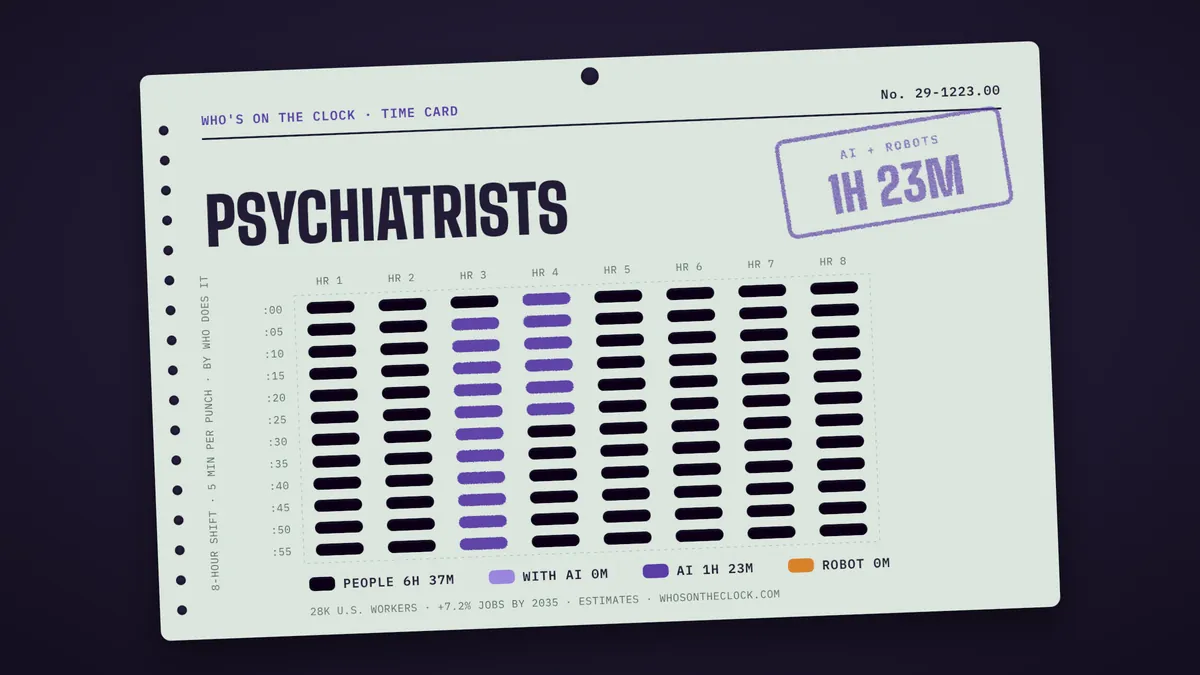
| PsychiatristsCollaborate with physicians, psychologists, social workers, psychiatric nurses, or other professionals to discuss treatment plans and progress. | 42m | No evidence yet |
| Registered NursesConsult and coordinate with healthcare team members to assess, plan, implement, or evaluate patient care plans. | 39m | No evidence yet |
| Acute Care NursesCollaborate with members of multidisciplinary health care teams to plan, manage, or assess patient treatments. | 37m | No evidence yet |
| Clinical Nurse SpecialistsCollaborate with other health care professionals and service providers to ensure optimal patient care. | 37m | No evidence yet |
| PharmacistsCollaborate with other health care professionals to plan, monitor, review, or evaluate the quality or effectiveness of drugs or drug regimens, providing advice on drug applications or characteristics. | 36m | No evidence yet |
| ParamedicsCoordinate with treatment center personnel to obtain patients' vital statistics and medical history, to determine the circumstances of the emergency, and to administer emergency treatment. | 36m | No evidence yet |
| ProsthodontistsCollaborate with general dentists, specialists, and other health professionals to develop solutions to dental and oral health concerns. | 34m | No evidence yet |
| Oral and Maxillofacial SurgeonsCollaborate with other professionals, such as restorative dentists and orthodontists, to plan treatment. | 31m | No evidence yet |
| Dietitians and NutritionistsConsult with physicians and health care personnel to determine nutritional needs and diet restrictions of patient or client. | 31m | No evidence yet |
| Recreational TherapistsConfer with members of treatment team to plan and evaluate therapy programs. | 31m | No evidence yet |
| NeuropsychologistsConsult with other professionals about patients' neurological conditions. | 30m | No evidence yet |
| Emergency Medical TechniciansCoordinate work with other emergency medical team members or police or fire department personnel. | 29m | No evidence yet |
| Clinical NeuropsychologistsConsult with other professionals about patients' neurological conditions. | 28m | No evidence yet |
| Critical Care NursesCollaborate with other health care professionals to develop and revise treatment plans, based on identified needs and assessment data. | 26m | No evidence yet |
| Licensed Practical and Licensed Vocational NursesWork as part of a healthcare team to assess patient needs, plan and modify care, and implement interventions. | 26m | No evidence yet |
| Respiratory TherapistsWork as part of a team of physicians, nurses, or other healthcare professionals to manage patient care by assisting with medical procedures or related duties. | 26m | No evidence yet |
| OrthoptistsCollaborate with ophthalmologists, optometrists, or other specialists in the diagnosis, treatment, or management of conditions such as glaucoma, cataracts, and retinal diseases. | 26m | No evidence yet |
| Psychiatric TechniciansCollaborate with or assist doctors, psychologists, or rehabilitation therapists in working with patients with cognitive, intellectual, or developmental disabilities to treat, rehabilitate, and return patients to the community. | 26m | No evidence yet |
| Speech-Language PathologistsParticipate in and write reports for meetings regarding patients' progress, such as individualized educational planning (IEP) meetings, in-service meetings, or intervention assistance team meetings. | 25m | No evidence yet |
| Allergists and ImmunologistsCoordinate the care of patients with other health care professionals or support staff. | 25m | No evidence yet |
| Occupational TherapistsConsult with rehabilitation team to select activity programs or coordinate occupational therapy with other therapeutic activities. | 25m | No evidence yet |
| Dietetic TechniciansAttend interdisciplinary meetings with other health care professionals to discuss patient care. | 25m | No evidence yet |
| Occupational Health and Safety SpecialistsCollaborate with engineers or physicians to institute control or remedial measures for hazardous or potentially hazardous conditions or equipment. | 25m | No evidence yet |
| Sports Medicine PhysiciansCoordinate sports care activities with other experts, including specialty physicians and surgeons, athletic trainers, physical therapists, or coaches. | 24m | No evidence yet |
| Orthotists and ProsthetistsConfer with physicians to formulate specifications and prescriptions for orthopedic or prosthetic devices. | 24m | No evidence yet |
| AnesthesiologistsCoordinate administration of anesthetics with surgeons during operation. | 22m | No evidence yet |
| MidwivesEvaluate patients' laboratory and medical records, requesting assistance from other practitioners when necessary. | 22m | No evidence yet |
| Naturopathic PhysiciansConsult with other health professionals to provide optimal patient care, referring patients to traditional health care professionals as necessary. | 20m | No evidence yet |
| Art TherapistsConfer with other professionals on client's treatment team to develop, coordinate, or integrate treatment plans. | 20m | No evidence yet |
| Physical Medicine and Rehabilitation PhysiciansCoordinate physical medicine and rehabilitation services with other medical activities. | 20m | No evidence yet |
| Family Medicine PhysiciansCoordinate work with nurses, social workers, rehabilitation therapists, pharmacists, psychologists, and other health care providers. | 20m | No evidence yet |
| Low Vision Therapists, Orientation and Mobility Specialists, and Vision Rehabilitation TherapistsCollaborate with specialists, such as rehabilitation counselors, speech pathologists, and occupational therapists, to provide client solutions. | 19m | No evidence yet |
| Physical TherapistsConfer with the patient, medical practitioners, or appropriate others to plan, implement, or assess the intervention program. | 19m | No evidence yet |
| PathologistsConsult with physicians about ordering and interpreting tests or providing treatments. | 19m | No evidence yet |
| Magnetic Resonance Imaging TechnologistsComfort patients during exams, or request sedatives or other medication from physicians for patients with anxiety or claustrophobia. | 19m | No evidence yet |
| Diagnostic Medical SonographersCoordinate work with physicians or other healthcare team members, including providing assistance during invasive procedures. | 18m | No evidence yet |
| AudiologistsPlan and conduct treatment programs for patients' hearing or balance problems, consulting with educators, physicians, nurses, psychologists, speech-language pathologists, and other health care personnel, as necessary. | 18m | No evidence yet |
| Nurse AnesthetistsEvaluate patients' post-surgical or post-anesthesia responses, taking appropriate corrective actions or requesting consultation if complications occur. | 17m | No evidence yet |
| Athletic TrainersCollaborate with physicians to develop and implement comprehensive rehabilitation programs for athletic injuries. | 15m | No evidence yet |
| Obstetricians and GynecologistsConsult with or provide consulting services to other physicians. | 14m | No evidence yet |
| Music TherapistsConfer with professionals on client's treatment team to develop, coordinate, or integrate treatment plans. | 13m | No evidence yet |
| OptometristsConsult with and refer patients to ophthalmologist or other health care practitioner if additional medical treatment is determined necessary. | 13m | No evidence yet |
| OrthodontistsCoordinate orthodontic services with other dental and medical services. | 13m | No evidence yet |
| Advanced Practice Psychiatric NursesParticipate in treatment team conferences regarding diagnosis or treatment of difficult cases. | 12m | No evidence yet |
| Nurse PractitionersConsult with, or refer patients to, appropriate specialists when conditions exceed the scope of practice or expertise. | 12m | No evidence yet |
| Nurse MidwivesConsult with or refer patients to appropriate specialists when conditions exceed the scope of practice or expertise. | 11m | No evidence yet |
| NeurologistsCoordinate neurological services with other health care team activities. | 10m | No evidence yet |
| OphthalmologistsCollaborate with multidisciplinary teams of health professionals to provide optimal patient care. | 10m | No evidence yet |
| ChiropractorsConsult with or refer patients to appropriate health practitioners when necessary. | 7m | No evidence yet |
| Skincare SpecialistsCollaborate with plastic surgeons and dermatologists to provide patients with preoperative and postoperative skin care. | 7m | No evidence yet |
| Radiologic Technologists and TechniciansCoordinate work with clerical personnel or other technologists and technicians. | 6m | No evidence yet |
| Surgical AssistantsCoordinate with anesthesia personnel to maintain patient temperature. | 6m | No evidence yet |
| RadiologistsCoordinate radiological services with other medical activities. | 5m | No evidence yet |
How to read this
This task type comes from O*NET's detailed work activities, which link similar tasks across jobs. A label applies to one job's version of the task: AI use comes from real AI conversations (Anthropic Economic Index) and robot evidence from deployments in real workplaces. "No evidence yet" may just mean the task is rare in the data. How we keep time.
See all 250 shared tasks, or find any job on the big clock.